
 대표어
대표어
권호기사보기
| 기사명 | 저자명 | 페이지 | 원문 | 기사목차 |
|---|
결과 내 검색
동의어 포함
Managing risk necessitates an understanding of both how to avoid detrimental outcomes and to reap beneficial results. Organizations are regularly confronted with complex decisions involving risk and the impending consequences of the negative impact of its manifestation. However, the positive aspects of embracing risk should also be sufficiently evaluated to obtain a full assessment of opportunities.
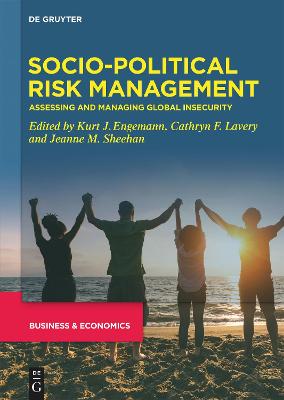
Socio-Political Risk Management: Assessing and Managing Global Insecurity covers a range of viewpoints and issues which can be applied to various organizational agency structures. These perspectives examine how social and political risk can impact an agency, and what recommendations are made to adapt, mitigate, and strengthen the organization against political risk. Accessibility to personnel and agencies via social media, the internet and public exposure compounded with political and social societal shifts have led many agencies in a constant spin to assuage and sustain viability and relevance publicly.
Socio-Political Risk Management: Assessing and Managing Global Insecurity serves the readers by raising awareness and the necessity to control social and political risks in their organizations. This volume explores pathways for those in differing organizational structures to find common threads pertaining to social and political risks. An important goal of the work is also to develop a framework for managing and exploiting risk that can be applied at the organizational level.
- Provides a new and unique perspective of risk assessment and management.
- Establishes an interdisciplinary and inter-collaborative discussion of how social and political risks impact all agencies.
| 등록번호 | 청구기호 | 권별정보 | 자료실 | 이용여부 |
|---|---|---|---|---|
| 0003014190 | 658.155 -A23-9 | 서울관 서고(열람신청 후 1층 대출대) | 이용가능 |

Managing risk necessitates an understanding of both how to avoid detrimental outcomes and to reap beneficial results. Organizations are regularly confronted with complex decisions involving risk and the impending consequences of the negative impact of its manifestation. However, the positive aspects of embracing risk should also be sufficiently evaluated to obtain a full assessment of opportunities.
Socio-Political Risk Management: Assessing and Managing Global Insecurity covers a range of viewpoints and issues which can be applied to various organizational agency structures. These perspectives examine how social and political risk can impact an agency, and what recommendations are made to adapt, mitigate, and strengthen the organization against political risk. Accessibility to personnel and agencies via social media, the internet and public exposure compounded with political and social societal shifts have led many agencies in a constant spin to assuage and sustain viability and relevance publicly.
Socio-Political Risk Management: Assessing and Managing Global Insecurity serves the readers by raising awareness and the necessity to control social and political risks in their organizations. This volume explores pathways for those in differing organizational structures to find common threads pertaining to social and political risks. An important goal of the work is also to develop a framework for managing and exploiting risk that can be applied at the organizational level.
The objective of the multi-volume book Developments in Managing and Exploiting
Risk is to offer a balanced view to enable the reader to better appreciate risk as a
counterpart to reward, and to understand how to holistically manage both elements of this
duality. Crises can challenge any organization, and with a seemingly endless stream of
disruptive and even catastrophic events taking place, there is an increasing emphasis on
preparing for the worst. However, being focused on the negative aspects of risk, without
giving consideration to the positive attributes, may be shortsighted. Playing it safe may not
always be the best policy, because great benefits may be missed.
Analyzing risk is difficult, in part because it often entails events that have never
occurred. Organizations, being mindful of undesirable potential events, are often keenly
averse to risk to the detriment of capitalizing on its potential opportunities. Risk is usually
perceived as a negative or downside but a commensurate weight should also be given to
the potential rewards or upside, when evaluating new ventures. Even so, too much of a
good thing may create unintended consequences of positive risk, which is also an
undesirable situation. Developments in Managing and Exploiting Risk provides a
professional and scholarly venue in the critical field of risk in business with particular
emphasis on decision-making using a comprehensive and inclusive approach.
*표시는 필수 입력사항입니다.
| 전화번호 |
|---|
| 기사명 | 저자명 | 페이지 | 원문 | 기사목차 |
|---|
| 번호 | 발행일자 | 권호명 | 제본정보 | 자료실 | 원문 | 신청 페이지 |
|---|
도서위치안내: / 서가번호:

우편복사 목록담기를 완료하였습니다.
*표시는 필수 입력사항입니다.
저장 되었습니다.
