
 대표어
대표어
권호기사보기
| 기사명 | 저자명 | 페이지 | 원문 | 기사목차 |
|---|
결과 내 검색
동의어 포함
| 등록번호 | 청구기호 | 권별정보 | 자료실 | 이용여부 |
|---|---|---|---|---|
| 0003074383 | 320.01 -A24-8 | 서울관 서고(열람신청 후 1층 대출대) | 이용가능 |

A constitutionalist reading of Plato’s political thought
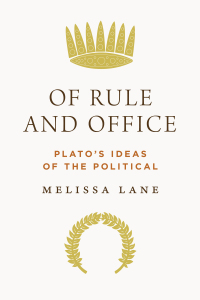
Plato famously defends the rule of knowledge. Knowledge, for him, is of the good. But what is rule? In this study, Melissa Lane reveals how political office and rule were woven together in Greek vocabulary and practices that both connected and distinguished between rule in general and office as a constitutionally limited kind of rule in particular. In doing so, Lane shows Plato to have been deeply concerned with the roles and relationships between rulers and ruled. Adopting a longstanding Greek expectation that a ruler should serve the good of the ruled, Plato’s major political dialogues—the Republic, the Statesman, and Laws—explore how different kinds of rule might best serve that good. With this book, Lane offers the first account of the clearly marked vocabulary of offices at the heart of all three of these dialogues, explaining how such offices fit within the broader organization and theorizing of rule.
Lane argues that taking Plato’s interest in rule and office seriously reveals tyranny as ultimately a kind of anarchy, lacking the order as well as the purpose of rule. When we think of tyranny in this way, we see how Plato invokes rule and office as underpinning freedom and friendship as political values, and how Greek slavery shaped Plato’s account of freedom. Reading Plato both in the Greek context and in dialogue with contemporary thinkers, Lane argues that rule and office belong at the center of Platonic, Greek, and contemporary political thought.
*표시는 필수 입력사항입니다.
| 전화번호 |
|---|
| 기사명 | 저자명 | 페이지 | 원문 | 기사목차 |
|---|
| 번호 | 발행일자 | 권호명 | 제본정보 | 자료실 | 원문 | 신청 페이지 |
|---|
도서위치안내: / 서가번호:

우편복사 목록담기를 완료하였습니다.
*표시는 필수 입력사항입니다.
저장 되었습니다.
