1 Introduction 1 1.1 Aims of the Book 3 1.2 Policy and Academic Gaps Filled in the Book 5 1.2.1 Part One: The Effects of Government Debt Dynamics 5 1.2.2 Part Two: The Effects of Fiscal Budget Defcit Dynamics 7 1.2.3 Part Three: The Effects of Interest Rates and Debt Service Costs on Government Debt 7 1.2.4 Part Four: The Macroeconomic Effects of Economic Policy Uncertainty on Government Borrowing Costs, Employment Growth, and role of monetary policy 8 1.3 The Economic Aspects Covered in Our Earlier Research 9 1.3.1 Income Inequality 9 1.3.2 Fiscal Policy, Labour Markets, Income Inequality, Minimum Wage, and Poverty 9 1.3.3 Income Inequality and Employment Issues 9 1.3.4 The Distributive Effects of Fuel Levies, Public Transport Infation, and Their Impact on Infation Rates 10 1.3.5 Government Spending and Revenue Shocks 10 1.3.6 Budget Allocation and State Capture-Related Activities 10 Reference 10 2 Synopsis of Fiscal Policy in South Africa: 1994–2020 11 2.1 Introduction 11 2.2 What Do the Last 34 Years Suggest About the Fiscal Policy Framework? 13 2.2.1 The Government Debt Trends 13 2.2.2 Developments in Revenue 15 2.3 Did the Fiscal Policy Framework Perform as Expected in Supporting South Africa to Absorb Unexpected Asymmetric Shocks? 16 2.4 Did the Countercyclical Fiscal Policy Implemented in 2009 Perform as Expected? 19 2.5 Conclusion and Policy Implications 21 Reference 22 Part I Effect of Government Debt Dynamics 23 3 Effects of Government Debt on Output, Household Consumption, and Gross Fixed Capital Formation: Role of the Credit Conditions Channel 25 3.1 Introduction 25 3.2 Theory on the Link Between Credit Conditions and Government Debt 30 3.3 Model 31 3.4 Trends Analysis 32 3.4.1 The Interaction Between Government Debt and Credit Conditions 35 3.4.2 The Role of Credit Conditions in Transmitting Positive Government Debt Shocks to Output, Household Consumption, and Investment 36 3.4.3 Disentangling the Effects of Government Debt Ratio and Credit Conditions on Real Variables 38 3.4.4 Forecast Error Variance Decompositions 40 3.5 Conclusion and Policy Implications 42 References 43 4 Government Debt and Household Consumption: The Infuence of the Wealth Channel 45 4.1 Introduction 45 4.2 The Link Between Government Debt-to-GDP Ratio, Consumption, Credit Conditions, and Wealth 48 4.3 The Model 50 4.4 Data 51 4.5 Empirical Results 52 4.5.1 Forecast Error Variance Decompositions 54 4.6 The Role of Household Balance Sheet in Transmitting Positive Government Debt Shocks to Household Consumption 57 4.7 Conclusion and Policy Implications 58 References 59 5 Government Debt and Capital Formation Nexus in South Africa: The Role of the Debt Threshold 61 5.1 Introduction 61 5.2 Theory 64 5.3 Methodology 65 5.4 Data and Stylised Facts 67 5.4.1 Cross Correlation and Correlations 68 5.5 Results 68 5.6 Evidence from Robustness Testing 70 5.7 Further Robustness Testing 72 5.8 Conclusion and Policy Implications 73 Appendix 74 References 75 6 Government Debt and Fixed Capital Formation Nexus: Effects of the Interest Rate and Monetary Policy Credibility Channels 77 6.1 Introduction 77 6.2 Do Government Debt Shocks Affect Gross Fixed Capital Formation Asymmetrically? 80 6.3 VAR Modelling 82 6.3.1 Forecast Variance Decompositions 84 6.3.2 Historical Decompositions 86 6.4 Counterfactual Analysis 87 6.4.1 The Role of the Interest Rate Channel 87 6.4.2 Does Monetary Policy Credibility Matter? 88 6.5 Conclusion and Policy Implications 89 References 90 7 Infation Targeting Band, the Government Debt, and Capital Formation Nexus in South Africa 93 7.1 Introduction 93 7.2 Theory and Why Infation Thresholds Matter 96 7.3 Data 97 7.4 Methodology 98 7.5 Results 101 7.6 A Counterfactual VAR Perspective 103 7.7 The Role of the Infation Expectations Channel 105 7.8 Conclusion and Policy Implications 106 References 106 8 Do High Government Debt-to-GDP Regimes Propagate the Adverse Macroeconomic Effects of High Budget Defcit Regimes? 109 8.1 Introduction 109 8.2 How Selected Macroeconomic Variables Respond to the Government Debt Regimes? 112 8.3 How Robust Are the Responses of Selected Macroeconomic Variables to the Government Debt Regimes? 113 8.4 Does the High Debt-to-GDP Channel Propagate the Macroeconomic Effects of High Budget Defcit Regimes? 115 8.5 Conclusion and Policy Implications 117 References 118 9 Government Debt-to-GDP Ratio, Investment Growth and Employment Growth, and Their Response to High Nominal GDP Growth Regimes 119 9.1 Introduction 119 9.2 How Does the Debt-to-GDP Ratio Respond to Positive NGDP Growth Shocks? 121 9.3 Responses of Investment Growth and Employment Growth to Positive NGDP Shocks 122 9.4 Effects of Positive Shocks in the High and Low NGDP Growth Regimes on the Debt-to-GDP Ratio 123 9.5 Conclusion and Policy Implications 124 Reference 126 10 The Impact of the Government Debt-to-GDP Ratio on Investment Growth 127 10.1 Introduction 127 10.2 Responses of Real GDP Growth, Employment Growth, and Investment Growth to Positive Debt-to-GDP Shocks 128 10.3 Private and Public Sector Employment Results 129 10.4 Responses to Persistent and Non-persistent Positive Debt-to-GDP Shocks 131 10.5 Responses of Real GDP Growth, Employment Growth, and Investment Growth to Shocks in Low and High Debt-to-GDP Regimes 131 10.6 Conclusion and Policy Implications 133 Reference 134 Part II The Effects of Fiscal Budget Balance Defcits Dynamics 135 11 Budget Balance Defcit Thresholds and Their Macroeconomic Impact 137 11.1 Introduction 137 11.2 How Do Government Bond Yields, Output Growth, and Employment Growth Respond to Positive Shocks to the Budget Defcit? 139 11.3 How Robust Are the Results to Changes to Model Size and Specifcation? 140 11.4 Infation Responses Due to an Unexpected Rise in the Budget Defcit 141 11.5 Do High and Low Budget Defcit Regimes Exert Different Effects on Various Macroeconomic Variables? 143 11.6 Conclusion and Policy Implications 146 References 147 12 The Impact of a Persistent Increase in the Budget Defcit on Real Interest Rates 149 12.1 Introduction 149 12.2 How Does a Persistent Increase in the Budget Defcit Impact Real Rates and Other Macroeconomic Variables? 151 12.3 Are the Results Robust to Changes in the Model Technique? 152 12.4 Are There Real Economic Activity Asymmetric Responses Due to Shocks That Arise in Low and High Budget Defcit Regimes? 153 12.5 Do High Budget Defcit Regimes Propagate the Negative Effects of Infationary Pressures? 154 12.6 Conclusion and Policy Implications 155 Reference 155 13 What Are the Effects of Budget Balance Defcit Regimes on Infation and Infation Expectations? 157 13.1 Introduction 157 13.2 How Do Infation and Infation Expectations Respond to Positive Budget Defcit Shocks? 158 13.3 Do Budget Defcit Regimes Matter for Infation and Infation Expectations? 159 13.4 What Are the Effects of Persistent and Non-persistent Budget Defcit Shocks on Infation and Infation Expectations? 161 13.5 Conclusion and Policy Implications 163 References 163 Part III The Effects of Interest Rates and Debt Service Cost of Government Debt 165 14 Widening Budget Defcits and Investment Growth Dynamics 167 14.1 Introduction 167 14.2 How Does Investment Growth Respond to Positive Budget Defcit Shocks? 169 14.3 Are the Results Affected by the Inclusion of the Interest Rate Channel? 170 14.4 Does the Inclusion of the Business and Consumer Confdence Indices Change the Results? 171 14.5 Does the Interest Rate Channel Amplify the Impact of the Positive Budget Defcit Shocks? 172 14.6 What Role Do the Business and Consumer Confdence Channels Play in the Amplifcation of the Positive Budget Defcit Shocks? 173 14.7 Conclusion and Policy Implications 173 References 175 15 Do High Government Debt Service Costs Reduce the Potency of Accommodative Fiscal Policy in South Africa? 177 15.1 Introduction 177 15.2 What Explains the Different Trends in the Interest Payments Observed Between South Africa and the Advanced Economies? 182 15.3 Brief Literature on Fiscal Multipliers 184 15.3.1 What Factors Infuence the Size of Fiscal Multipliers? 184 15.4 Stylised Facts 185 15.5 Does the Increase in Interest Payments to Nominal GDP Ratio Explain Signifcant Changes in the Fiscal Multipliers in South Africa? 190 15.6 Robustness Analysis Using the Endogenous-Exogenous VAR Approach 191 15.7 Does the Tight Monetary Policy Stance Dampen the Impact of Fiscal Expansions on GDP Growth, Employment Growth, and the Unemployment Rate? 193 15.8 Conclusions and Policy Recommendations 196 Appendix 198 References 198 16 What Are the Macroeconomic Effects of a Positive Interest Rate-GDP Growth Differential Shock? 201 16.1 Introduction 201 16.2 What Is the Importance and Signifcance of the Interest Rate-GDP Growth Differentials? 204 16.3 What Are the Macroeconomic Effects of Positive Shocks to the Interest Rate-GDP Growth Differential? 205 16.4 Robustness Analysis 206 16.5 Do Positive and Negative Interest Rate-GDP Growth Differential Regimes Exert Different Macroeconomic Effects? 207 16.6 Conclusion and Policy Implications 210 References 211 Part IV Macroeconomic Effects of Economic Policy Uncertainty on Government Borrowing Costs, Employment Growth and the Role of Monetary Policy 213 17 Economic Policy Uncertainty and the Employment Dynamics in South Africa Under the Infation Targeting Regime 215 17.1 Introduction 215 17.2 Should Policymakers Care About the Effects of the Economic Policy Uncertainty on Employment Dynamics in South Africa? 217 17.3 Is there a Shift in Employment Shares Between the Private and Public Sectors to Positive Uncertainty Shocks? 219 17.4 Conclusion and Policy Implications 220 References 220 18 Economic Policy Uncertainty, Employment Dynamics, and Price Stability in South Africa 221 18.1 Introduction 221 18.2 Theory 224 18.3 VAR Methodology 225 18.3.1 VAR Model 225 18.4 Data 226 18.5 Results and Discussions 227 18.5.1 The Counterfactual View of the Monetary Policy Channel 228 18.6 Conclusion and Policy Implications 231 References 231 19 The Role of Economic and Policy Uncertainty on the Effects of Widening Budget Defcits on Yields and the Credit Default Swap Spreads 233 19.1 Introduction 233 19.2 What Are the Effects of Economic and Policy Uncertainty on Yields and Credit Default Swap Spreads? 235 19.3 Does Economic and Policy Uncertainty Propagate the Effects of Widening Budget Defcits on Ten-Year Yields and the Credit Default Swap Spreads? 236 19.4 Do CDS Spreads and Ten-Year Yields Respond Asymmetrically to Positive Budget Defcit Shocks? 238 19.5 How Do CDS Spreads and Ten-Year Yields Respond to Transitory and Persistent Positive Budget Defcit Shocks? 239 19.6 Conclusion and Policy Implications 239 References 241 20 Summary of Main Findings and Policy Implications 243 Index 251
이용현황보기
Fiscal policy shocks and macroeconomic growth in South Africa : missing links and policy gaps 이용현황 표 - 등록번호, 청구기호, 권별정보, 자료실, 이용여부로 구성 되어있습니다.
등록번호
청구기호
권별정보
자료실
이용여부
0003094158
336.68 -A24-1
서울관 서고(열람신청 후 1층 대출대)
이용가능
출판사 책소개
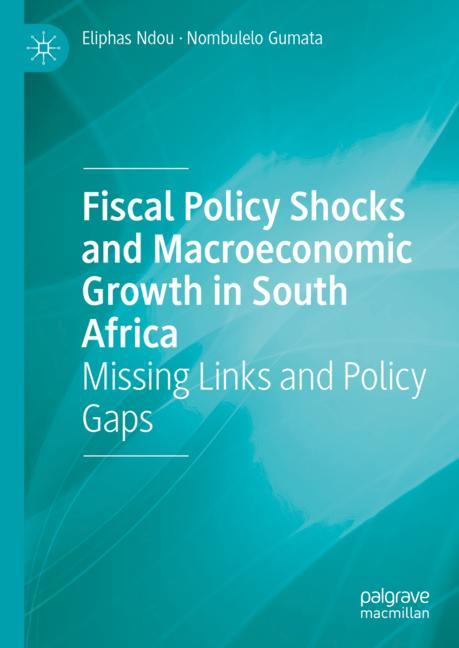
This book explores the disconnect between fiscal policy and macroeconomic development in South Africa. It analyses the factors that have contributed to the lack of economic growth in the country over recent decades and outlines an improved fiscal policy framework that increases investment and employment. Particular attention is given to the impact of government debt and its relationship with GDP, the connection between budget deficits and interest rates, and how economic policy uncertainty?affects?employment dynamics and inflation.
This book provides practical fiscal policy suggestions to increase economic growth in South Africa and Africa more generally. It will be relevant to researchers and policymakers interested in African economics and economic policy.

 대표어