
 대표어
대표어
 https://openknowledge.worldbank.org/entities/publication/b5f5a90f-3229-482f-b8c5-d3c4e9ecbad5


권호기사보기
| 기사명 | 저자명 | 페이지 | 원문 | 기사목차 |
|---|
결과 내 검색
동의어 포함
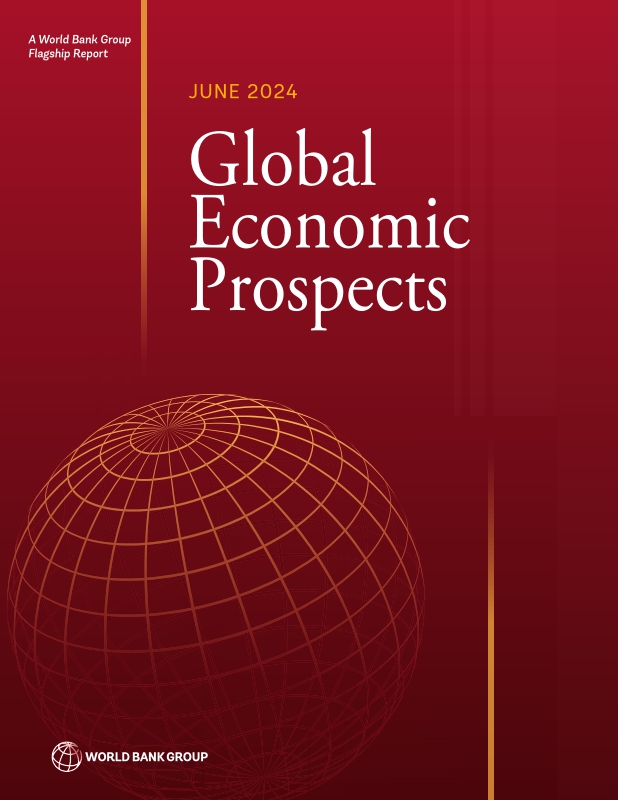
Title page
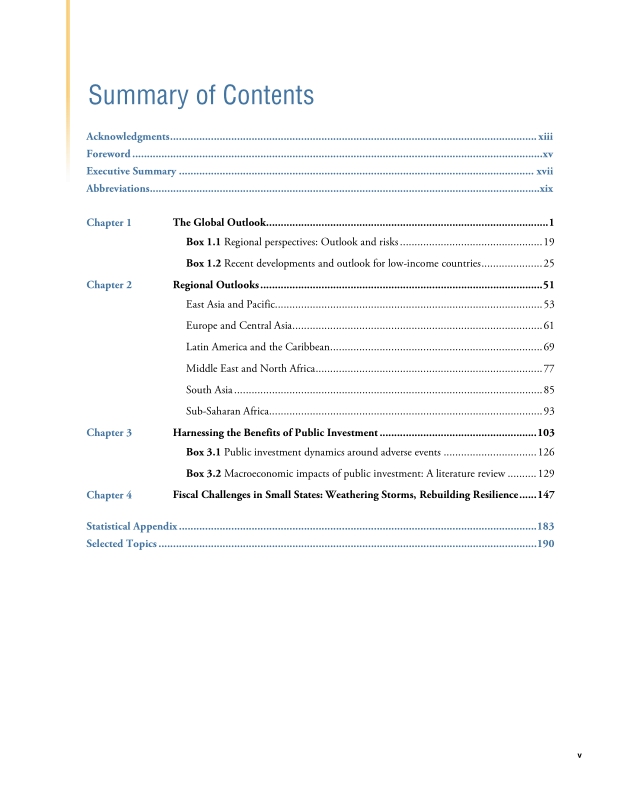
Contents
Acknowledgments 12
Foreword 13
Executive Summary 15
Abbreviations 17
CHAPTER 1. GLOBAL OUTLOOK 18
Summary 19
Global context 25
Global trade 25
Commodity markets 26
Global inflation 27
Global financial developments 28
Major economies: Recent developments and outlook 30
Advanced economies 30
China 31
Emerging market and developing economies 32
Recent developments 32
EMDE outlook 33
LICs outlook 40
Per capita income growth 40
Global outlook and risks 46
Summary of global outlook 46
Risks to the outlook 47
Policy challenges 53
Key global challenges 53
EMDE monetary and financial policy challenges 56
EMDE fiscal policy challenges 57
EMDE structural policy challenges 59
References 63
CHAPTER 2. REGIONAL OUTLOOKS 67
East Asia and Pacific 68
Recent developments 68
Outlook 69
Risks 71
Europe and Central Asia 76
Recent developments 76
Outlook 76
Risks 79
Latin America and the Caribbean 83
Recent developments 83
Outlook 83
Risks 86
Middle East and North Africa 90
Recent developments 90
Outlook 91
Risks 93
South Asia 97
Recent developments 97
Outlook 98
Risks 100
Sub-Saharan Africa 104
Recent developments 104
Outlook 105
Risks 107
References 111
CHAPTER 3. HARNESSING THE BENEFITS OF PUBLIC INVESTMENT 114
Introduction 115
Evolution of public investment 119
Public investment-growth nexus: Channels of transmission 121
Macroeconomic implications of public investment 123
Database and methodology 123
Results 123
Policies to improve the macroeconomic benefits of public investment 128
Expansion of fiscal space 128
Efficiency of public investment 130
Enhanced global support 134
Conclusion 134
ANNEX 3.1. Identification of public investment shocks 143
ANNEX 3.2. Estimation of public investment multipliers 145
References 149
CHAPTER 4. FISCAL CHALLENGES IN SMALL STATES: Weathering Storms, Rebuilding Resilience 156
Introduction 157
Fiscal vulnerability to shocks 160
Evolution of fiscal positions in small states 162
Conceptual framework 162
Evolution of debt 163
Widespread rise in government debt 163
Deficit-driven government debt buildup 164
Reliance on official creditors 164
Evolution of primary deficits 165
Evolution of government revenues 166
Evolution of government expenditure 168
Fiscal policy options in small states 169
Domestic revenue mobilization 171
Expenditure efficiency 173
Robust fiscal frameworks 175
International cooperation 177
Conclusion 179
ANNEX 4.1. Debt decomposition 181
ANNEX 4.2. Fiscal reaction function 181
References 184
Statistical Appendix 190
Data and Forecast Conventions 195
Selected Topics 196
FIGURE 1.1. Global prospects 21
FIGURE 1.2. Global risks and policy challenges 23
FIGURE 1.3. Global trade 25
FIGURE 1.4. Commodity markets 27
FIGURE 1.5. Global inflation 28
FIGURE 1.6. Global financial developments 29
FIGURE 1.7. Major economies: Recent developments and outlook 31
FIGURE 1.8. Recent developments in emerging market and developing economies 33
FIGURE 1.9. Outlook in emerging market and developing economies 34
FIGURE 1.10. Per capita income growth 46
FIGURE 1.11. Global outlook 47
FIGURE 1.12. Risks from conflicts, trade fragmentation, and higher-for-longer policy rates 48
FIGURE 1.13. Other risks to the outlook 51
FIGURE 1.14. Global policy challenges 54
FIGURE 1.15. EMDE monetary and financial policy challenges 56
FIGURE 1.16. EMDE fiscal policy challenges 58
FIGURE 1.17. EMDE structural policy challenges 59
FIGURE 2.1.1. China: Recent developments 69
FIGURE 2.1.2. EAP excluding China: Recent developments 70
FIGURE 2.1.3. EAP: Outlook 71
FIGURE 2.1.4. EAP: Risks 72
FIGURE 2.2.1. ECA: Recent developments 77
FIGURE 2.2.2. ECA: Outlook 78
FIGURE 2.2.3. ECA: Risks 79
FIGURE 2.3.1. LAC: Recent developments 84
FIGURE 2.3.2. LAC: Outlook 85
FIGURE 2.3.3. LAC: Risks 86
FIGURE 2.4.1. MNA: Recent developments 91
FIGURE 2.4.2. MNA: Outlook 92
FIGURE 2.4.3. MNA: Risks 94
FIGURE 2.5.1. SAR: Recent developments 98
FIGURE 2.5.2. SAR: Outlook 99
FIGURE 2.5.3. SAR: Risks 101
FIGURE 2.6.1. SSA: Recent developments 105
FIGURE 2.6.2. SSA: Outlook 106
FIGURE 2.6.3. SSA: Risks 108
FIGURE 3.1. Infrastructure investment needs and investment growth 116
FIGURE 3.2. Public investment patterns in EMDEs 120
FIGURE 3.3. Macroeconomic impacts of public investment in EMDEs 124
FIGURE 3.4. Effects of public investment on output conditional on country characteristics 126
FIGURE 3.5. Effects of public investment on output by EMDE groups 127
FIGURE 3.6. Fiscal space in EMDEs 129
FIGURE 3.7. Public investment efficiency 131
FIGURE 3.8. Private sector participation in infrastructure 133
FIGURE 4.1. Small states and other economies: Output growth and structural characteristics 159
FIGURE 4.2. Fiscal outcomes around major events in small states and other EMDEs 162
FIGURE 4.3. Output since the COVID-19 pandemic in small states and other EMDEs 163
FIGURE 4.4. Government debt in small states and other EMDEs 164
FIGURE 4.5. Contributors to increases in government debt in small states 165
FIGURE 4.6. Fiscal balances in small states and other EMDEs 166
FIGURE 4.7. Contributors to changes in primary balances in small states and other EMDEs 167
FIGURE 4.8. Government revenue in small states and other EMDEs 168
FIGURE 4.9. Tax revenue composition in small states and other EMDEs 169
FIGURE 4.10. Government expenditure in small states and other EMDEs 170
FIGURE 4.11. Composition of government expenditure in small states and other EMDEs 171
FIGURE 4.12. Domestic revenue mobilization in small states and other EMDEs 172
FIGURE 4.13. Expenditure efficiency in small states and other economies 174
FIGURE 4.14. Fiscal performance and fiscal frameworks 175
FIGURE 4.15. Donor support for small states and other EMDEs 178
Boxes
BOX 1.1. Regional perspectives: Outlook and risks 35
BOX 1.2. Recent developments and outlook for low-income countries 41
BOX 3.1. Public investment dynamics around adverse events 136
BOX 3.2. Macroeconomic impacts of public investment: A literature review 139
Box Tables
TABLE B1.2.1. Low-income country forecasts 44
TABLE B3.2.1. Output effects of public investment: Summary of the literature 141
Box Figures
FIGURE B1.1.1. Regional outlooks 36
FIGURE B1.1.2. Regional risks 37
FIGURE B1.2.1. LICs: Recent developments 42
FIGURE B1.2.2. LICs: Outlook and risks 43
FIGURE B3.1.1. Public investment dynamics around adverse events 137
Annex Tables
TABLE A3.2.1. Sample used in the estimation of public investment multipliers 147
TABLE A3.2.2. Summary statistics for public investment shocks 147
TABLE A3.2.3. Definitions of data used and sources 148
TABLE A3.2.4. Selected additional results and robustness checks 148
TABLE A4.1.1. List of small states included in the debt decomposition analysis, and the fiscal reaction function analysis 183
TABLE A4.2.1. Variables, definitions, and data sources for fiscal reaction function analysis 183
TABLE A4.2.2. Small states' fiscal reaction functions: Results 183

*표시는 필수 입력사항입니다.
| 전화번호 |
|---|
| 기사명 | 저자명 | 페이지 | 원문 | 기사목차 |
|---|
| 번호 | 발행일자 | 권호명 | 제본정보 | 자료실 | 원문 | 신청 페이지 |
|---|
도서위치안내: / 서가번호:

우편복사 목록담기를 완료하였습니다.
*표시는 필수 입력사항입니다.
저장 되었습니다.
