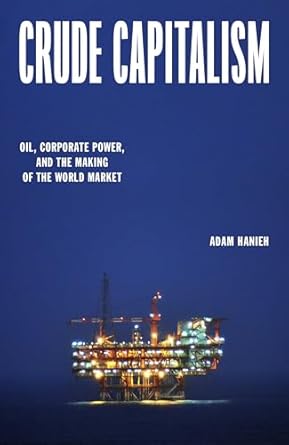
A groundbreaking history of oil and it's importance to US politics, finance, militarism and consumerism from an award-winning author and scholar This expansive history traces the hidden connections between oil and capitalism from the late 1800s to the current climate crisis. Beyond simplistic narratives that frame oil as 'prize' or 'curse',
Crude Capitalism uncovers the surprising ways that oil is woven into the fabric of our modern world: the rise of an American-centered global order; the breakdown of Empire and anti-colonial rebellion; contemporary finance and US dollar hegemony; debt and militarism; and the emergence of new forms of synthetic consumption.
Much more than an energy source or transport fuel, oil has a foundational place in all aspects of contemporary life - no challenge to the fossil fuel industry can be effective without taking this fact seriously.
Crude Capitalism maps the varied geographies of oil, including the rise of OPEC, the importance of revolutionary and Post-Soviet Russia, the crucial role of African upstream reserves, and the new petrochemical circuits that link the Middle East, China, and East Asia.
The book provides an original and fine-grained empirical analysis of corporate ownership and control, including refining and petrochemicals. By exposing these structures of power and placing oil in capitalism, the book makes an essential contribution to debates around oil-dependency and the struggle for climate justice.

 대표어
대표어