
 대표어
대표어
 https://documents.worldbank.org/en/publication/documents-reports/documentdetail/099011525183511237/P178620185fd3507a1aa2715b94bd1eebda
권호기사보기
| 기사명 | 저자명 | 페이지 | 원문 | 기사목차 |
|---|
결과 내 검색
동의어 포함
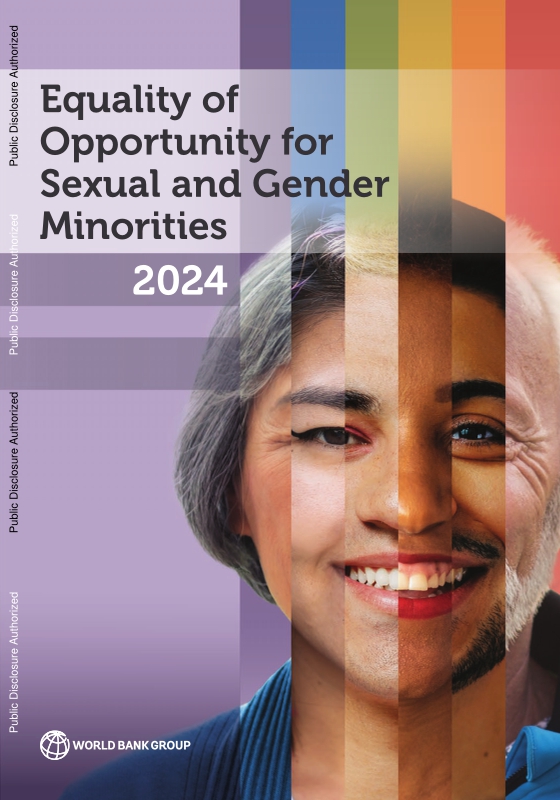
Title page 1
Contents 6
Foreword 10
Acknowledgments 12
Executive Summary 14
Abbreviations 21
CHAPTER 1. The EQOSOGI data set and global findings: An introduction 22
What does EQOSOGI measure and why? 22
Data collection and analysis 25
Construction of the EQOSOGI data set and scores 28
Strengths and limitations of the methodology 29
Global findings 30
Notes 40
References 41
CHAPTER 2. A deep dive into the EQOSOGI findings 42
Decriminalization 42
Access to education 49
Access to labor markets 55
Access to services and social protection 59
Civil and political inclusion 72
Protection from hate crimes 79
Notes 83
References 83
CHAPTER 3. Why do SOGIESC-inclusive laws and policies matter for economic development? 89
SOGIESC inclusion and development 89
Three pathways connecting SOGIESC inclusion and development outcomes 94
Empirical findings on EQOSOGI and development outcomes 97
Notes 99
References 100
CHAPTER 4. Conclusions and the way forward 103
Lack of inclusive legal frameworks across all regions and groups 103
Efforts toward greater SOGIESC inclusion 105
Areas for policy engagement to advance SOGIESC inclusion 108
What's next? 109
Note 110
References 110
Glossary 112
References 115
Appendix A. Questions and coding methodology 118
Appendix B. Scoring methodology 139
Appendix C. Countries and local experts who contributed to the 2024 EQOSOGI 146
Tables 8
TABLE ES.1. EQOSOGI 2024 coverage, by region 15
TABLE 1.1. EQOSOGI 2024 coverage, by region 26
TABLE 1.2. EQOSOGI scores by country, overall and by indicator set 32
TABLE 1.3. EQOSOGI scores by country, overall and by SOGIESC group 35
TABLE 2.1. Examples of good legal practices on inclusive curricula and sexuality education, EQOSOGI 2024 countries 52
TABLE 2.2. Examples of good legal practices on SOGIESC inclusion in labor markets, EQOSOGI 2024 countries 57
TABLE 2.3. Recognition of SOGIESC-based persecution as grounds for asylum, EQOSOGI 2024 countries 78
TABLE 3.1. Correlation analysis between EQOSOGI scores and selected covariates 98
Figures 7
FIGURE ES.1. Distribution of EQOSOGI 2024 scores, by indicator set and region 19
FIGURE 1.1. Distribution of EQOSOGI 2024 scores, overall and by indicator set 31
FIGURE 1.2. Distribution of EQOSOGI 2024 scores, overall and by SOGIESC group 35
FIGURE 1.3. Distribution of EQOSOGI 2024 scores, overall and by SOGIESC group and region 38
FIGURE 1.4. Distribution of EQOSOGI 2024 scores, by indicator set and region 39
FIGURE 1.5. Distribution of EQOSOGI 2024 scores, by indicator set and country income group 40
FIGURE 2.1. Of the 64 countries analyzed, 20 prohibit discrimination in educational settings on the basis of one or more elements of SOGIESC;... 50
FIGURE 2.2. Of the 64 countries analyzed, 28 explicitly prohibit discrimination in employment on one or more SOGIESC grounds 56
FIGURE 2.3. Of the 64 countries analyzed, 18 have enacted legislation explicitly prohibiting discrimination in health care on one or more SOGIESC grounds 60
FIGURE 2.4. Of the 64 countries analyzed, 14 have enacted legislation explicitly prohibiting discrimination in housing on one or more SOGIESC grounds 61
FIGURE 2.5. Of the 64 countries analyzed, 17 have enacted legislation explicitly prohibiting discrimination in social protection and other services on one or more SOGIESC grounds 61
FIGURE 2.6. Of the 49 countries permitting SOGIESC-related organizations, 10 impose legal limitations on their operations 65
FIGURE 2.7. Of the 64 countries analyzed, 16 have public institutions such as national human rights institutions with an explicit mandate to advance the inclusion... 66
FIGURE 2.8. Of the 64 countries analyzed, 18 have institutions that handle charges of SOGIESC-based discrimination in public services 67
FIGURE 2.9. Of the 27 countries that allow updating sex/gender in official documents, 14 do so on a self-identification basis 68
FIGURE 2.10. Of the 64 countries analyzed, 11 offer more than two gender options in ID cards or passports 70
FIGURE 2.11. Of the 64 countries analyzed, 19 have members of parliament, cabinets, or the highest courts who openly identify as sexual or gender minorities 73
FIGURE 2.12. Few countries recognize domestic and foreign same-sex civil partnerships or marriages 74
FIGURE 2.13. About 30 percent of countries explicitly criminalize hate crimes based on one or more SOGIESC grounds 81
FIGURE 3.1. Pathways linking SOGIESC inclusion with economic development and social sustainability 94
Boxes 7
BOX 1.1. How does the World Bank integrate SOGIESC inclusion in its work? 24
BOX 2.1. Criminalization of behavior related to sexual orientation, gender identity and expression, and sex characteristics: A remnant of the colonial past 45
BOX 2.2. Recent legal advances in decriminalizing behavior related to sexual orientation, gender identity and expression, and sex characteristics-and the backlash 46
BOX 2.3. Addressing transgender-based discrimination: Thailand's gender equality act and the role of the WorLorPor committee 53
BOX 2.4. Advances in legal recognition of the rights of intersex persons 62
BOX 2.5. Advances in recognizing the rights of transgender persons in Pakistan 69
BOX 2.6. Advances in the legalization of same-sex marriages and registered civil partnerships in Latin America and the Caribbean 75
BOX 2.7. Argentina: Support services to the victims of hate crimes based on sexual orientation, gender identity and expression, and sex characteristics 82
BOX 3.1. World Bank research on the economic cost of SOGIESC-based exclusion 91
BOX 4.1. Legal reforms related to inclusion of sexual and gender minorities in Canada, India, Japan, Kosovo, and Mexico since the first edition of EQOSOGI 105
BOX 4.2. The World Bank's efforts to mainstream SOGIESC inclusion 107
Maps 8
MAP 1.1. EQOSOGI 2024 coverage, pilot and expansion countries 26
MAP 2.1. Of the 64 countries analyzed, 23 criminalize people based on their sexual orientation and/or gender expression, and 7 rely on vagrancy, public morals,... 44
Box Figures 8
FIGURE B3.1.1. Total economic and fiscal cost of LGBTI exclusion in North Macedonia and Serbia, 2021 92
Appendix Tables 9
TABLE B.1. Selected questions to be used in the computation of the EQOSOGI score, by SOGIESC group 144
TABLE B.2. Number of questions in the EQOSOGI report, by indicator set, 2021 and 2024 144
Appendix Figures 8
FIGURE B.1. Steps involved in the computation of the EQOSOGI score 141
FIGURE B.2. EQOSOGI score construction for a hypothetical country 142
*표시는 필수 입력사항입니다.
| 전화번호 |
|---|
| 기사명 | 저자명 | 페이지 | 원문 | 기사목차 |
|---|
| 번호 | 발행일자 | 권호명 | 제본정보 | 자료실 | 원문 | 신청 페이지 |
|---|
도서위치안내: / 서가번호:

우편복사 목록담기를 완료하였습니다.
*표시는 필수 입력사항입니다.
저장 되었습니다.
