
 대표어
대표어
권호기사보기
| 기사명 | 저자명 | 페이지 | 원문 | 기사목차 |
|---|
결과 내 검색
동의어 포함
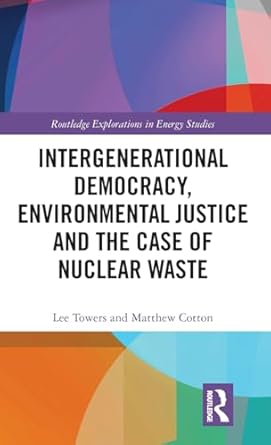
This book explores the interplay between intergenerational justice and intragenerational justice using nuclear waste management as a consistent case to explore these themes.
Lee Towers and Matthew Cotton examine the issue of intergenerational justice from a social scientific perspective, drawing on central case studies of nuclear waste management in Canada, Finland, and the United Kingdom. They connect indigenous philosophies and notions of justice with the concept of intergenerational democracy, advocating for better inclusion of youth and elders in decision-making that affects their well-being. As such, the book’s primary objectives are fourfold:
To assess whether trade-offs between intergenerational and intragenerational justice are necessary, and if so, what these trade-offs are and how they might be resolved.
To critically assess dominant western liberal philosophical approaches that shape contemporary intergenerational justice thinking in policy and practice, and consider alternatives drawn from anthropology and indigenous philosophies.
To assess how far our current capitalist system can achieve substantive forms of justice.
To critically examine three nuclear waste management case studies and assess how far these achieve environmental and energy justice and how they exemplify tensions between inter- and intragenerational justice.
This short, accessible volume will be of great interest to students and scholars of energy, environmental justice, and ethics.
| 등록번호 | 청구기호 | 권별정보 | 자료실 | 이용여부 |
|---|---|---|---|---|
| 0003192699 | LM 344.04622 -A25-1 | 서울관 법률정보센터(206호) | 이용가능 |

This book explores the interplay between intergenerational justice and intra-generational justice using nuclear waste management as a consistent case to explore these themes.
?
Lee Towers and Matthew Cotton examine the issue of intergenerational justice from a social scientific perspective, drawing on central case studies of nuclear waste management in Canada, Finland and the United Kingdom. They connect indigenous philosophies and notions of justice with the concept of intergenerational democracy, advocating for better inclusion of youth and elders in decision-making that effects their wellbeing. As such, the book’s primary objectives are fourfold:
? To assess whether trade-offs between intergenerational and intragenerational justice are necessary, and if so, what these trade-offs are and how they might be resolved.
? To critically assess dominant western liberal philosophical approaches that shape contemporary intergenerational justice thinking in policy and practice, and consider alternatives drawn from anthropology and indigenous philosophies.
? To assess how far our current capitalist system can achieve substantive forms of justice.
? To critically examine three nuclear waste management case studies and assess how far these achieve environmental and energy justice and how they exemplify tensions between inter and intragenerational justice.
?
This short, accessible volume will be of great interest to students and scholars of energy, environmental justice and ethics.
This book explores the interplay between intergenerational justice and intra-generational justice using nuclear waste management as a consistent case to explore these themes.
?
*표시는 필수 입력사항입니다.
| 전화번호 |
|---|
| 기사명 | 저자명 | 페이지 | 원문 | 기사목차 |
|---|
| 번호 | 발행일자 | 권호명 | 제본정보 | 자료실 | 원문 | 신청 페이지 |
|---|
도서위치안내: 법률정보센터(206호) / 서가번호: 5

우편복사 목록담기를 완료하였습니다.
*표시는 필수 입력사항입니다.
저장 되었습니다.
