본문 바로가기 주메뉴 바로가기
국회도서관 홈으로 정보검색 소장정보 검색

결과 내 검색

동의어 포함

목차보기


List of Contributors
List of Tables
Preface
Acknowledgement
Abbreviations and Keywords
1 Introduction: Future Food Landscape – Towards Sustainable Food Systems Through Innovations, Cultural Shifts, and Transformative Law
1.1 Introduction: Sustainable Food Systems as a Target and Duty for Humanity
1.2 The Contents of This Book
1.3 Conclusion
2 From Colonialism to the Commodification of Food: The Criticality of a Globalised Food System
2.1 Introduction
2.2 Colonialism, Capitalism, and Commodification of Food
2.3 Food as the Colonising Force in the Past and the Present
2.4 Capitalism and the Commodification of Food
2.5 Management of Natural Resources
2.6 Criticalities of the Current Food Systems and the Call for Sustainable Food Systems Governance
2.6.1 Health Sustainability
2.6.2 Social Sustainability
2.6.3 Environmental Sustainability
2.7 Conclusion
3 The Role of Regenerative Agricultural Practices in Balancing Food Security Concerns and Natural Resources Management
3.1 Introduction
3.2 Food at the Centre of Sustainable Development Goals (SDGs)
3.3 Importance of Food Systems and SDGs
3.4 Balancing Food Security Concerns with Fair Natural Resource Management
3.5 Agroforestry to Reconcile Conservation with Social and Economic Benefits
3.5.1 Chestnut Groves as An Excellent Example
3.6 Conclusion
4 The Human-Food-Environmental Nexus: Anthropological Perspectives on the Impact of Human Food Choices Through Time
4.1 Introduction
4.2 In Brief: The Impact of Human Food Choice on the Present
4.3 The Impact of Human Food Choice on Past Environments
4.3.1 Food Production as a Driver of Past Climate Change
4.4 Archaeological and Historical Case Studies
4.4.1 Australia and the Introduction of Sheep
4.4.2 Cattle Grazing in the Americas
4.4.3 Cereal Agriculture in the Near East and Mediterranean
4.5 Conclusion: Drawing on the Past to Change the Future
4.5.1 Cultural Change as a Way Forward
5 Post-COVID Future: Living and Managing Life After COVID From Food Security Perspective
5.1 Introduction: Food as a Necessity
5.2 Traditional Food Cultures
5.3 Globalisation and Industrialisation: A Threat to Regional and Traditional Cuisines
5.4 Impacts of COVID-19: Food Supply Chain Disruptions
5.5 Future Policies for More Resilient Food Systems
5.6 Conclusion
6 Alternative Protein Products and the Legal Rules on Novel Foods: A Global Comparison
6.1 Introduction
6.2 Novel Food Legislation Across the World with Alternative Protein Cases
6.2.1 European Union
6.2.2 United States
6.2.3 Australia
6.2.4 Singapore
6.3 Conclusions and Discussion
7 Health Claims and Their Regulation: Comparing Australia and Europe
7.1 Introduction
7.2 Medicalisation of Health Claims Escapes Regulation
7.3 The Dilemma in Classifying Functional Foods as Medicinal
7.4 Codex Alimentarius 1997 Guidelines on Nutrition and Health Claims
7.4.1 Requirements in Codex Alimentarius
7.5 Regulation of Health Claims in Functional Food
7.5.1 Australia’s Regulation of Health Claims
7.5.2 European Union Regulations on Health Claims
7.6 Critical Appraisal of the Australian System and the European Union
7.7 Towards Better Regulatory Control in Australia
7.8 Way Forward for the European Union
7.9 Commentary
7.10 Conclusion
8 Enriching Environmental Law and Improving Food Security Through an Innovative Interpretation of Human and Natural Rights
8.1 Introduction
8.2 What Does Granting Rights to Nature Mean?
8.3 Human Rights-Based Approach and Legal Rights to Nature
8.4 The Birth of Rights to Nature
8.5 Legal and Cultural Prerequisites
8.6 Transitioning from Food as Commodity to Food as Common Good: Legal Instruments and Policies
8.7 Conclusion
9 Intellectual Property Supporting a Green Framework for Sustainability
9.1 Introduction
9.2 Food Security
9.2.1 The Role of the Sustainable Agriculture Sector on Food Security
9.2.2 Agricultural Sustainability Challenges
9.2.3 Role of R&D in the Agriculture Sector
9.3 The University – R&D in Innovation and Technology Accessibility
9.4 Intellectual Property Rights as a Mechanism for Knowledge Flow
9.4.1 Diverse Perspective on Intellectual Property Rights’ Effect
9.4.2 Weak Intellectual Property Protection System
9.5 Green IP Boost R&D in Different Intellectual Property Systems
9.6 Conclusion
10 Corporate Social Responsibility and Embedded Sustainable Business Practices
10.1 Introduction
10.2 Corporate Social Responsibility in Perspective
10.3 Corporate Social Responsibility Globally
10.4 Does Corporate Social Responsibility Matter
10.5 Evidence Suggesting the Adoption of a Corporate Social Responsibility Approach is Gaining Momentum
10.6 Is There a Need for the Adoption of Mandatory Reporting of Aspects of Corporate Social Responsibility, including the Australian Position
10.7 Conclusion
11 Eradicating Malnutrition: Capacity to Access Nutritious Food
11.1 Introduction
11.2 Nutritious Food, Malnutrition, and Capability Approach
11.2.1 Nutritious Food
11.2.2 Malnutrition
11.2.3 Capability Approach
11.3 Capability Approach Towards Access to Nutritious Food
11.3.1 Poverty – An Absolute Capability Failure for Nutritious Food?
11.3.2 Education – A Basic Capability to Access Nutritious Foods?
11.3.3 Health as a Basic Capability – Need for Bifurcation?
11.4 Access to Nutritious Food – A Basic Capability
11.5 Conclusion
12 Future Food and Islam: A Perspective From Malaysia
12.1 Introduction
12.2 The Intersection Between Future Food and Islam
12.3 General Principles of Permissibility and Non-Permissibility Under Shariah
12.4 Specific Reasons of Permissibility and Non-Permissibility
12.5 Halal Certification in Malaysia: Process and Regulations
12.6 Understanding the Concept of Halal Certification in Malaysia
12.6.1 Halal Certification Challenges
12.7 The Impact of Halal Certification on the Economy and Trade
12.8 Regulatory Framework for Halal Certification in Malaysia
12.9 Thoughts on Future Food: Halal Considerations
12.10 Addressing Food Scarcity: A Muslim Challenge
12.11 Conclusion – Malaysia’s Stance on Future Foods and Islam
Index

이용현황보기

The changing food law landscape : food security, sustainability, and the environment 이용현황 표 - 등록번호, 청구기호, 권별정보, 자료실, 이용여부로 구성 되어있습니다.
등록번호 청구기호 권별정보 자료실 이용여부
0003195058 LM 344.033 -A25-1 서울관 법률정보센터(206호) 북큐레이션
(자료실내 이용)

출판사 책소개

알라딘제공

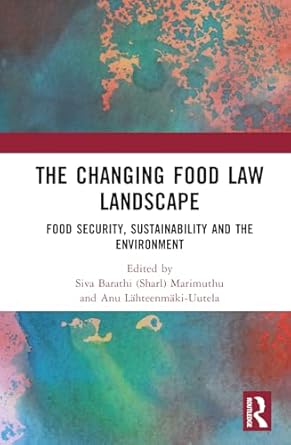
This book analyses the current debates within food system governance, covering different aspects of food systems (from production to consumption) as well as different fields of law (from human rights law to environmental law). Recognizing that the law, in interacting with multiple disciplines, plays a major role in setting binding targets for sustainable innovation and business transformation, it brings together contributors from a wide range of professions, including agriculture, law, and business to examine the dimensions of food systems and the challenges in transforming them.

The contributors to this book examine some of the most significant aspects of food law and regulation, including the effects of global warming, intellectual property rights, and human rights, as well as local and international viewpoints on food safety, information sharing, and systems transformation. They consider the history and present challenges of food production, the different approaches to addressing the issues faced, and the factors of human biology, psychology, cultural norms and religion that shape our food environments. The analysis of knowledge, values and institutions provides a holistic analysis of human food systems. Topics such as regenerative agriculture, novel and alternative foods, and health-enhancing foods are also covered.

With its interdisciplinary approach, this book will interest researchers in agricultural law, food policy, environmental law, transdisciplinary food studies, and food science.


The contributors to this book examine some of the most significant aspects of food law and regulation, including the effects of global warming, intellectual property rights, and human rights, as well as local and international viewpoints on food safety, information sharing, and systems transformation.


