
 대표어
대표어
권호기사보기
| 기사명 | 저자명 | 페이지 | 원문 | 기사목차 |
|---|
결과 내 검색
동의어 포함
| 등록번호 | 청구기호 | 권별정보 | 자료실 | 이용여부 |
|---|---|---|---|---|
| 0003199517 | LM 344.046 -A25-12 | 서울관 법률정보센터(206호) | 이용가능 |

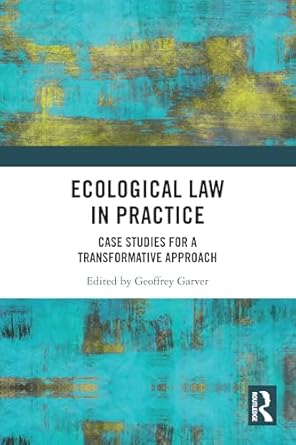
This book presents a series of "ecological law" case studies, designed to illustrate in concrete, real-world ways how ecological law would transform law in a range of diverse contexts.
Ecological law is an emerging, and currently mostly theoretical, discipline grounded in the need to shift away from anthropocentric legal systems, which aim to promote economic growth using strong protections of private property regimes and state sovereignty, to ecological approaches, which emphasize ecocentrism, the primacy of ecological limits, and intragenerational, intergenerational, and interspecies fairness and justice. The ecological law case studies presented in this book apply the theoretical principles and concepts of ecological law to diverse real-world situations or activities in several countries and contexts. Taking up a range of examples from Brazil, Canada, Germany, Mexico, Nigeria, the United States, and internationally, the book demonstrates the concrete relevance of ecological law to contemporary sustainability challenges, as it reveals pathways for overcoming real-world challenges in the implementation and public acceptance of ecological law.
This book will appeal to researchers, scholars, and policy makers working in the area of environmental law and governance, as well as others with relevant interests in sociolegal studies, human geography, political science, and environmental studies.
This book presents a series of ‘ecological law’ case studies, designed to illustrate in concrete, real-world ways how ecological law would transform law in a range of diverse contexts.
*표시는 필수 입력사항입니다.
| 전화번호 |
|---|
| 기사명 | 저자명 | 페이지 | 원문 | 기사목차 |
|---|
| 번호 | 발행일자 | 권호명 | 제본정보 | 자료실 | 원문 | 신청 페이지 |
|---|
도서위치안내: 법률정보센터(206호) / 서가번호: 5

우편복사 목록담기를 완료하였습니다.
*표시는 필수 입력사항입니다.
저장 되었습니다.
