
 대표어
대표어
권호기사보기
| 기사명 | 저자명 | 페이지 | 원문 | 기사목차 |
|---|
결과 내 검색
동의어 포함
| 등록번호 | 청구기호 | 권별정보 | 자료실 | 이용여부 |
|---|---|---|---|---|
| 0003221844 | 179.9 -A25-6 | 서울관 인문자연과학자료실(314호) | 이용가능 |

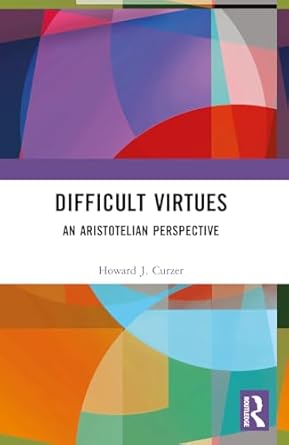
In this book, Howard J. Curzer describes eight virtues that have proven problematic to virtue ethicists.?Integrity?has been the subject of wildly different accounts.?Open-mindedness?and?forgiveness?are described in ways that many endorse, but few seek to practice. Accounts of?tolerance?and?civility?generally fit only the privileged. Finally,?good timing,?ambition, and?creativity?have attracted almost no attention at all. Curzer offers novel, plausible accounts of all of these eight difficult virtues, and demonstrates that they possess the standard features of Aristotelian virtues (for example, conformity to the Doctrine of the Mean). This enlarges the scope of Aristotelian virtue ethics by enabling it to cover eight additional spheres of human life.
Using these difficult virtues as springboards and extrapolating from some of Aristotle’s remarks, Curzer codifies some standard features of Aristotelian virtues, and speculatively suggests additional features to enhance the descriptive and prescriptive power of Aristotelian virtue ethics. Thus, Curzer adds to the standard list of Aristotelian virtues, and to the standard list of features that make virtues Aristotelian.
Each difficult virtue is different, but certain themes thread through all of them: self-construction, social critique, and significant creation. Curzer’s accounts of these virtues illuminate the ways people forge their own identities, struggle to acquire virtue despite disadvantage, and produce and appreciate novelty.
This book describes 8 virtues that have proven problematic to virtue ethicists. Curzer offers novel?accounts of all?8?difficult virtues, and demonstrates that they possess the standard features of Aristotelian virtues.
*표시는 필수 입력사항입니다.
| 전화번호 |
|---|
| 기사명 | 저자명 | 페이지 | 원문 | 기사목차 |
|---|
| 번호 | 발행일자 | 권호명 | 제본정보 | 자료실 | 원문 | 신청 페이지 |
|---|
도서위치안내: 인문자연과학자료실(314호) / 서가번호: 42

우편복사 목록담기를 완료하였습니다.
*표시는 필수 입력사항입니다.
저장 되었습니다.
