Abbreviations vi A Note on Naming Missiles vii Introduction 1 CHAPTER ONE The Post-Cold War Years: A New Era of Conflict 65 CHAPTER TWO The George W. Bush Years: Deterring an Invasion and Becoming a Nuclear Weapons State 115 CHAPTER THREE The Barack Obama Years: A New Phase of Conflict 157 CHAPTER FOUR The Obama Administration on the Offensive 191 CHAPTER FIVE Fire and Fury: The Military Standoff That Ended an Era 225 CHAPTER SIX North Korea Wins: Coming to Terms with a New Status Quo 284 CHAPTER SEVEN The Second Cold War: A New Era For North Korea 347 CHAPTER EIGHT Future Trajectories in the U.S.-DPRK Conflict 385 Index 418
이용현황보기
Surviving the Unipolar Era : North Korea's 35-year standoff with the United States 이용현황 표 - 등록번호, 청구기호, 권별정보, 자료실, 이용여부로 구성 되어있습니다.
등록번호
청구기호
권별정보
자료실
이용여부
0003239158
327.7305171 -A25-1
서울관 사회과학자료실(208호)
이용가능
출판사 책소개
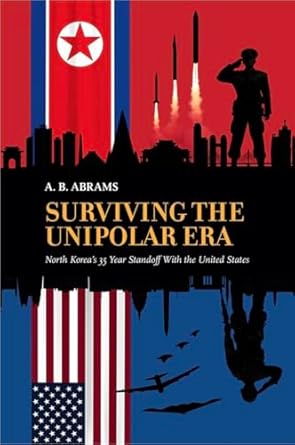
On June 29, 1950, the U.S. launched its first ever air strikes on the North Korean capital, Pyongyang, marking the start of what would become the longest conflict in history between two industrial powers. Four decades later, the end of the Cold War in 1989 and the disintegration of the Soviet Union in 1991 marked the beginning of a new phase of the conflict, with a new unipolar world order centered on the power of the U.S. and Western world leaving North Korea in unprecedented isolation. Now unsupported in its fight against a Western superpower intent on its destruction, the small but technologically adept and heavily militarized East Asian state would need to adopt more radical measures to ensure its security. Over the next 35 years, the conflict would transform from a period of North Korean decline in the face of tremendous economic and military pressure, to one of an ascent in its power and decline in the West as international order evolved past the unipolar era
Surviving the Unipolar Era elucidates the conflict's transformation, beginning with unprecedented U.S.-led efforts to achieve North Korea's total collapse and elimination through maximum pressure, and ending three decades later with a subsiding of Pyongyang's international isolation and the modernization of its economy, armed forces and nuclear deterrent. A. B. Abrams highlights how the small state has been able to hold its own in multiple standoffs with the world's superpower, successfully weather economic sanctions, and prevent penetration of its information space, and the implications that this has had for the country, the region and the wider world. He details the strong consistency in American objectives, and the evolution of consensus across five separate administrations on how these should be pursued as the circumstances of the conflict transformed. In the context of prevailing geopolitical, economic and security trends, Abrams projects the future course of the conflict including aspects such as Western difficulties coming to terms with North Korea's ascent, U.S. policy priorities going forward, and the growing opportunities that an emerging new global cold war is likely to provide Pyongyang.

 대표어
대표어