

 대표어
권호기사보기
| 기사명 | 저자명 | 페이지 | 원문 | 기사목차 |
|---|
결과 내 검색
동의어 포함
| 등록번호 | 청구기호 | 권별정보 | 자료실 | 이용여부 |
|---|---|---|---|---|
| 0003246163 | 306.2 -A25-16 | 서울관 사회과학자료실(208호) | 이용가능 |

Societies that ignore social disintegration and collapsing birth rates are putting their future in peril. So why are we ignoring the signs?
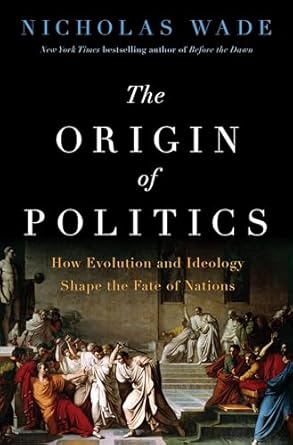
?In The Origin Of Politics, Nicholas Wade explains how our political systems compete with a more ancient set of rules for organizing society--those developed by evolution. Modern ideologies are in constant tension with structures inherent in human social behavior, such as the family, the tribe, and male-dominated institutions.
This tension plays out in various ways. Sometimes nature prevails over politics, as in the proposal by Marx and Engels to eliminate the family, the basic unit of society. The founders of the kibbutz movement put this radical idea into practice, only to find that the conflict with human nature was unsustainable. In other cases, culture has successfully modified evolutionary behaviors, replacing polygamy with monogamy and dissolving the bonds of tribalism to make way for modern states.
But the evolutionary framework of human societies is not infinitely flexible. The nation-state, especially in the case of the United States, is prone to disintegration if disruptive ideologies are allowed to undermine the cohesive affinities that hold its disparate cultures together.
The worldwide decline in fertility in most countries except those in Africa signals a severe derangement in the behaviors evolution has devised for ensuring that a population will maintain itself. If the causes of this disruption cannot be understood and reversed, human societies will embark on an unsought path to extinction.
Other fraught issues in which human biology and politics conflict include the innate specializations of the sexes, the stratification of society by ability, and the mismatch between the inequalities of wealth-creating societies and the egalitarian ethic inherited from our hunter-gatherer ancestors.
We live in an iridescent bubble, the intoxicating richness of modern culture. Shielded from the natural world, we have lost our awareness of the evolutionary forces that still guide our motivations and shape the foundations of our societies. The Origin of Politics explores the risks of underestimating evolution's fundamental role in human affairs.
Why do modern political systems so often fail when they conflict with the ancient blueprints of our own biology?
*표시는 필수 입력사항입니다.
| 전화번호 |
|---|
| 기사명 | 저자명 | 페이지 | 원문 | 기사목차 |
|---|
| 번호 | 발행일자 | 권호명 | 제본정보 | 자료실 | 원문 | 신청 페이지 |
|---|
도서위치안내: 사회과학자료실(208호) / 서가번호: 35

우편복사 목록담기를 완료하였습니다.
*표시는 필수 입력사항입니다.
저장 되었습니다.
