List of Figures List of Tables Preface Acknowledgments 1 The Promise of Judicial Review 2 Theorizing Judicial Efficacy 3 How, When, and Where to Evaluate Judicial Efficacy 4 Measuring Public Support for the Rule of Law 5 How Judicial Independence Facilitates State Constrain 6 Citizens' Convictions and Judicial Review 7 Judicial Review Amid Partisan Publics 8 Do Partisan Litigants Weaken Jucicial Efficacy? 9 The Prospects of Judicial Review References Index
이용현황보기
The efficacy of judicial review : the rule of law and the promise of independent courts 이용현황 표 - 등록번호, 청구기호, 권별정보, 자료실, 이용여부로 구성 되어있습니다.
등록번호
청구기호
권별정보
자료실
이용여부
0003251411
LM 347.012 -A25-5
서울관 법률정보센터(206호)
이용가능
출판사 책소개
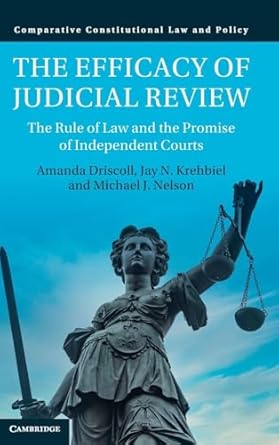
Over the past century, countries around the globe have empowered constitutional courts to safeguard the rule of law. But when can courts effectively perform this vital task? Drawing upon a series of survey experiments fielded in the United States, Germany, Hungary, and Poland, this book demonstrates that judicial independence is critical for judicial efficacy. Independent courts can empower citizens to punish executives who flout the bounds of constitutional rule; weak courts are unable to generate public costs for transgressing the law. Although judicial efficacy is neither universal nor automatic, courts - so long as they are viewed by the public as independent - can provide an effective check on executives and promote the rule of law.

 대표어
대표어