
 대표어
대표어
 https://iris.who.int/items/76bc7195-692f-4b50-bbd0-74c7c0a4ecdb
권호기사보기
| 기사명 | 저자명 | 페이지 | 원문 | 기사목차 |
|---|
결과 내 검색
동의어 포함
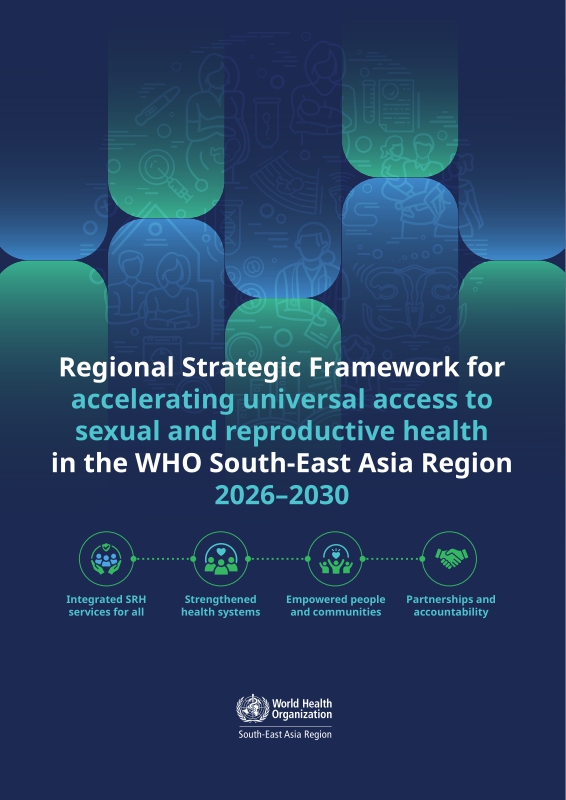
Title page 1
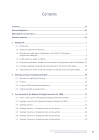
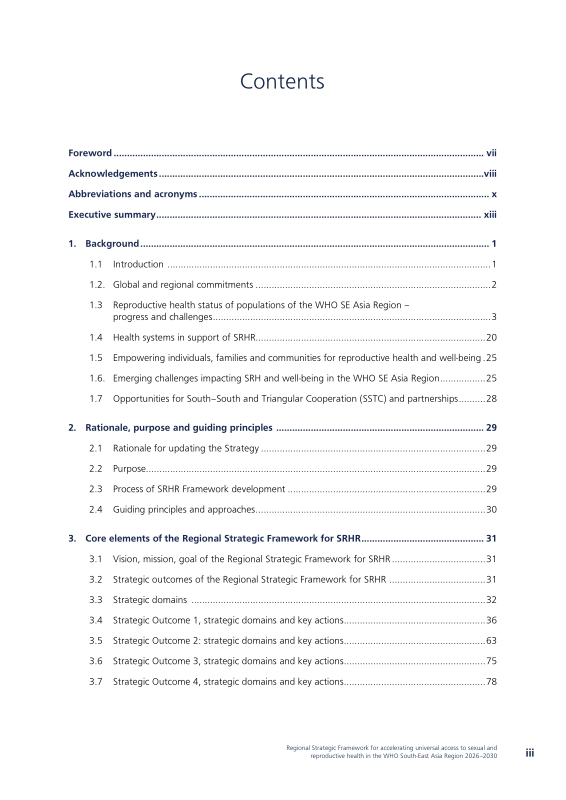
Contents 4
Foreword 7
Acknowledgements 8
Abbreviations and acronyms 10
Executive summary 13
1. Background 16
1.1. Introduction 16
1.2. Global and regional commitments 17
1.3. Reproductive health status of populations of the WHO SE Asia Region - progress and challenges 18
1.3.1. Maternal and perinatal health and well-being 19
1.3.2. Family planning 26
1.3.3. Infertility 28
1.3.4. Abortion 30
1.3.5. Reproductive tract cancers 30
1.3.6. Intimate partner violence and sexual violence 32
1.3.7. HIV/STI linkages to SRHR 32
1.3.8. Adolescent sexual and reproductive health and well-being 33
1.3.9. SRH needs of ageing population including those in late reproductive years 34
1.3.10. SRH needs of persons with disability 34
1.3.11. SRH needs of populations in urban slums and remote and hard-to-reach areas 34
1.3.12. SRHR in emergencies 35
1.4. Health systems in support of SRHR 35
1.4.1. Health system leadership/governance for SRHR 36
1.4.2. Human resources for SRHR 36
1.4.3. Health service delivery for SRH 37
1.4.4. Health management information system for SRH 39
1.4.5. Health financing 39
1.4.6. Medical products, vaccines and technologies for SRH 39
1.4.7. Universal Health Coverage 39
1.5. Empowering individuals, families and communities for reproductive health and well-being 40
1.5.1. Self-care 40
1.6. Emerging challenges impacting SRH and well-being in the WHO SE Asia Region 40
1.6.1. Declining fertility rates 40
1.6.2. Rising burden of NCDs among women of reproductive age 41
1.6.3. Increasing innovations related to digital health and artificial intelligence (AI) in SRH 42
1.6.4. Impact of climate change on SRHR 42
1.7. Opportunities for South-South and Triangular Cooperation (SSTC) and partnerships 43
2. Rationale, purpose and guiding principles 44
2.1. Rationale for updating the Strategy 44
2.2. Purpose 44
2.3. Process of SRHR Framework development 44
2.4. Guiding principles and approaches 45
3. Core elements of the Regional Strategic Framework for SRHR 46
3.1. Vision, mission, goal of the Regional Strategic Framework for SRHR 46
3.2. Strategic outcomes of the Regional Strategic Framework for SRHR 46
3.3. Strategic domains 47
3.4. Strategic Outcome 1, strategic domains and key actions 51
3.4.1. Maternal and perinatal health and well-being 52
3.4.2. Family planning 63
3.4.3. Prevention and management of infertility 65
3.4.4. Availability and access to Comprehensive Abortion Care (CAC) 66
3.4.5. Reproductive organ cancers 67
3.4.6. Health sector response to intimate partner violence (IPV) and sexual violence 69
3.4.7. Integrated SRH, HIV And STI services and elimination of mother-to-child transmission (EMTCT) Of HIV, syphilis and hepatitis B 70
3.4.8. Adolescent sexual and reproductive health services 71
3.4.9. SRH services for the ageing population and women in later reproductive life 72
3.4.10. SRH services for persons with disability 73
3.4.11. SRH services for urban slums and hard-to-reach populations 74
3.4.12. Climate-resilient SRH systems 75
3.4.13. SRH services during emergencies 76
3.5. Strategic Outcome 2: strategic domains and key actions 78
3.5.1. Leadership/governance (stewardship) 78
3.5.2. Human resources for health (HRH) 80
3.5.3. Health-care service delivery 82
3.5.4. Health Management Information System (HMIS) 86
3.5.5. Health Financing 87
3.5.6. Medical products, vaccines and technologies 88
3.6. Strategic Outcome 3, strategic domains and key actions 90
3.6.1. Engaging and empowering individuals and families for SRHR and well-being 90
3.6.2. Engaging and Empowering communities for SRHR 90
3.6.3. Promotion of self-care for SRHR and well-being 91
3.6.4. Improving male involvement and engagement for SRHR 92
3.7. Strategic Outcome 4, strategic domains and key actions 93
3.7.1. Harnessing knowledge and experience to strengthen collaboration within and beyond the region through South-South and Triangular... 93
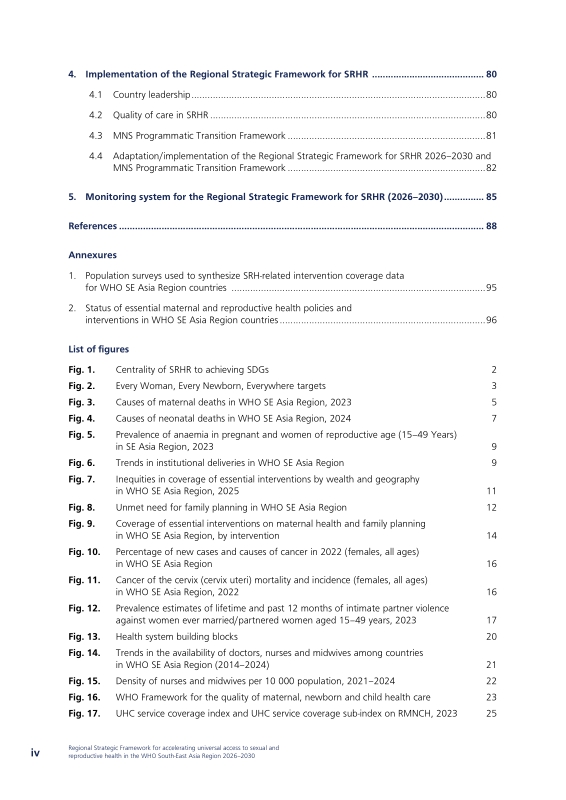
4. Implementation of the Regional Strategic Framework for SRHR 95
4.1. Country leadership 95
4.2. Quality of care in SRHR 95
4.3. MNS Programmatic Transition Framework 96
4.4. Adaptation/implementation of the Regional Strategic Framework for SRHR 2026-2030 and MNS Programmatic Transition Framework 97
4.4.1. Steps in adapting and implementing the Regional Strategic Framework for SRHR (2026-2030) 98
5. Monitoring system for the Regional Strategic Framework for SRHR (2026-2030) 100
References 103
Annex 1. Population surveys used to synthesize SRH-related intervention coverage data for WHO SE Asia Region countries 110
Annex 2. Status of essential maternal and reproductive health policies and interventions in WHO SE Asia Region countries 111
Fig. 1. Centrality of SRHR to achieving SDGs 17
Fig. 2. Every Woman, Every Newborn, Everywhere targets 18
Fig. 3. Causes of maternal deaths in WHO SE Asia Region, 2023 20
Fig. 4. Causes of neonatal deaths in WHO SE Asia Region, 2024 22
Fig. 5. Prevalence of anaemia in pregnant and women of reproductive age (15-49 Years) in SE Asia Region, 2023 24
Fig. 6. Trends in institutional deliveries in WHO SE Asia Region 24
Fig. 7. Inequities in coverage of essential interventions by wealth and geography in WHO SE Asia Region, 2025 26
Fig. 8. Unmet need for family planning in WHO SE Asia Region 27
Fig. 9. Coverage of essential interventions on maternal health and family planning in WHO SE Asia Region, by intervention 29
Fig. 10. Percentage of new cases and causes of cancer in 2022 (females, all ages) in WHO SE Asia Region 31
Fig. 11. Cancer of the cervix (cervix uteri) mortality and incidence (females, all ages) in WHO SE Asia Region, 2022 31
Fig. 12. Prevalence estimates of lifetime and past 12 months of intimate partner violence against women ever married/partnered women aged 15-49 years, 2023 32
Fig. 13. Health system building blocks 35
Fig. 14. Trends in the availability of doctors, nurses and midwives among countries in WHO SE Asia Region (2014-2024) 36
Fig. 15. Density of nurses and midwives per 10 000 population, 2021-2024 37
Fig. 16. WHO Framework for the quality of maternal, newborn and child health care 38
Fig. 17. UHC service coverage index and UHC service coverage sub-index on RMNCH, 2023 40
Fig. 18. Total fertility rates among Member States of WHO SE Asia Region 41
Fig. 19. Prevalence rates of selected NCDs and risk factors for NCDs in WHO SE Asia Region 42
Fig. 20. Impacts of climate change across the life stages 43
Fig. 21. Outcomes and key strategic domains 49
Fig. 22. Maternal well-being concepts 52
Fig. 23. MNS Programmatic Transition Framework 96
Fig. 24. Programme planning and management cycle 97
Figure 2.1. Coverage of essential interventions on maternal health and family planning in the WHO SE Asia Region - by country 113
*표시는 필수 입력사항입니다.
| 전화번호 |
|---|
| 기사명 | 저자명 | 페이지 | 원문 | 기사목차 |
|---|
| 번호 | 발행일자 | 권호명 | 제본정보 | 자료실 | 원문 | 신청 페이지 |
|---|
도서위치안내: / 서가번호:

우편복사 목록담기를 완료하였습니다.
*표시는 필수 입력사항입니다.
저장 되었습니다.
