
 대표어
대표어
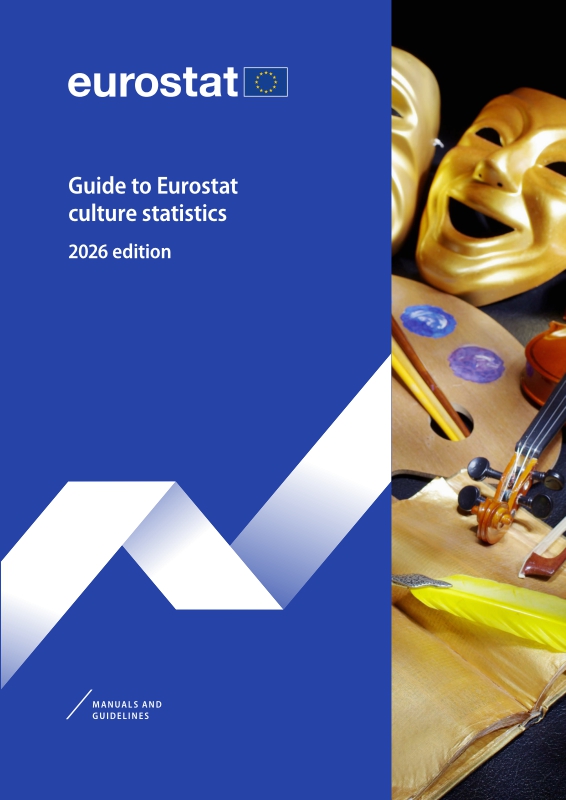
 https://op.europa.eu/en/publication-detail/-/publication/18f7d9d8-9aaa-11f1-9262-01aa75ed71a1/language-en?WT.mc_id=Selectedpublications&WT.ria_c=41957&WT.ria_f=6415&WT.ria_ev=search
권호기사보기
| 기사명 | 저자명 | 페이지 | 원문 | 기사목차 |
|---|
결과 내 검색
동의어 포함
Title page 1
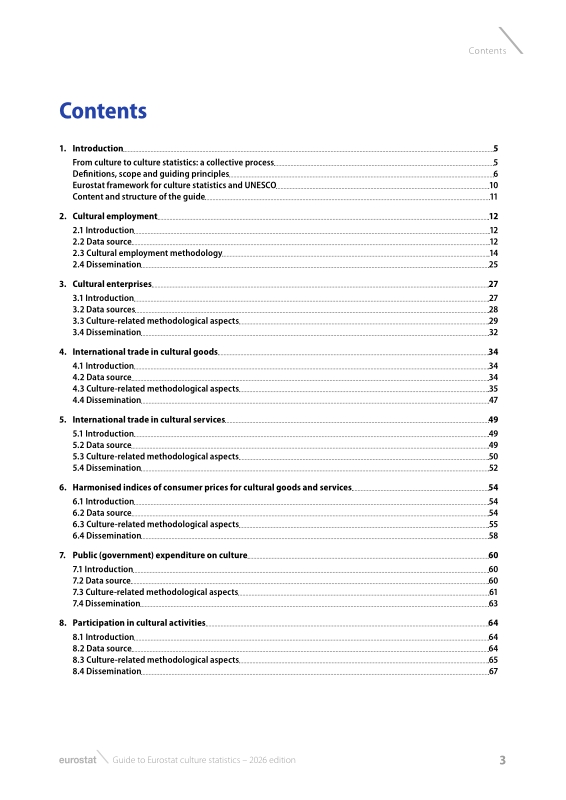
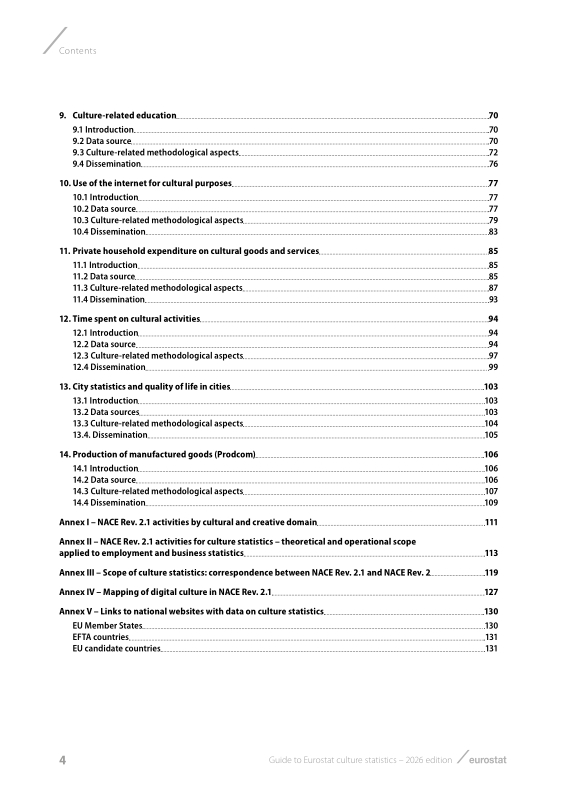
Contents 4
1. Introduction 6
From culture to culture statistics: a collective process 6
Definitions, scope and guiding principles 7
Eurostat framework for culture statistics and UNESCO 11
Content and structure of the guide 12
2. Cultural employment 13
2.1. Introduction 13
2.2. Data source 13
2.3. Cultural employment methodology 15
2.3.1. Coverage 15
2.3.2. Data processing for cultural indicators 15
2.3.3. Limitations and specific issues 24
2.4. Dissemination 26
3. Cultural enterprises 28
3.1. Introduction 28
3.2. Data sources 29
3.3. Culture-related methodological aspects 30
3.3.1. Coverage of culture 30
3.3.2. Data processing for cultural indicators 33
3.3.3. Limitations and specific issues 33
3.4. Dissemination 33
4. International trade in cultural goods 35
4.1. Introduction 35
4.2. Data source 35
4.3. Culture-related methodological aspects 36
4.3.1. Coverage of culture 36
4.3.2. Data processing for cultural indicators 47
4.3.3. Limitations and specific issues 47
4.4. Dissemination 48
5. International trade in cultural services 50
5.1. Introduction 50
5.2. Data source 50
5.3. Culture-related methodological aspects 51
5.3.1. Coverage of culture 51
5.3.2. Data processing for cultural indicators 53
5.3.3. Limitations and specific issues 53
5.4. Dissemination 53
6. Harmonised indices of consumer prices for cultural goods and services 55
6.1. Introduction 55
6.2. Data source 55
6.3. Culture-related methodological aspects 56
6.3.1. Coverage of culture 56
6.3.2. Data processing for cultural indicators 59
6.3.3. Limitations and specific issues 59
6.4. Dissemination 59
7. Public (government) expenditure on culture 61
7.1. Introduction 61
7.2. Data source 61
7.3. Culture-related methodological aspects 62
7.3.1. Coverage of culture 62
7.3.2. Data processing for cultural indicators 63
7.3.3. Limitations and specific issues 63
7.4. Dissemination 64
8. Participation in cultural activities 65
8.1. Introduction 65
8.2. Data source 65
8.3. Culture-related methodological aspects 66
8.3.1. Coverage of culture 66
8.3.2. Data processing for cultural indicators 67
8.3.3. Limitations and specific issues 67
8.4. Dissemination 68
9. Culture-related education 71
9.1. Introduction 71
9.2. Data source 71
9.3. Culture-related methodological aspects 73
9.3.1. Coverage of culture 73
9.3.2. Data processing for cultural indicators 76
9.3.3. Limitations and specific issues 76
9.4. Dissemination 77
10. Use of the internet for cultural purposes 78
10.1. Introduction 78
10.2. Data source 78
10.3. Culture-related methodological aspects 80
10.3.1. Coverage of culture 80
10.3.2. Data processing for cultural indicators 84
10.3.3. Limitations and specific issues 84
10.4. Dissemination 84
11. Private household expenditure on cultural goods and services 86
11.1. Introduction 86
11.2. Data source 86
11.3. Culture-related methodological aspects 88
11.3.1. Coverage 88
11.3.2. Data processing for cultural indicators 93
11.3.3. Limitations and specific issues 93
11.4. Dissemination 94
12. Time spent on cultural activities 95
12.1. Introduction 95
12.2. Data source 95
12.3. Culture-related methodological aspects 98
12.3.1. Coverage of culture 98
12.3.2. Data processing for cultural indicators 100
12.3.3. Limitations and specific issues 100
12.4. Dissemination 100
13. City statistics and quality of life in cities 104
13.1. Introduction 104
13.2. Data sources 104
13.3. Culture-related methodological aspects 105
13.3.1. Coverage of culture 105
13.3.2. Data processing and dissemination 106
13.3.3. Limitations and specific issues 106
13.4. Dissemination 106
14. Production of manufactured goods (Prodcom) 107
14.1. Introduction 107
14.2. Data source 107
14.3. Culture-related methodological aspects 108
14.3.1. Coverage of culture 108
14.3.2. Data processing and dissemination 110
14.3.3. Limitations and specific issues 110
14.4. Dissemination 110
Annex I. NACE Rev. 2.1 activities by cultural and creative domain 112
Annex II. NACE Rev. 2.1 activities for culture statistics theoretical and operational scope applied to employment and business statistics 114
Annex III. Scope of culture statistics: correspondence between NACE Rev. 2.1 and NACE Rev. 2 120
Annex IV. Mapping of digital culture in NACE Rev. 2.1 128
Annex V. Links to national websites with data on culture statistics 131
EU Member States 131
EFTA countries 132
EU candidate countries 132
Figure 4.1. Aggregated level of cultural goods, presented by cultural domain 38
*표시는 필수 입력사항입니다.
| 전화번호 |
|---|
| 기사명 | 저자명 | 페이지 | 원문 | 기사목차 |
|---|
| 번호 | 발행일자 | 권호명 | 제본정보 | 자료실 | 원문 | 신청 페이지 |
|---|
도서위치안내: / 서가번호:

우편복사 목록담기를 완료하였습니다.
*표시는 필수 입력사항입니다.
저장 되었습니다.
