
 대표어
대표어
 https://iris.who.int/items/775ea82a-6863-4767-b82d-5d8f04379ce3
권호기사보기
| 기사명 | 저자명 | 페이지 | 원문 | 기사목차 |
|---|
결과 내 검색
동의어 포함
Title page 1
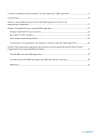
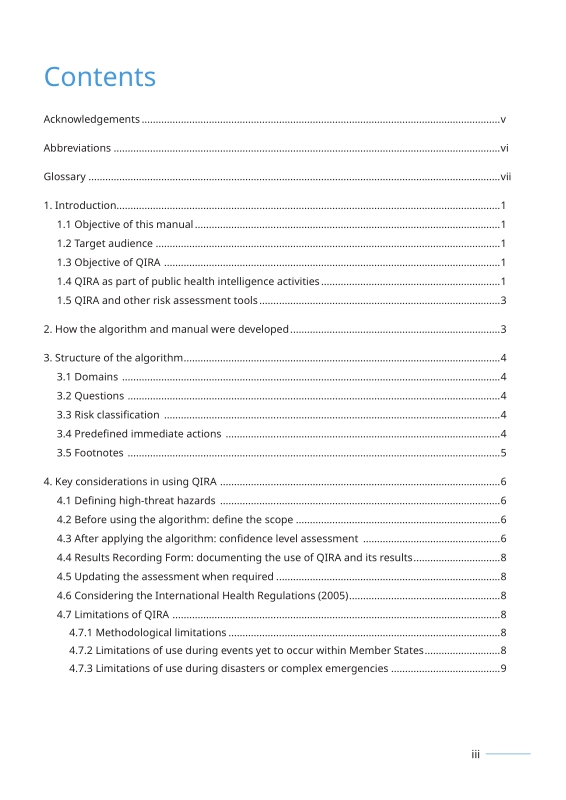
Contents 4
Acknowledgements 6
Abbreviations 7
Glossary 8
1. Introduction 11
1.1. Objective of this manual 11
1.2. Target audience 11
1.3. Objective of QIRA 11
1.4. QIRA as part of public health intelligence activities 11
1.5. QIRA and other risk assessment tools 13
2. How the algorithm and manual were developed 13
3. Structure of the algorithm 14
3.1. Domains 14
3.2. Questions 14
3.3. Risk classification 14
3.4. Predefined immediate actions 14
3.5. Footnotes 15
4. Key considerations in using QIRA 16
4.1. Defining high-threat hazards 16
4.2. Before using the algorithm: define the scope 16
4.3. After applying the algorithm: confidence level assessment 16
4.4. Results Recording Form: documenting the use of QIRA and its results 18
4.5. Updating the assessment when required 18
4.6. Considering the International Health Regulations (2005) 18
4.7. Limitations of QIRA 18
4.7.1. Methodological limitations 18
4.7.2. Limitations of use during events yet to occur within Member States 18
4.7.3. Limitations of use during disasters or complex emergencies 19
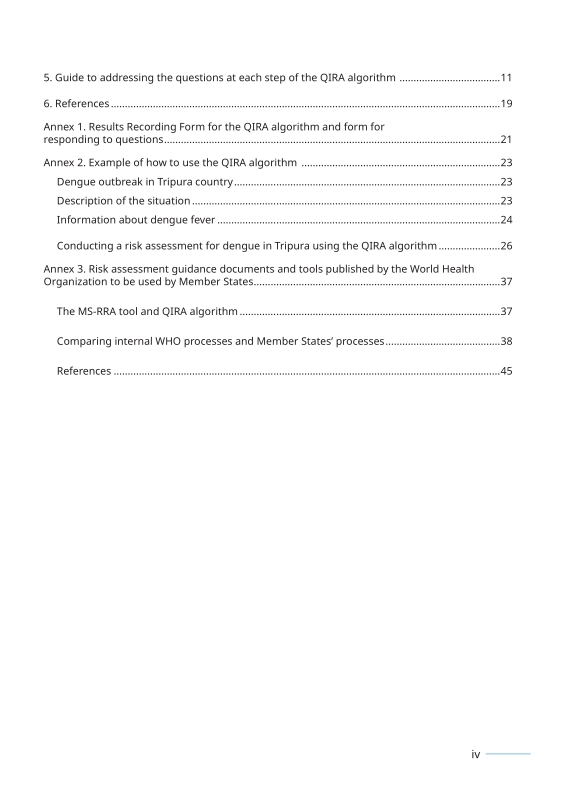
5. Guide to addressing the questions at each step of the QIRA algorithm 21
6. References 29
Annex 1. Results Recording Form for the QIRA algorithm and form for responding to questions 31
Annex 2. Example of how to use the QIRA algorithm 33
Dengue outbreak in Tripura country 33
Description of the situation 33
Information about dengue fever 34
Conducting a risk assessment for dengue in Tripura using the QIRA algorithm 36
Annex 3. Risk assessment guidance documents and tools published by the World Health Organization to be used by Member States 47
The MS-RRA tool and QIRA algorithm 47
Comparing internal WHO processes and Member States' processes 48
References 55
Fig. 1. Immediate and formal rapid risk assessments in the public health intelligence workflow 13
Fig. 2. Quick and Immediate Risk Assessment (QIRA) algorithm for potential adaptation for use in Member States or other areas 20
Fig. A2.1/Fig. A2.2. QIRA algorithm pathway for assessment of the dengue outbreak in Tripura, August 2023 36
Fig. A3.1. Flowchart to support choosing among key WHO risk assessment tools and guidance for responding to public health events and... 50
*표시는 필수 입력사항입니다.
| 전화번호 |
|---|
| 기사명 | 저자명 | 페이지 | 원문 | 기사목차 |
|---|
| 번호 | 발행일자 | 권호명 | 제본정보 | 자료실 | 원문 | 신청 페이지 |
|---|
도서위치안내: / 서가번호:

우편복사 목록담기를 완료하였습니다.
*표시는 필수 입력사항입니다.
저장 되었습니다.
