
 대표어
 https://documents.worldbank.org/en/publication/documents-reports/documentdetail/099091526174061355


권호기사보기
| 기사명 | 저자명 | 페이지 | 원문 | 기사목차 |
|---|
결과 내 검색
동의어 포함
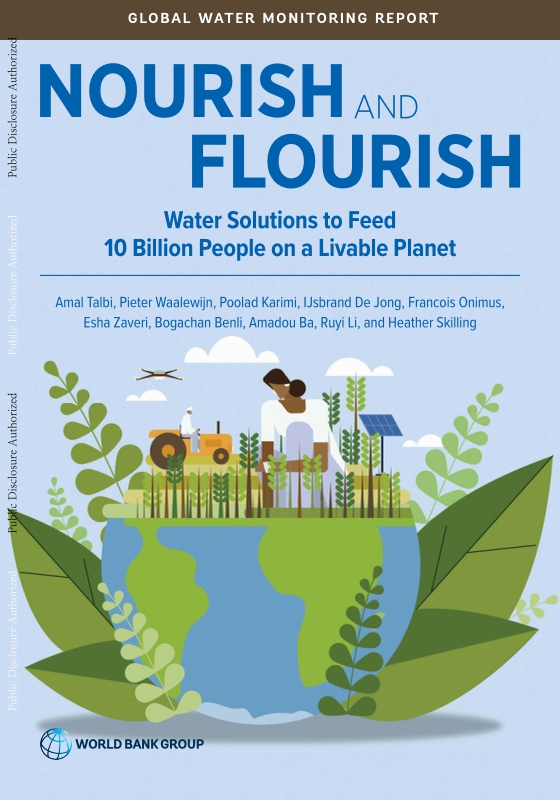
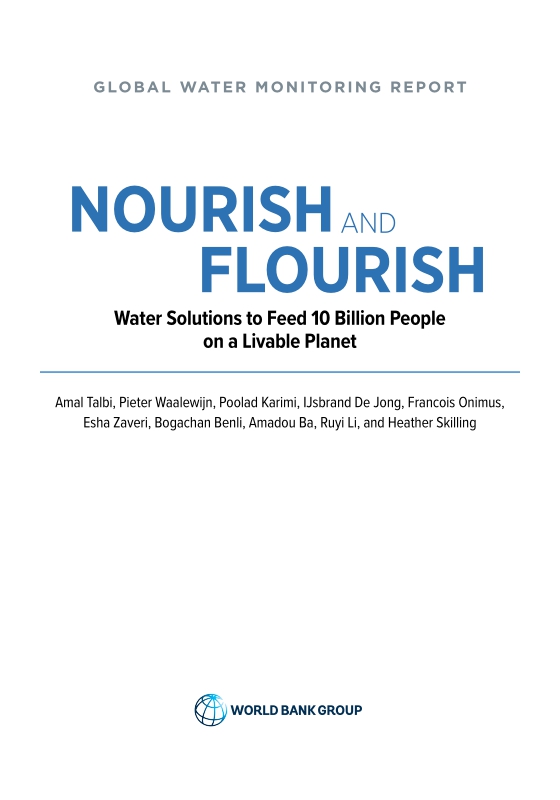
Title page 1
Contents 7
Foreword 9
Acknowledgments 11
Main Messages 15
Abbreviations 17
CHAPTER 1. Introduction 18
What is new in this report, and why is it important? 18
The challenge: Feeding 10 billion people sustainably 22
AWM benefits extend far beyond farm-level interventions 24
Notes 27
References 27
CHAPTER 2. Rethinking Agricultural Water Management 29
Investments in agricultural water management deliver against three strategic policy objectives: People, prosperity, and planet 29
Three shifts needed to transform AWM 29
Note 37
References 37
CHAPTER 3. Framework for Regional Strategies 40
A new framing for agricultural water management: Rooted in local context 40
Pathways to AWM: Navigation from each water-food nexus context 44
References 55
CHAPTER 4. Funding and Policy Development 56
Financing agricultural water management 56
A structured approach to AWM policy development 59
Notes 68
References 68
CHAPTER 5. Conclusion 70
Reference 71
FIGURE 1.1. The continuum of agricultural water management 24
FIGURE 2.1. AWM delivers against three strategic policy objectives: People, prosperity, and planet 30
FIGURE 3.1. Four local contexts defined by water-food nexus framework 41
Boxes 8
BOX 2.1. Achieving transformational shift through stakeholder collaboration 31
BOX 2.2. Achieving transformational shift through institutional and regulatory change 33
BOX 2.3. The private sector's role in scaling AWM 34
BOX 2.4. Machine learning to identify irrigation opportunities in the Sahel 36
BOX 3.1. The water-food nexus framework methodology explained: Water stress index and calories as a metric for food 42
Maps 8
MAP 3.1. World map reflecting four local contexts defined by the water-food nexus framework 43
Box Maps 8
MAP B2.4.1. Shallow basement groundwater in the Sahel identified through a machine learning model 37

*표시는 필수 입력사항입니다.
| 전화번호 |
|---|
| 기사명 | 저자명 | 페이지 | 원문 | 기사목차 |
|---|
| 번호 | 발행일자 | 권호명 | 제본정보 | 자료실 | 원문 | 신청 페이지 |
|---|
도서위치안내: / 서가번호:

우편복사 목록담기를 완료하였습니다.
*표시는 필수 입력사항입니다.
저장 되었습니다.
