대표어
대표어
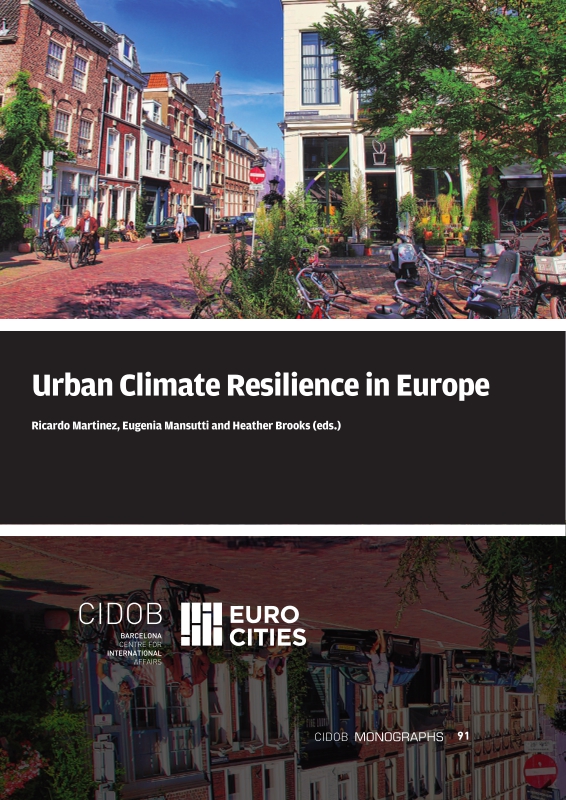
 https://www.cidob.org/en/publications/urban-climate-resilience-europe

권호기사보기
| 기사명 | 저자명 | 페이지 | 원문 | 기사목차 |
|---|
결과 내 검색
동의어 포함
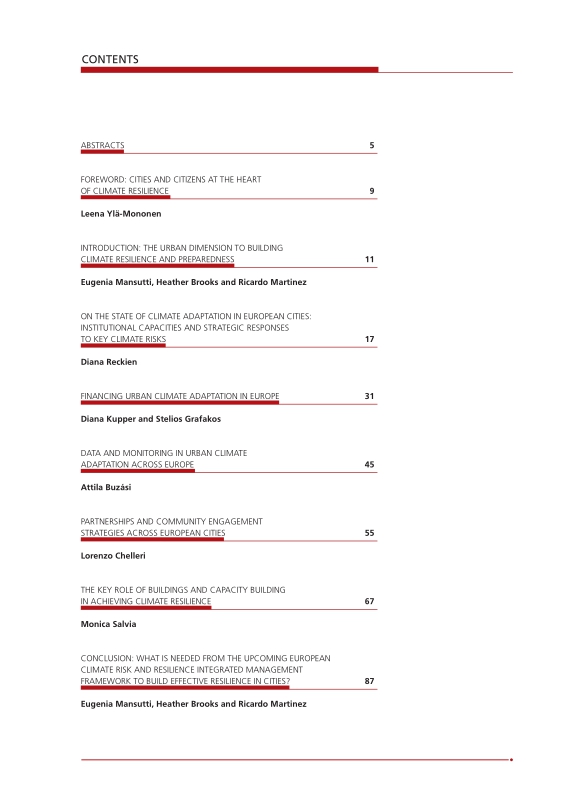
Title page 1
Contents 4
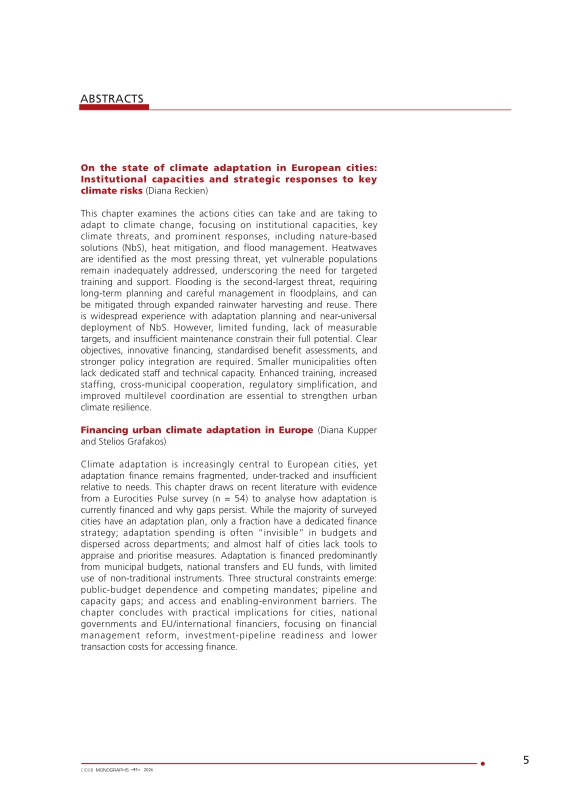
ABSTRACTS 5
FOREWORD: CITIES AND CITIZENS AT THE HEART OF CLIMATE RESILIENCE 8
INTRODUCTION: THE URBAN DIMENSION TO BUILDING CLIMATE RESILIENCE AND PREPAREDNESS 10
ON THE STATE OF CLIMATE ADAPTATION IN EUROPEAN CITIES: INSTITUTIONAL CAPACITIES AND STRATEGIC RESPONSES TO KEY CLIMATE RISKS 15
1. Introduction 15
2. What cities are doing 16
2.1. Institutional and organisational aspects of climate adaptation 16
2.2. Municipal staff working on climate adaptation 16
2.3. Experienced climate impacts and risks 17
2.4. Implementing nature-based solutions 19
2.5. Implementing responses to heat 21
2.6. Implementing responses to flooding 22
3. Needs and challenges: why adaptation gaps persist 23
4. Emerging directions: what looks promising 25
5. Implications and key messages 26
References 27
FINANCING URBAN CLIMATE ADAPTATION IN EUROPE 29
1. Introduction: the adaptation finance challenge in cities 29
2. What cities are doing: how adaptation is currently financed and operationalised 30
2.1. Current funding mix and instruments (what is actually financing adaptation) 30
2.2. Institutionalising adaptation finance: from plans to finance strategies 32
2.3. Budget integration and tracking (a visibility problem) 32
2.4. Risk-informed and evidence-based programming and prioritisation (tools, data, decision practices) 33
3. Needs and challenges: why the gap persists 34
3.1. The "public budget dependence" trap and competing mandates 34
3.2. The pipeline/capacity/evidence gap (including valuation, prioritisation and financial integration) 34
3.3. Access and enabling-environment constraints (rules, transaction costs and limited instrument diversification) 36
4. Emerging directions: what looks promising (and under what conditions) 36
4.1. Embedding adaptation in budget rules and processes 36
4.2. Building funder-ready pipelines from risk assessments 37
4.3. Reducing access barriers 37
4.4. Diversification of instruments 37
5. Implications and key messages 38
5.1. What cities can do 38
5.2. What national frameworks should change/support 39
5.3. What EU frameworks and international financiers should change/support 39
5.4. Five key highlights 39
References 40
DATA AND MONITORING IN URBAN CLIMATE ADAPTATION ACROSS EUROPE 42
1. Introduction 42
2. What cities are doing 43
3. Needs and challenges 48
4. Emerging directions 49
5. Implications and key messages 49
References 51
PARTNERSHIPS AND COMMUNITY ENGAGEMENT STRATEGIES ACROSS EUROPEAN CITIES 52
1. Introduction: bridging climate plans and people's capacities 52
2. What are cities doing? 53
2.1. Which are the most valuable partnerships, and why? 53
2.2. From valuing contributions to sharing data, knowledge, and potential actions 54
2.3. From communication to engagement and co-implementation? 56
3. Needs and challenges: skills and knowledge gaps 56
3.1. How to move toward co-implementation? 56
3.2. From skills and gaps to community pushback and behavioral challenges 58
4. Emerging directions: responding to people's resistance to change 59
5. Implications and key messages 61
References 62
THE KEY ROLE OF BUILDINGS AND CAPACITY BUILDING IN ACHIEVING CLIMATE RESILIENCE 64
1A. Introduction: climate resilience and the built environment 64
2A. What cities are doing 65
3A. Needs and challenges 68
4A. Emerging directions 68
5A. Implications and key messages 69
1B. Introduction: the role of capacity building for climate resilience 70
2B. What cities are doing in terms of capacity building 71
3B. Needs and challenges 72
4B. Emerging directions 77
5B. Implications and key messages 78
References 80
CONCLUSION: WHAT IS NEEDED FROM THE UPCOMING EUROPEAN CLIMATE RISK AND RESILIENCE INTEGRATED MANAGEMENT FRAMEWORK... 83
ON THE STATE OF CLIMATE ADAPTATION IN EUROPEAN CITIES: INSTITUTIONAL CAPACITIES AND STRATEGIC RESPONSES TO KEY CLIMATE RISKS 18
Figure 1. Ranking of main climate-related threats and risks 18
Figure 2. Impact of hazards on European cities depending on the risk/ threat metric, or damage category used 18
Figure 3. Prioritisation of nature-based solutions as part of policies and measures for climate adaptation 19
Figure 4. Support needed to accelerate the use of NbS and greening for adaptation cities 20
Figure 5. Climate adaptation plans that dedicatedly address heat exposure of vulnerable people in social institutions 21
FINANCING URBAN CLIMATE ADAPTATION IN EUROPE 31
Figure 1. Survey answers to traditional financing for adaptation measures in cities 31
Figure 2. Survey answers to innovative and non-traditional sources of finance for adaptation measures in cities 31
Figure 3. Survey responses to tools or methods used to evaluate adaptation costs, benefits and co-benefits, and prioritise climate adaptation measures 35
DATA AND MONITORING IN URBAN CLIMATE ADAPTATION ACROSS EUROPE 44
Figure 1. What types of climate-related data does your city collect for climate adaptation? 44
Figure 2. What challenges does your city face in collecting or accessing climate data for adaptation planning? 46
Figure 3. Stakeholders involved in drafting emergency preparedness plans 47
PARTNERSHIPS AND COMMUNITY ENGAGEMENT STRATEGIES ACROSS EUROPEAN CITIES 54
Figure 1. Perceived importance of stakeholders 54
Figure 2. Support to active involvement of citizens or community initiatives in climate adaptation solutions 55
THE KEY ROLE OF BUILDINGS AND CAPACITY BUILDING IN ACHIEVING CLIMATE RESILIENCE 66
Figure 1. Percentage of cities in the sample with mandatory building codes for climate-resilient new buildings, classified by city size 66
Figure 2. Percentage of cities in the sample with and without mandatory building codes for climate-resilient targets for retrofitting buildings,... 67
Figure 3. Distribution of responses from cities regarding the key factors in building capacity on climate adaptation, by city size 72
Figure 4. Distribution of responses from cities, classified by size, regarding the main challenges in integrating climate adaptation into urban planning... 73
Figure 5. Distribution of responses from cities, classified by size, regarding the top three challenges for building capacity to address climate adaptation 74
Figure 6. Distribution of responses from cities, classified by size, regarding the biggest challenges for building capacity in climate adaptation 75
Figure 7. Distribution of the first three top choices for capacity building among the available options 76
Figure 8. Distribution of the bottom three choices for capacity building among the available options 76
*표시는 필수 입력사항입니다.
| 전화번호 |
|---|
| 기사명 | 저자명 | 페이지 | 원문 | 기사목차 |
|---|
| 번호 | 발행일자 | 권호명 | 제본정보 | 자료실 | 원문 | 신청 페이지 |
|---|
도서위치안내: / 서가번호:

우편복사 목록담기를 완료하였습니다.
*표시는 필수 입력사항입니다.
저장 되었습니다.