대표어
대표어
 https://www.iai.it/en/publications/c02/reshaping-eu-democracy-support-and-democratic-practices


권호기사보기
| 기사명 | 저자명 | 페이지 | 원문 | 기사목차 |
|---|
결과 내 검색
동의어 포함
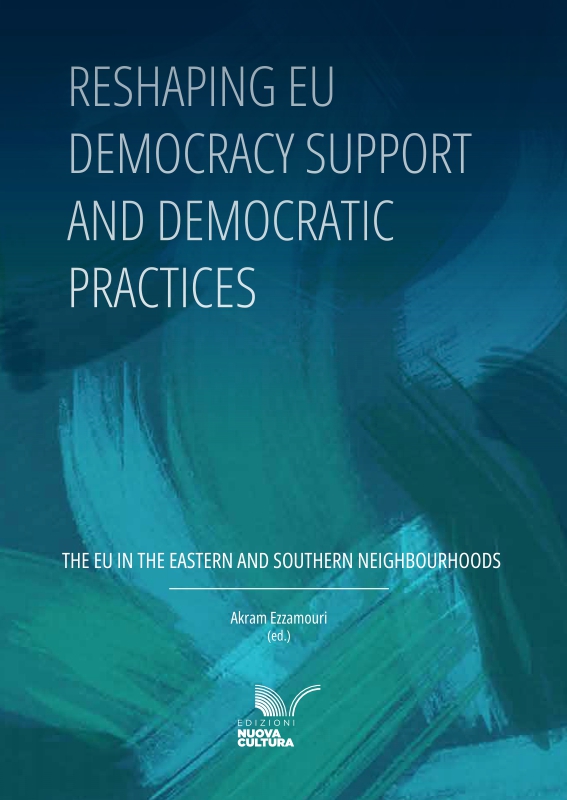
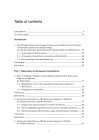
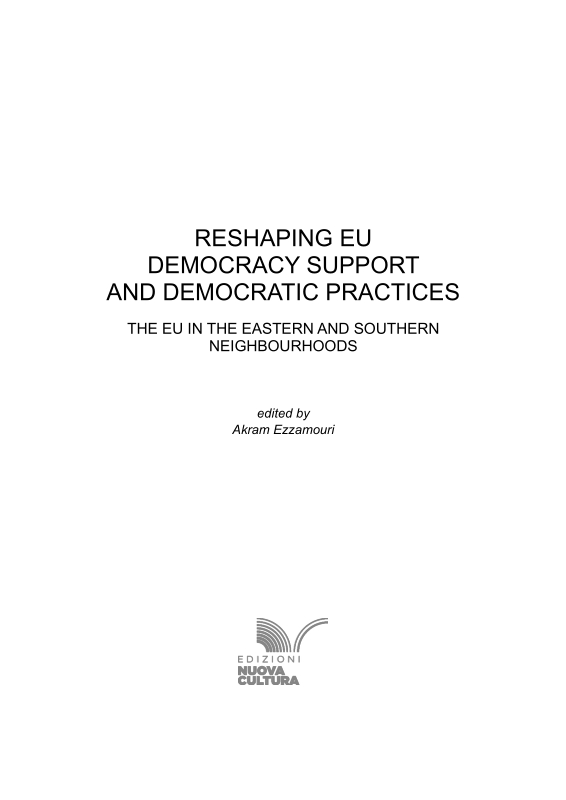
Title page 1
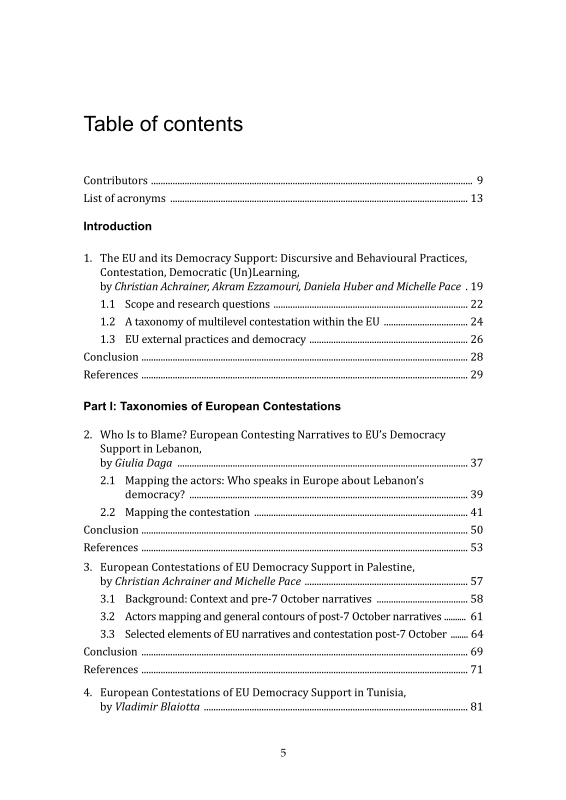
Contents 5
CONTRIBUTORS 8
LIST OF ACRONYMS 12
INTRODUCTION 15
1. The EU and its Democracy Support: Discursive and Behavioural Practices, Contestation, Democratic (Un)Learning 16
1.1. Scope and research questions 19
1.2. A taxonomy of multilevel contestation within the EU 21
1.3. EU external practices and democracy 23
Conclusion 25
References 26
PART I. TAXONOMIES OF EUROPEAN CONTESTATIONS 31
2. Who Is to Blame? European Contesting Narratives to EU's Democracy Support in Lebanon 32
2.1. Mapping the actors: Who speaks in Europe about Lebanon's democracy? 34
2.2. Mapping the contestation 36
Conclusions 45
References 48
3. European Contestations of EU Democracy Support in Palestine 52
3.1. Background: Context and pre-7 October narratives 53
3.2. Actors mapping and general contours of post-7 October narratives 56
3.3. Selected elements of EU narratives and contestation post-7 October 59
Conclusion 64
References 66
4. European Contestations of EU Democracy Support in Tunisia 75
4.1. Framing the democratic backsliding in Tunisia 77
4.2. The incremental narrative 78
4.3. Tunisia backsliding with EU complicity? 81
Conclusions 84
References 85
5. European Contestations of EU Democracy Support in Armenia, Georgia and Ukraine 89
5.1. Historical turning points in Georgia, Armenia and Ukraine 90
5.2. Mapping key actors and analysing discourse on democracy support across historical turning points 93
Conclusions 115
References 122
PART II. DEMOCRATICNESS OF EUROPEAN FOREIGN POLICY PRACTICES 130
6. EU Foreign Policy Practices and Democracy Support in Lebanon 131
6.1. Migration and refugees 132
6.2. Security 135
6.3. Border management 136
6.4. Democracy and elections 138
6.5. Presidential elections 140
6.6. Trade 141
Conclusion 142
References 144
7. Democracy and Security in EU Foreign Policy Practices in Palestine 150
7.1. Defining the concept of democraticness 151
7.2. Assessing democraticness of EU foreign policy practices in Palestine 153
7.3. Absence of (un)learning 160
Conclusion 162
References 164
8. EU Security Practices and Democracy Support in Tunisia 166
8.1. Conceptual definition of democraticness 168
8.2. July 2021 and Tunisia's critical juncture 169
8.3. From democratic security reform to security assistance 171
8.4. Assessing EU (un)learning in Tunisia 175
Conclusion 179
References 180
9. Between Security and Democracy Support: The EU's Evolving Foreign Policy Engagement with Armenia 184
9.1. Assessing democratic nature of EU foreign policy practices 186
9.2. Historic turning points in the EU-Armenia relations 2013-2023 and potential moments of epiphany 187
9.3. EU lessons learnt? 194
Conclusion 196
References 199
10. EU Foreign Policy Practices and Democracy Support in Ukraine 203
10.1. Historic turning points in the EU-Ukraine relations since 2013 and potential moments of epiphany 204
10.2. Conclusion: EU lessons learnt? 213
References 215
11. EU Democracy Support and Civil Society in Georgia 218
11.1. Analytical framework and research questions 219
11.2. EU civil society support in Georgia: An overview 220
11.3. EaP Civil Society Forum: A case of the Georgian National Platform 223
Conclusions 226
References 228
CONCLUSION 231
12. Fragmented Practices, Shared Lessons: EU Democracy Support in the Eastern and Southern Neighbourhoods 232
12.1. Fragmented democratic practices in the EU's neighbourhoods 233
12.2. Perceptions of EU democracy support in the neighbourhoods 239
12.3. Putting the democracy learning loop into practice 240
References 243
*표시는 필수 입력사항입니다.
| 전화번호 |
|---|
| 기사명 | 저자명 | 페이지 | 원문 | 기사목차 |
|---|
| 번호 | 발행일자 | 권호명 | 제본정보 | 자료실 | 원문 | 신청 페이지 |
|---|
도서위치안내: / 서가번호:

우편복사 목록담기를 완료하였습니다.
*표시는 필수 입력사항입니다.
저장 되었습니다.