대표어
 https://www.oecd.org/en/publications/reforming-government-communication-for-the-age-of-algorithms_adef6a50-en.html
권호기사보기
| 기사명 | 저자명 | 페이지 | 원문 | 기사목차 |
|---|
결과 내 검색
동의어 포함
Title page 1
Contents 6
Foreword 4
Acknowledgements 5
Reader's guide 9
Executive summary 11
1. Digital disruption: How technology keeps reshaping how societies connect 13
1.1. The rise of algorithms and new information intermediaries: How a decentralised news ecosystem is redefining how people receive information 18
1.1.1. Creators and issue-based communities are supplanting traditional news sources as intermediaries 22
1.2. New patterns of engagement with news and information are complicating the task of connecting with citizens 23
1.2.1. When news feels overwhelming or unrelatable: The growing trend for news avoidance among citizens 24
1.2.2. Government communication needs new strategies to navigate an increasingly divisive landscape 24
References 31
Notes 34
2. The evolution of institutions' online presence 35
2.1. New strategies for new platforms: Adapting to reach citizens on social media 38
2.1.1. Authenticity and relatability as levers to resonate with citizens online 40
2.1.2. Expanding reach beyond followers through paid content 42
2.1.3. Reviewing social media's value to engage with citizens and listen to them 43
2.2. From reach to depth: Alternative digital formats for sustained engagement 45
2.3. Partnerships and co-creation: Connecting with audiences across fragmented communities and online spaces 47
References 51
Notes 55
3. Emerging applications of AI in public communication 56
3.1. How government communication teams are adopting and reacting to AI 58
3.1.1. Responsible AI for boosting efficiency and effectiveness in communication 59
3.1.2. Artificial Intelligence as a lever for responsive, relatable and interactive communication 60
3.1.3. Looking ahead: Strengthening generative engine optimisation in public communication 65
3.2. Scaling trustworthy AI in public communication 66
3.2.1. Building strategies and resources to support effective and responsible uptake of AI in public communication 67
References 71
Notes 74
4. A roadmap for reform: Equipping government communication to succeed in the age of algorithms 75
4.1. Setting the agenda: Key priorities for reform in the age of algorithms 76
4.1.1. Reforming to drive results: The case for evidence- and data-driven communication 78
4.2. Managing continuous transformation: Building agile and innovative communication teams 80
4.2.1. The ethics of responsible innovation in communication 82
4.2.2. Equipping communicators for the digital era: Evolving skills and specialisations 85
4.3. Investing in the foundations: Strengthening the communication function as a lever for government delivery 88
4.3.1. Strengthening the role of communication across the policy cycle 89
4.3.2. Cross-government co-ordination for greater coherence and impact 92
4.3.3. Investing strategically in communication capacity 94
References 96
Notes 98
Annex A. Compendium of selected OECD countries' practices to reform government communication 99
Figure 1.1. Most government communicators surveyed feel the nature of communication has changed significantly, over a third have updated... 15
Figure 1.2. Communication's contribution to policy impact 18
Figure 1.3. Younger people rely more on social than traditional media 19
Figure 1.4. Half of communicators say news media has lost efficacy for achieving communication goals 22
Figure 1.5. Respondents see polarising discourse as an obstacle to clear communication 26
Figure 1.6. The approach for communicating across divides 27
Figure 1.7. A majority of communicators worry about politicisation of government communication 29
Figure 2.1. A majority of communicators feel positive about their teams' level of digitalisation 37
Figure 2.2. Key changes and new challenges to institutions' use of social media 39
Figure 2.3. Social media is still regarded as somewhat useful for interacting with audiences, but less than communicators wish 44
Figure 2.4. Social listening is still regarded as a moderately useful source of insight but has considerable limitations 45
Figure 2.5. Communicators are working with intermediaries to reach beyond their core audiences 48
Figure 3.1. AI is widely expected to transform public communication 59
Figure 3.2. The most common uses of AI remain focused on routine content tasks 60
Figure 3.3. AI is yet to take off in most communication teams 67
Figure 3.4. Guidance and resources to support AI adoption are available in most institutions 68
Figure 3.5. The OECD Framework for Trustworthy AI in Government 70
Figure 4.1. Reform priorities are varied, but data-driven communication is the most common 77
Figure 4.2. Evaluation of communication's impact remains limited 79
Figure 4.3. Time, resource constraints and risk aversion hold back innovation 82
Figure 4.4. The use of AI calls for fresh ethical guidance according to most respondents 83
Figure 4.5. The European Commission Joint Research Centre's modes of communication and their ethical implications 84
Figure 4.6. Digital and content specialist profiles are increasingly in demand 86
Figure 4.7. Communicators have a seat at the table but are not yet embedded in policy processes 90
Figure 4.8. Barriers to effective communication-policy collaboration 91
Figure 4.9. Horizontal co-ordination is the prevalent form of governance for cross- government communication 92
Figure 4.10. Communication budgets remain strained compared to demands 95
Boxes 7
Box 1.1. How public communication adds value across the policy cycle 17
Box 1.2. Information, communication, and trust: Evidence from the 2023 and 2025 OECD Trust Surveys 21
Box 1.3. OECD's guidance to Bridge Divides and Shape Better Policy: a multi-disciplinary approach for communicating on divisive and... 26
Box 1.4. The United Kingdom's New Media Unit: An approach to connect with audiences' everyday realities 30
Box 2.1. In Singapore, the government uses humour and creator-style content on YouTube to communicate on public services 41
Box 2.2. The Netherlands' guidance on privacy and data use within online campaigns 43
Box 2.3. Using digital newsletters to deepen public understanding of priority policies in Ireland 47
Box 2.4. Ireland's collaboration with content creators during COVID-19 contributed to disseminate critical public health information 49
Box 2.5. Korea's collaboration with content creators to promote the K-brand 50
Box 3.1. Custom AI-powered monitoring and analytics tools 61
Box 3.2. Government chatbots and virtual assistants 64
Box 3.3. The OECD Framework for Trustworthy AI in Government 70
Box 4.1. Policies to support innovation in United Kingdom Government Communications 81
Box 4.2. Building agility through learning and professional development 86
Box 4.3. Communities of practice and networks for peer learning 88
Box 4.4. France's reforms for coherence, efficiency, and integration of government communication 93
Figure A A.1. GovSocial's online portal within the Digital Profession site 114
Figure A A.2. Recent GovSocial quarterly meeting agendas 115
Annex Boxes 8
Box A A.1. Two examples of major national communication campaigns leveraging partnerships with third parties 103
*표시는 필수 입력사항입니다.
| 전화번호 |
|---|
| 기사명 | 저자명 | 페이지 | 원문 | 기사목차 |
|---|
| 번호 | 발행일자 | 권호명 | 제본정보 | 자료실 | 원문 | 신청 페이지 |
|---|
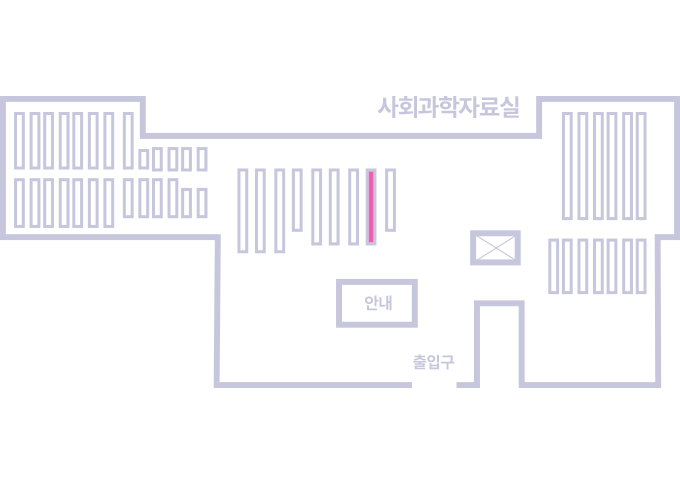
도서위치안내: / 서가번호:
우편복사 목록담기를 완료하였습니다.
*표시는 필수 입력사항입니다.
저장 되었습니다.