
 대표어
대표어
 http://www.odi.org/publications/8896-urbanisation-land-property-rights
권호기사보기
| 기사명 | 저자명 | 페이지 | 원문 | 기사목차 |
|---|
결과 내 검색
동의어 포함
Title page
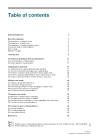
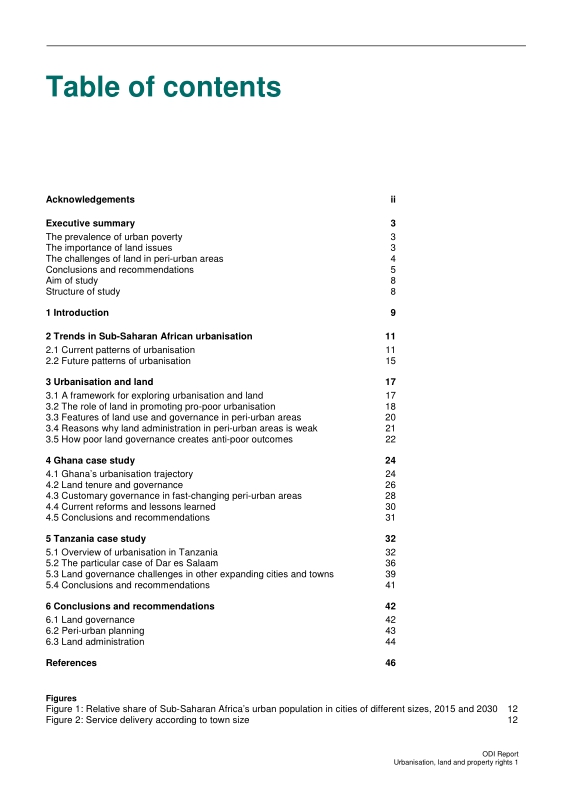
Contents
Acknowledgements 2
Executive summary 5
The prevalence of urban poverty 5
The importance of land issues 5
The challenges of land in peri-urban areas 6
Conclusions and recommendations 7
Aim of study 10
Structure of study 10
1. Introduction 11
2. Trends in Sub-Saharan African urbanisation 13
2.1. Current patterns of urbanisation 13
2.2. Future patterns of urbanisation 17
3. Urbanisation and land 19
3.1. A framework for exploring urbanisation and land 19
3.2. The role of land in promoting pro-poor urbanisation 20
3.3. Features of land use and governance in peri-urban areas 22
3.4. Reasons why land administration in peri-urban areas is weak 23
3.5. How poor land governance creates anti-poor outcomes 24
4. Ghana case study 26
4.1. Ghana's urbanisation trajectory 26
4.2. Land tenure and governance 28
4.3. Customary governance in fast-changing peri-urban areas 30
4.4. Current reforms and lessons learned 32
4.5. Conclusions and recommendations 33
5. Tanzania case study 34
5.1. Overview of urbanisation in Tanzania 34
5.2. The particular case of Dar es Salaam 38
5.3. Land governance challenges in other expanding cities and towns 41
5.4. Conclusions and recommendations 43
6. Conclusions and recommendations 44
6.1. Land governance 44
6.2. Peri-urban planning 45
6.3. Land administration 46
References 48
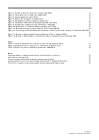
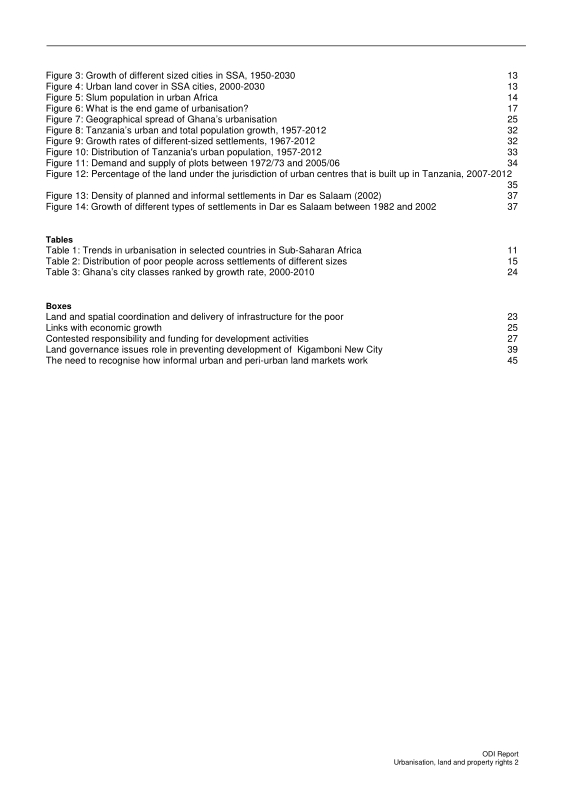
Figure 1. Relative share of Sub-Saharan Africa's urban population in cities of different sizes, 2015 and 2030 14
Figure 2. Service delivery according to town size 14
Figure 3. Growth of different sized cities in SSA, 1950-2030 15
Figure 4. Urban land cover in SSA cities, 2000-2030 15
Figure 5. Slum population in urban Africa 16
Figure 6. What is the end game of urbanisation? 19
Figure 7. Geographical spread of Ghana's urbanisation 27
Figure 8. Tanzania's urban and total population growth, 1957-2012 34
Figure 9. Growth rates of different-sized settlements, 1967-2012 34
Figure 10. Distribution of Tanzania's urban population, 1957-2012 35
Figure 11. Demand and supply of plots between 1972/73 and 2005/06 36
Figure 12. Percentage of the land under the jurisdiction of urban centres that is built up in Tanzania, 2007-2012 37
Figure 13. Density of planned and informal settlements in Dar es Salaam (2002) 39
Figure 14. Growth of different types of settlements in Dar es Salaam between 1982 and 2002 39
Boxes
Land and spatial coordination and delivery of infrastructure for the poor 25
Links with economic growth 27
Contested responsibility and funding for development activities 29
Land governance issues role in preventing development of Kigamboni New City 41
The need to recognise how informal urban and peri-urban land markets work 47
*표시는 필수 입력사항입니다.
| 전화번호 |
|---|
| 기사명 | 저자명 | 페이지 | 원문 | 기사목차 |
|---|
| 번호 | 발행일자 | 권호명 | 제본정보 | 자료실 | 원문 | 신청 페이지 |
|---|
도서위치안내: / 서가번호:

우편복사 목록담기를 완료하였습니다.
*표시는 필수 입력사항입니다.
저장 되었습니다.
