
 대표어
대표어
 https://www.odi.org/publications/10428-enhancing-womens-influence-local-governance-community-scorecards-care-rwandas-experience

권호기사보기
| 기사명 | 저자명 | 페이지 | 원문 | 기사목차 |
|---|
결과 내 검색
동의어 포함
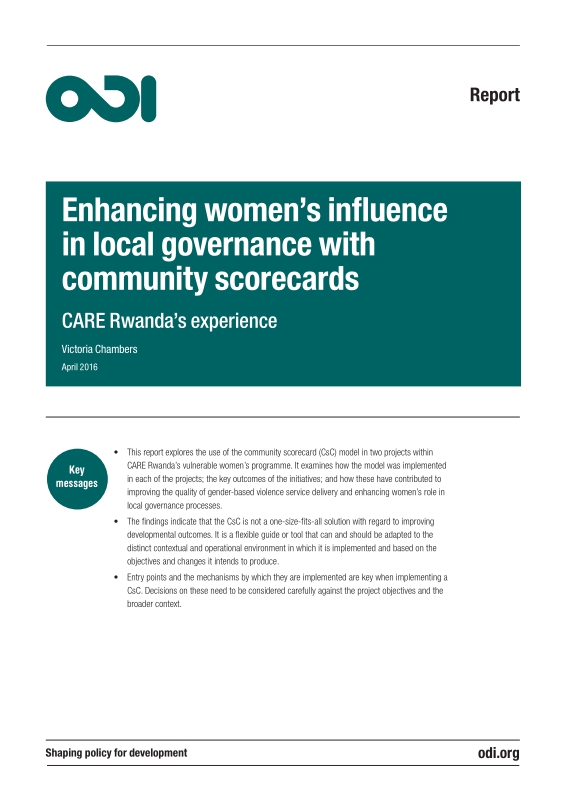
Title page
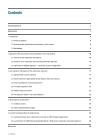
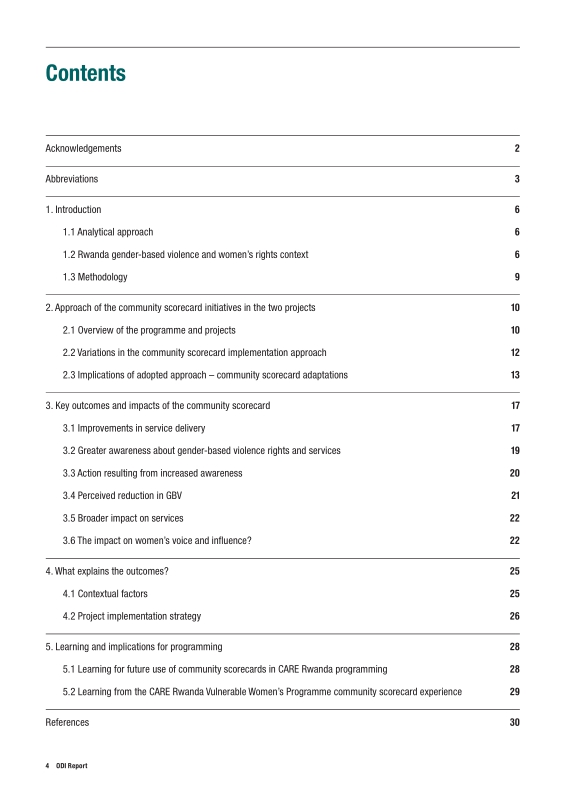
Contents
Acknowledgements 2
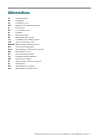
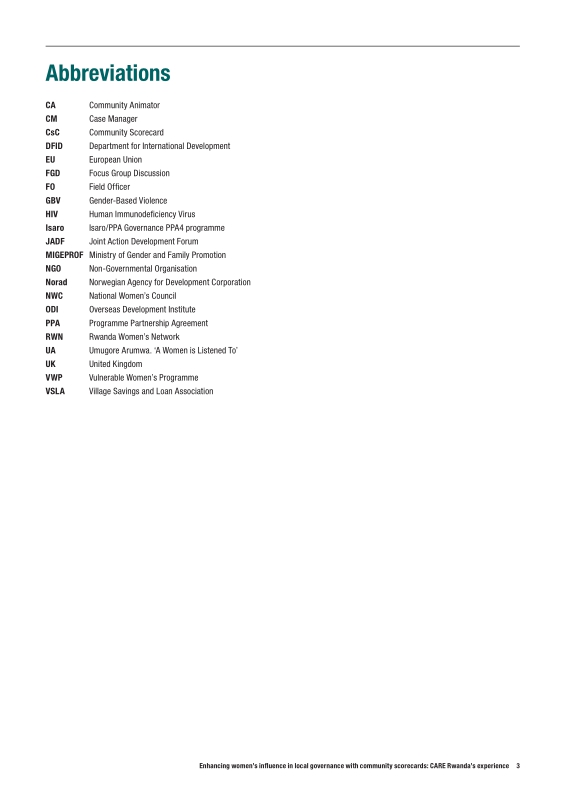
Abbreviations 3
1. Introduction 6
1.1. Analytical approach 6
1.2. Rwanda gender-based violence and women's rights context 6
1.3. Methodology 9
2. Approach of the community scorecard initiatives in the two projects 10
2.1. Overview of the programme and projects 10
2.2. Variations in the community scorecard implementation approach 12
2.3. Implications of adopted approach-community scorecard adaptations 13
3. Key outcomes and impacts of the community scorecard 17
3.1. Improvements in service delivery 17
3.2. Greater awareness about gender-based violence rights and services 19
3.3. Action resulting from increased awareness 20
3.4. Perceived reduction in GBV 21
3.5. Broader impact on services 22
3.6. The impact on women's voice and influence? 22
4. What explains the outcomes? 25
4.1. Contextual factors 25
4.2. Project implementation strategy 26
5. Learning and implications for programming 28
5.1. Learning for future use of community scorecards in CARE Rwanda programming 28
5.2. Learning from the CARE Rwanda Vulnerable Women's Programme community scorecard experience 29
References 30
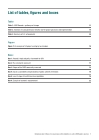
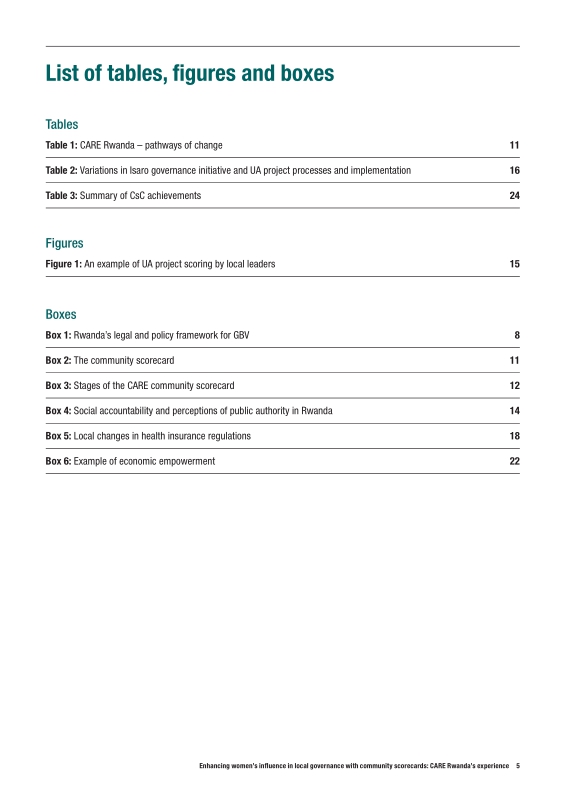
Figure 1. An example of UA project scoring by local leaders 15
Boxes
Box 1. Rwanda's legal and policy framework for GBV 8
Box 2. The community scorecard 11
Box 3. Stages of the CARE community scorecard 12
Box 4. Social accountability and perceptions of public authority in Rwanda 14
Box 5. Local changes in health insurance regulations 18
Box 6. Example of economic empowerment 22
*표시는 필수 입력사항입니다.
| 전화번호 |
|---|
| 기사명 | 저자명 | 페이지 | 원문 | 기사목차 |
|---|
| 번호 | 발행일자 | 권호명 | 제본정보 | 자료실 | 원문 | 신청 페이지 |
|---|
도서위치안내: / 서가번호:

우편복사 목록담기를 완료하였습니다.
*표시는 필수 입력사항입니다.
저장 되었습니다.
