
 대표어
대표어
 https://www.odi.org/publications/10423-mental-health-funding-and-sdgs-what-now-and-who-pays
권호기사보기
| 기사명 | 저자명 | 페이지 | 원문 | 기사목차 |
|---|
결과 내 검색
동의어 포함
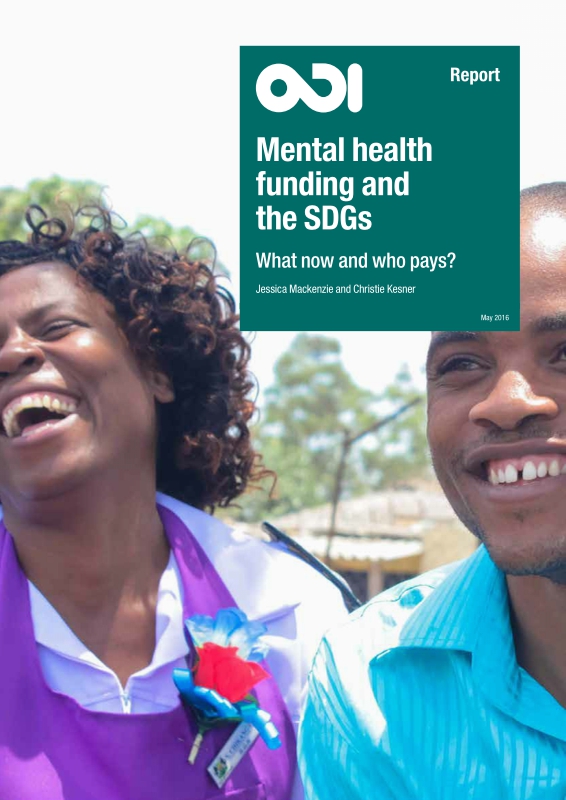
Title page
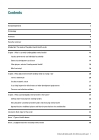
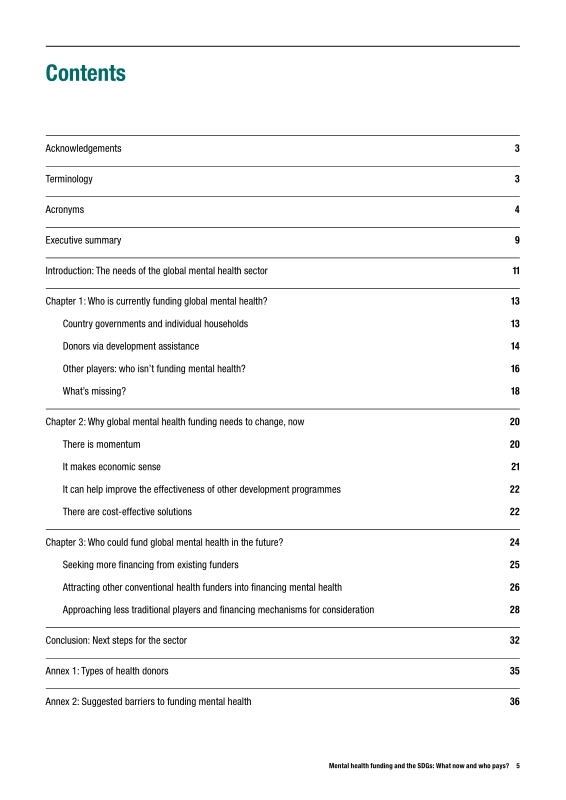
Contents
Acknowledgements 3
Terminology 3
Acronyms 4
Executive summary 8
Introduction: The needs of the global mental health sector 10
Chapter 1: Who is currently funding global mental health? 12
Country governments and households 12
Donors via development assistance 13
Who isn't funding mental health? 17
What's missing? 17
Chapter 2: Why global mental health funding needs to change, now 19
There is momentum 19
It makes economic sense 20
It can help improve the effectiveness of other development programmes 21
There are cost-effective solutions 21
Chapter 3: Who could fund global mental health in the future? 23
Seeking more financing from existing funders 23
Attracting other conventional health funders into financing mental health 25
Approaching less traditional players and financing mechanisms for consideration 27
Conclusion: Next steps for the sector 31
Annex 1: Types of health donors 34
Annex 2: Suggested barriers to funding mental health 35
Annex 3: Categories of mental health assistance 36
Annex 4: Supporting arguments for, and potential barriers against, investment in mental health 37
Bibliography 38
Figure 1. The state of mental health 8
Figure 2. Distribution of mental health expenditure per capita, by care setting 13
Figure 3. Development assistance for mental health (2007-2013) 14
Figure 4. Global health burden vs development assistance spending in LICs 16
Figure 5. The mental health funding gap 18
Figure 6. Annual DAMH by sector (2007-2013) 32
Boxes
Box 1. Categories of mental health activities 11
Box 2. Francis's story, Ghana 13
Box 3. The Chain-Free Initiative, Somalia 20
Box 4. The Friendship Bench, Zimbabwe 22
Box 5. Summary of recommendations 33
*표시는 필수 입력사항입니다.
| 전화번호 |
|---|
| 기사명 | 저자명 | 페이지 | 원문 | 기사목차 |
|---|
| 번호 | 발행일자 | 권호명 | 제본정보 | 자료실 | 원문 | 신청 페이지 |
|---|
도서위치안내: / 서가번호:

우편복사 목록담기를 완료하였습니다.
*표시는 필수 입력사항입니다.
저장 되었습니다.
