
 대표어
대표어
 http://www.environment.gov.au/epbc/publications/cost-recovery-implementation-statement-2016-17
권호기사보기
| 기사명 | 저자명 | 페이지 | 원문 | 기사목차 |
|---|
결과 내 검색
동의어 포함
Title page
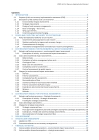
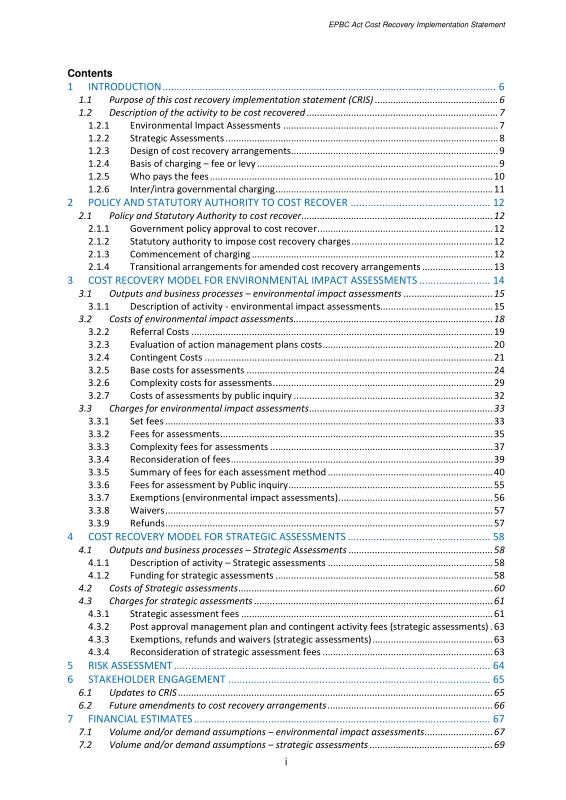
Contents
GLOSSARY 5
1. INTRODUCTION 7
1.1. Purpose of this cost recovery implementation statement (CRIS) 7
1.2. Description of the activity to be cost recovered 8
1.2.1. Environmental Impact Assessments 8
1.2.2. Strategic Assessments 9
1.2.3. Design of cost recovery arrangements 10
1.2.4. Basis of charging-fee or levy 10
1.2.5. Who pays the fees 11
1.2.6. Inter/intra governmental charging 12
2. POLICY AND STATUTORY AUTHORITY TO COST RECOVER 13
2.1. Policy and Statutory Authority to cost recover 13
2.1.1. Government policy approval to cost recover 13
2.1.2. Statutory authority to impose cost recovery charges 13
2.1.3. Commencement of charging 13
2.1.4. Transitional arrangements for amended cost recovery arrangements 14
3. COST RECOVERY MODEL FOR ENVIRONMENTAL IMPACT ASSESSMENTS 15
3.1. Outputs and business processes-environmental impact assessments 16
3.1.1. Description of activity-environmental impact assessments 16
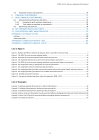
3.2. Costs of environmental impact assessments 19
3.2.1/3.2.2. Referral Costs 20
3.2.2/3.2.3. Evaluation of action management plans costs 21
3.2.3/3.2.4. Contingent Costs 22
3.2.4/3.2.5. Base costs for assessments 25
3.2.5/3.2.6. Complexity costs for assessments 30
3.2.6/3.2.7. Costs of assessments by public inquiry 33
3.3. Charges for environmental impact assessments 34
3.3.1. Set fees 34
3.3.2. Fees for assessments 36
3.3.3. Complexity fees for assessments 38
3.3.4. Reconsideration of fees 40
3.3.5. Summary of fees for each assessment method 41
3.3.6. Fees for assessment by Public inquiry 56
3.3.7. Exemptions (environmental impact assessments) 57
3.3.8. Waivers 58
3.3.9. Refunds 58
4. COST RECOVERY MODEL FOR STRATEGIC ASSESSMENTS 59
4.1. Outputs and business processes-Strategic Assessments 59
4.1.1. Description of activity-Strategic assessments 59
4.1.2. Funding for strategic assessments 59
4.2. Costs of Strategic assessments 61
4.3. Charges for strategic assessments 62
4.3.1. Strategic assessment fees 62
4.3.2. Post approval management plan and contingent activity fees (strategic assessments) 64
4.3.3. Exemptions, refunds and waivers (strategic assessments) 64
4.3.4. Reconsideration of strategic assessment fees 64
5. RISK ASSESSMENT 65
6. STAKEHOLDER ENGAGEMENT 66
6.1. Updates to CRIS 66
6.2. Future amendments to cost recovery arrangements 67
7. FINANCIAL ESTIMATES 68
7.1. Volume and/or demand assumptions-environmental impact assessments 68
7.2. Volume and/or demand assumptions-strategic assessments 70
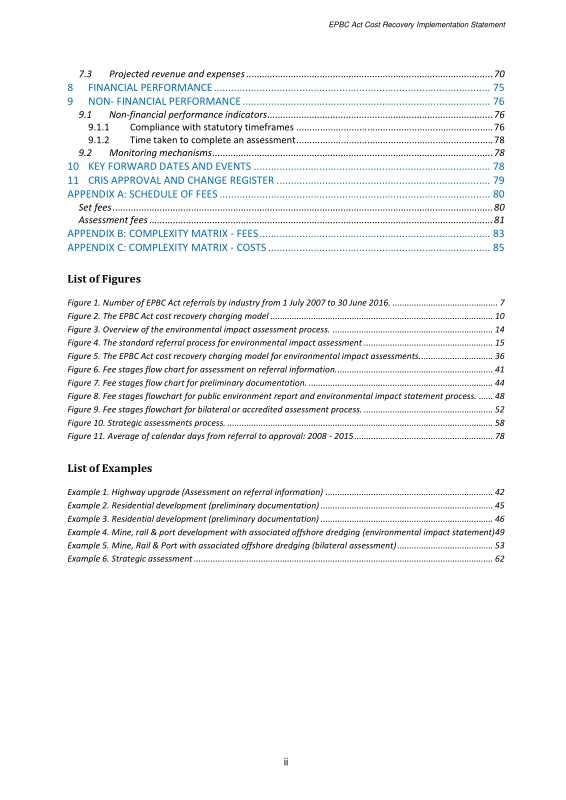
7.3. Projected revenue and expenses 71
8. FINANCIAL PERFORMANCE 76
9. NON-FINANCIAL PERFORMANCE 77
9.1. Non-financial performance indicators 77
9.1.1. Compliance with statutory timeframes 77
9.1.2. Time taken to complete an assessment 79
9.2. Monitoring mechanisms 79
10. KEY FORWARD DATES AND EVENTS 79
11. CRIS APPROVAL AND CHANGE REGISTER 80
APPENDIX A: SCHEDULE OF FEES 81
Set fees 81
Assessment fees 82
APPENDIX B: COMPLEXITY MATRIX-FEES 84
APPENDIX C: COMPLEXITY MATRIX-COSTS 86
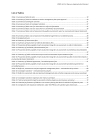
Figure 1. Number of EPBC Act referrals by industry from 1 July 2007 to 30 June 2016 8
Figure 2. The EPBC Act cost recovery charging model 11
Figure 3. Overview of the environmental impact assessment process 15
Figure 4. The standard referral process for environmental impact assessment 16
Figure 5. The EPBC Act cost recovery charging model for environmental impact assessments 37
Figure 6. Fee stages flow chart for assessment on referral information 42
Figure 7. Fee stages flow chart for preliminary documentation 45
Figure 8. Fee stages flowchart for public environment report and environmental impact statement process 49
Figure 9. Fee stages flowchart for bilateral or accredited assessment process 53
Figure 10. Strategic assessments process 59
Figure 11. Average of calendar days from referral to approval: 2008-2015 79
Examples
Example 1. Highway upgrade (Assessment on referral information) 43
Example 2. Residential development (preliminary documentation) 46
Example 3. Residential development (preliminary documentation) 47
Example 4. Mine, rail & port development with associated offshore dredging (environmental impact statement) 50
Example 5. Mine, Rail & Port with associated offshore dredging (bilateral assessment) 54
Example 6. Strategic assessment 63
*표시는 필수 입력사항입니다.
| 전화번호 |
|---|
| 기사명 | 저자명 | 페이지 | 원문 | 기사목차 |
|---|
| 번호 | 발행일자 | 권호명 | 제본정보 | 자료실 | 원문 | 신청 페이지 |
|---|
도서위치안내: / 서가번호:

우편복사 목록담기를 완료하였습니다.
*표시는 필수 입력사항입니다.
저장 되었습니다.
