
 대표어
대표어
 https://www.nrc.gov/reading-rm/doc-collections/nuregs/staff/sr2210/
권호기사보기
| 기사명 | 저자명 | 페이지 | 원문 | 기사목차 |
|---|
결과 내 검색
동의어 포함
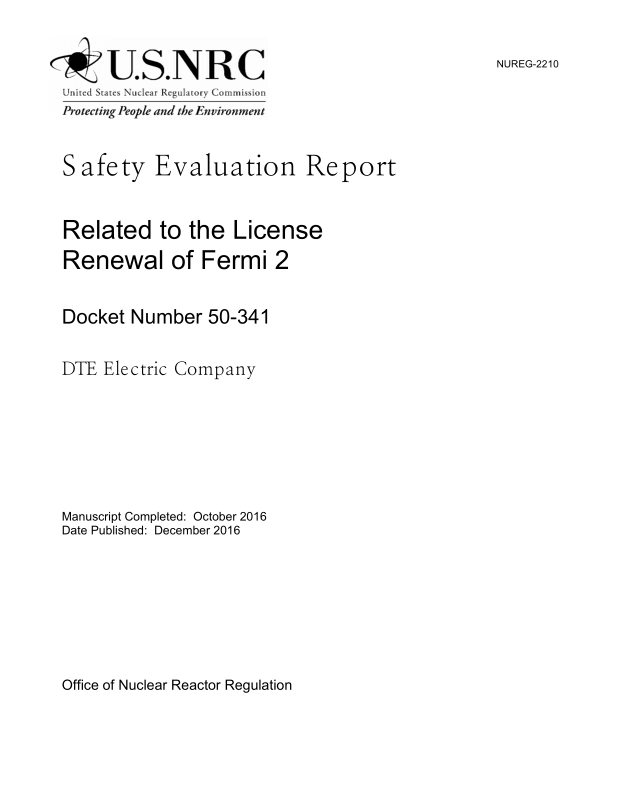
Title page
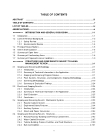
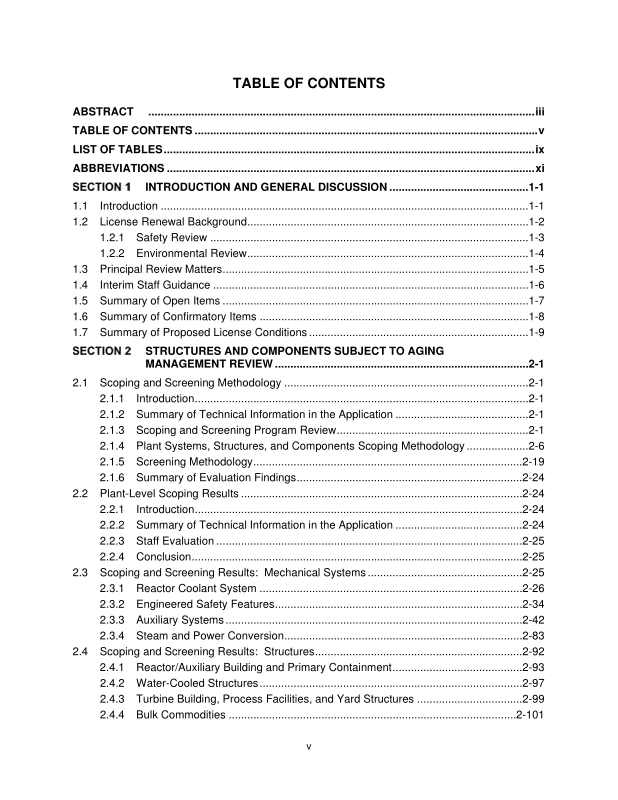
Contents
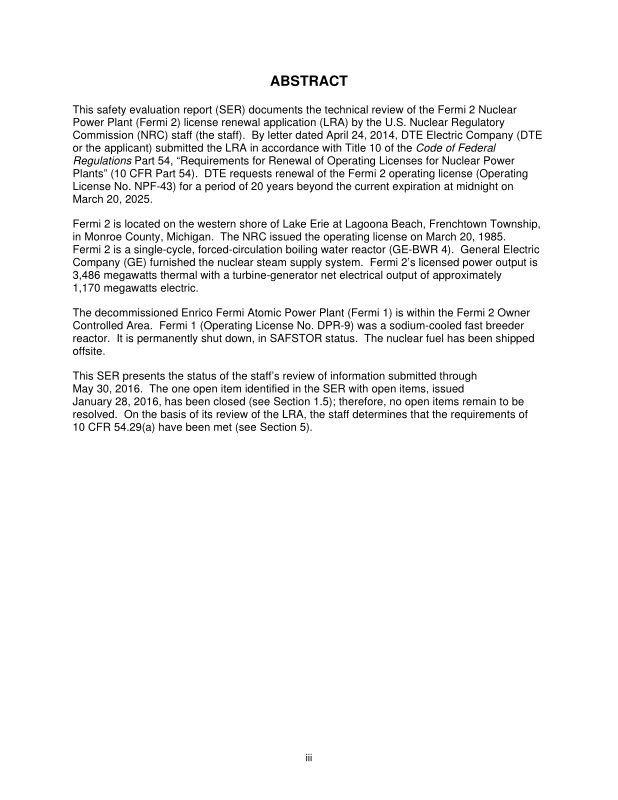
ABSTRACT 4
ABBREVIATIONS 11
SECTION 1. INTRODUCTION AND GENERAL DISCUSSION 16
1.1. Introduction 16
1.2. License Renewal Background 17
1.2.1. Safety Review 18
1.2.2. Environmental Review 19
1.3. Principal Review Matters 20
1.4. Interim Staff Guidance 21
1.5. Summary of Open Items 22
1.6. Summary of Confirmatory Items 23
1.7. Summary of Proposed License Conditions 24
SECTION 2. STRUCTURES AND COMPONENTS SUBJECT TO AGING MANAGEMENT REVIEW 25
2.1. Scoping and Screening Methodology 25
2.1.1. Introduction 25
2.1.2. Summary of Technical Information in the Application 25
2.1.3. Scoping and Screening Program Review 25
2.1.4. Plant Systems, Structures, and Components Scoping Methodology 30
2.1.5. Screening Methodology 43
2.1.6. Summary of Evaluation Findings 48
2.2. Plant-Level Scoping Results 48
2.2.1. Introduction 48
2.2.2. Summary of Technical Information in the Application 48
2.2.3. Staff Evaluation 49
2.2.4. Conclusion 49
2.3. Scoping and Screening Results: Mechanical Systems 49
2.3.1. Reactor Coolant System 50
2.3.2. Engineered Safety Features 58
2.3.3. Auxiliary Systems 66
2.3.4. Steam and Power Conversion 107
2.4. Scoping and Screening Results: Structures 116
2.4.1. Reactor/Auxiliary Building and Primary Containment 117
2.4.2. Water-Cooled Structures 121
2.4.3. Turbine Building, Process Facilities, and Yard Structures 123
2.4.4. Bulk Commodities 125
2.4.5. Fire Barriers Portion of Bulk Commodities 126
2.5. Scoping and Screening Results: Electrical and Instrumentation and Control Systems 131
2.5.1. Electrical and Instrumentation and Control Components and Commodity Groups 132
2.6. Conclusion for Scoping and Screening 134
SECTION 3. AGING MANAGEMENT REVIEW RESULTS 136
3.0. Applicant's Use of the Generic Aging Lessons Learned Report 136
3.0.1. Format of the License Renewal Application 137
3.0.2. Staff's Review Process 138
3.0.3. Aging Management Programs 142
3.0.4. QA Program Attributes Integral to Aging Management Programs 327
3.0.5. Operating Experience for Aging Management Programs 330
3.1. Aging Management of Reactor Vessel, Internals, and Reactor Coolant System 335
3.1.1. Summary of Technical Information in the Application 335
3.1.2. Staff Evaluation 336
3.1.3. Conclusion 382
3.2. Aging Management of Engineered Safety Features Systems 382
3.2.1. Summary of Technical Information in the Application 382
3.2.2. Staff Evaluation 382
3.2.3. Conclusion 412
3.3. Aging Management of Auxiliary Systems 412
3.3.1. Summary of Technical Information in the Application 412
3.3.2. Staff Evaluation 412
3.3.3. Conclusion 487
3.4. Aging Management of Steam and Power Conversion Systems 487
3.4.1. Summary of Technical Information in the Application 488
3.4.2. Staff Evaluation 488
3.4.3. Conclusion 514
3.5. Aging Management of Structures and Component Supports 514
3.5.1. Summary of Technical Information in the Application 515
3.5.2. Staff Evaluation 515
3.5.3. Conclusion 571
3.6. Aging Management of Electrical and Instrumentation and Controls System 571
3.6.1. Summary of Technical Information in the Application 572
3.6.2. Staff Evaluation 572
3.6.3. Conclusion 587
3.7. Conclusion for Aging Management Review Results 587
SECTION 4. TIME-LIMITED AGING ANALYSES 589
4.1. Identification of Time-Limited Aging Analyses 589
4.1.1. Summary of Technical Information in the Application 590
4.1.2. Staff Evaluation 591
4.1.3. Conclusion 608
4.2. Reactor Vessel Neutron Embrittlement 608
4.2.1. Reactor Vessel Fluence 608
4.2.2. Adjusted Reference Temperatures (ARTs) 610
4.2.3. Pressure-Temperature Limits 615
4.2.4. Upper-Shelf Energy 617
4.2.5. Reactor Vessel Circumferential Weld Inspection Relief 622
4.2.6. Reactor Vessel Axial Weld Failure Probability 627
4.2.7. Reactor Pressure Vessel Core Reflood Thermal Shock Analysis 630
4.3. Metal Fatigue 633
4.3.1. Class 1 Fatigue Analyses 633
4.3.2. Non-Class 1 Fatigue Analyses 644
4.3.3. Effects of Reactor Water Environment on Fatigue Life 648
4.4. Environmental Qualification (EQ) Analyses of Electric Equipment 658
4.4.1. Summary of Technical Information in the Application 658
4.4.2. Staff Evaluation 659
4.4.3. UFSAR Supplement 660
4.4.4. Conclusion 660
4.5. Concrete Containment Tendon Prestress Analyses 660
4.5.1. Summary of Technical Information in the Application 660
4.5.2. Staff Evaluation 661
4.5.3. UFSAR Supplement 661
4.5.4. Conclusion 661
4.6. Containment Liner Plate, Metal Containment, and Penetrations Fatigue Analyses 661
4.6.1. Primary Containment 661
4.6.2. Vent Line Bellows 666
4.6.3. Refueling and Drywell Seal Bellows 667
4.6.4. Traversing Incore Probe Penetration Bellows 669
4.6.5. Containment Penetrations 670
4.7. Other Plant-Specific TLAAs 674
4.7.1. Erosion of the Main Steam Line Flow Restrictors 674
4.7.2. Determination of High-Energy Line Break Locations 676
4.7.3. Jet Pump Auxiliary Spring Wedge Assembly 678
4.7.4. Jet Pump Slip Joint Repair Clamps 681
4.7.5. Flaw Evaluations for the Reactor Pressure Vessel 683
4.7.6. Main Steam Bypass Lines Cumulative Operating Time 685
4.7.7. Crane (Heavy Load) Cycles 687
4.8. Conclusion for TLAAs 688
SECTION 5. REVIEW BY THE ADVISORY COMMITTEE ON REACTOR SAFEGUARDS 690
SECTION 6. CONCLUSION 695
APPENDIX A. FERMI 2 LICENSE RENEWAL COMMITMENTS 696
APPENDIX B. CHRONOLOGY 728
APPENDIX C. PRINCIPAL CONTRIBUTORS 736
APPENDIX D. REFERENCES 739
*표시는 필수 입력사항입니다.
| 전화번호 |
|---|
| 기사명 | 저자명 | 페이지 | 원문 | 기사목차 |
|---|
| 번호 | 발행일자 | 권호명 | 제본정보 | 자료실 | 원문 | 신청 페이지 |
|---|
도서위치안내: / 서가번호:

우편복사 목록담기를 완료하였습니다.
*표시는 필수 입력사항입니다.
저장 되었습니다.
