
 대표어
대표어
 https://www.dcaf.ch/node/13592
권호기사보기
| 기사명 | 저자명 | 페이지 | 원문 | 기사목차 |
|---|
결과 내 검색
동의어 포함
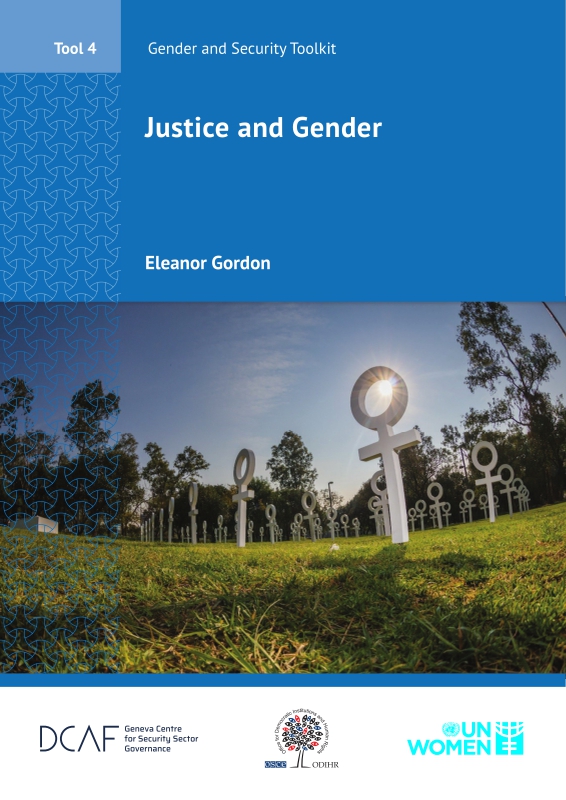
Title page
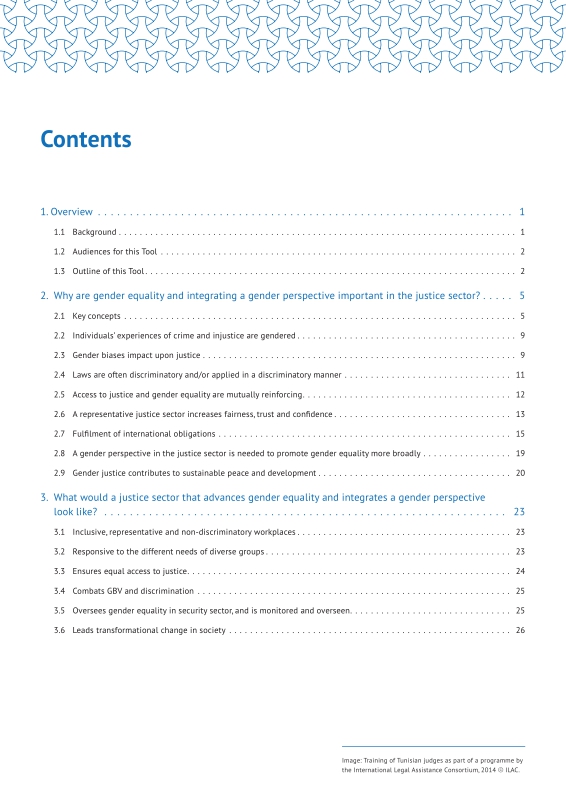
Contents
Acknowledgements 2
1. Overview 9
1.1. Background 9
1.2. Audiences for this Tool 10
1.3. Outline of this Tool 10
2. Why are gender equality and integrating a gender perspective important in the justice sector? 13
2.1. Key concepts 13
2.2. Individuals' experiences of crime and injustice are gendered 17
2.3. Gender biases impact upon justice 17
2.4. Laws are often discriminatory and/or applied in a discriminatory manner 19
2.5. Access to justice and gender equality are mutually reinforcing 20
2.6. A representative justice sector increases fairness, trust and confidence 21
2.7. Fulfilment of international obligations 23
2.8. A gender perspective in the justice sector is needed to promote gender equality more broadly 27
2.9. Gender justice contributes to sustainable peace and development 28
3. What would a justice sector that advances gender equality and integrates a gender perspective look like? 31
3.1. Inclusive, representative and non-discriminatory workplaces 31
3.2. Responsive to the different needs of diverse groups 31
3.3. Ensures equal access to justice 32
3.4. Combats GBV and discrimination 33
3.5. Oversees gender equality in security sector, and is monitored and overseen 33
3.6. Leads transformational change in society 34
4. How can the justice sector advance gender equality and integrate a gender perspective? 37
4.1. Conditions for success 38
4.2. Building an evidence base for gender justice reform 38
4.3. Planning and co-ordinating gender justice reform 39
4.4. Generating budgetary, political and judicial support for gender justice reform 39
4.5. Reforming the law 42
4.6. Developing policy, protocols and procedures 43
4.7. Establishing and strengthening gender-focused organizational structures 44
4.8. Handling GBV cases better 44
4.9. Training and other capacity development for justice professionals 46
4.10. Creating a more representative and responsive justice sector 47
4.11. Improving access to justice 48
4.12. Engaging with informal justice providers 49
4.13. Strengthening gender-responsive internal and external oversight of the justice sector 50
4.14. Challenging society's gender norms and stereotypes, and legal empowerment 51
5. Case studies 55
Case study 1: Using academic research to build support for law reform around image-based abuse (Australia) 55
Case study 2: Community consultation on reform of bail and sentencing regulations (Sierra Leone) 57
Case study 3: Increasing access to justice for survivors of GBV (Iraq) 59
Case study 4: Legislative reform concerning domestic violence (Ukraine) 61
Case study 5: Gender and justice reform (Bosnia and Herzegovina) 62
Case study 6: Gender equality protocols for magistrates and judges (The Caribbean) 65
6. Guiding questions for institutional self-assessment 69
7. Additional resources 73
Figure 1. Elements of the justice sector 14
Figure 2. Women in the judiciary 22
Figure 3. Integrating a gender perspective in the justice sector 37
Boxes
Box 1. Gender justice 16
Box 2. Gender bias 17
Box 3. International and regional instruments and standards relevant to gender equality and the justice sector 24
Box 4. "Silence is not Golden" campaign 40
Box 5. Paid domestic violence leave campaign 41
Box 6. Conducting diverse and inclusive consultations 43
*표시는 필수 입력사항입니다.
| 전화번호 |
|---|
| 기사명 | 저자명 | 페이지 | 원문 | 기사목차 |
|---|
| 번호 | 발행일자 | 권호명 | 제본정보 | 자료실 | 원문 | 신청 페이지 |
|---|
도서위치안내: / 서가번호:

우편복사 목록담기를 완료하였습니다.
*표시는 필수 입력사항입니다.
저장 되었습니다.
