
 대표어
대표어
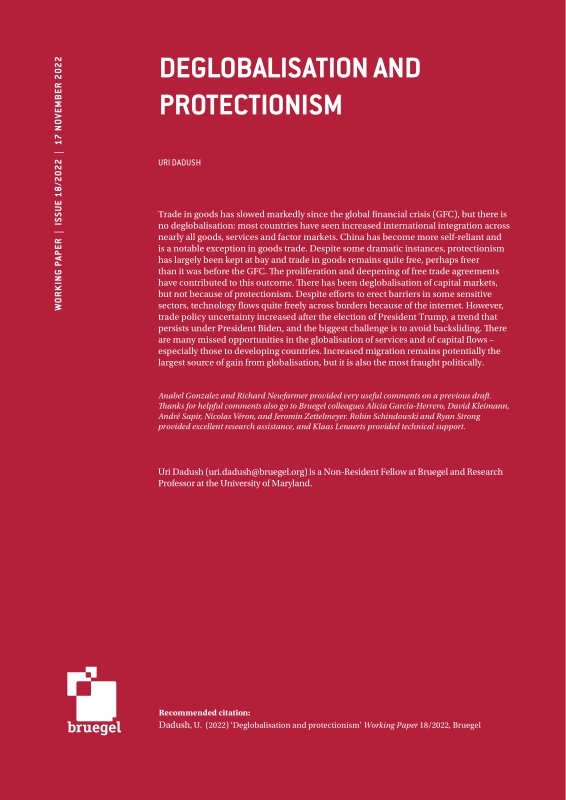
 https://www.bruegel.org/working-paper/deglobalisation-and-protectionism


권호기사보기
| 기사명 | 저자명 | 페이지 | 원문 | 기사목차 |
|---|
결과 내 검색
동의어 포함
Title page
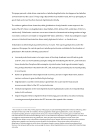
Contents
1. Introduction 2
2. From hyperglobalisation to deglobalisation? 4
3. Slowdown of trade in goods: the role of protectionism 8
3.1. MFN applied tariffs did not change much 9
3.2. Regional arrangements cover more trade and are deeper 10
3.3. Non-tariff measures are everywhere but the evidence is weak that they are more prevalent since the GFC, or that their intent is predominantly protectionist 12
3.4. Subsidy interventions have increased across the world since the GFC; however industrial subsidies in the EU and the US are unlikely to have had a significant... 15
3.5. Summary: trade in goods remains quite free, possibly freer than before the GFC 18
4. Other channels of globalisation 19
4.1. Services are highly protected, though no more than before, and continue to globalise because ICT facilitates their tradeability 19
4.2. Capital flows provide the clearest example of deglobalisation, but not because of protectionism 22
4.3. Migration is the most impeded channel of globalisation, but is not stopping 23
4.4. Technology transfer is probably occurring more easily than before 25
5. Conclusion: drivers of globalisation and implications for policy 26
References 29
Appendix 33
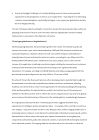
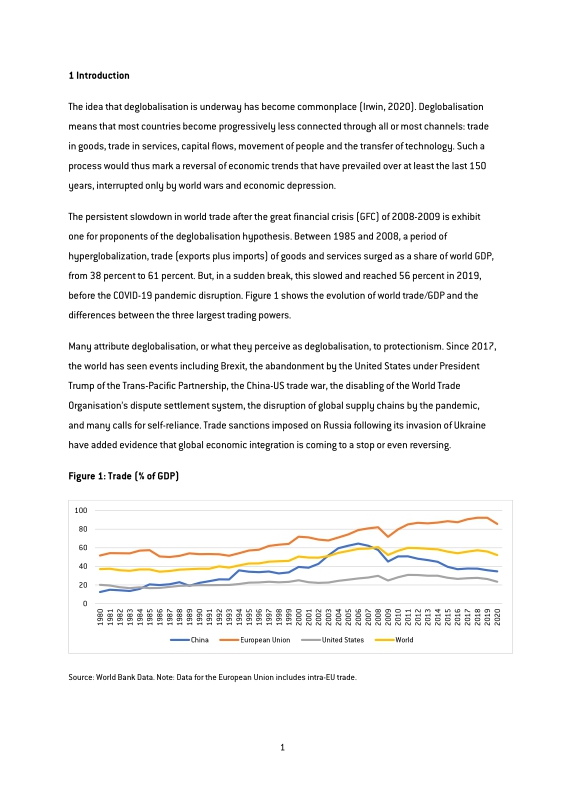
Figure 1. Trade 2
Figure 2. Change in Annual Trade/GDP for non-oil-exporting countries 6
Figure 3. Trade in intermediates growing rapidly World and regional exports of intermediate goods (excl. fuels), Q2 2019-Q2 2022 7
Figure 4. Share of world trade covered by trade agreement 11
Figure 5. Harmful interventions by type 14
Figure 6. Evolution of subsidies 15
Figure 7. Capital flows by type and region, as % of world GDP 23
Figure 8. Stock of migrants as percentage of population 24
Figure 9. personal remittances, received 25
*표시는 필수 입력사항입니다.
| 전화번호 |
|---|
| 기사명 | 저자명 | 페이지 | 원문 | 기사목차 |
|---|
| 번호 | 발행일자 | 권호명 | 제본정보 | 자료실 | 원문 | 신청 페이지 |
|---|
도서위치안내: / 서가번호:

우편복사 목록담기를 완료하였습니다.
*표시는 필수 입력사항입니다.
저장 되었습니다.
