
 대표어
대표어
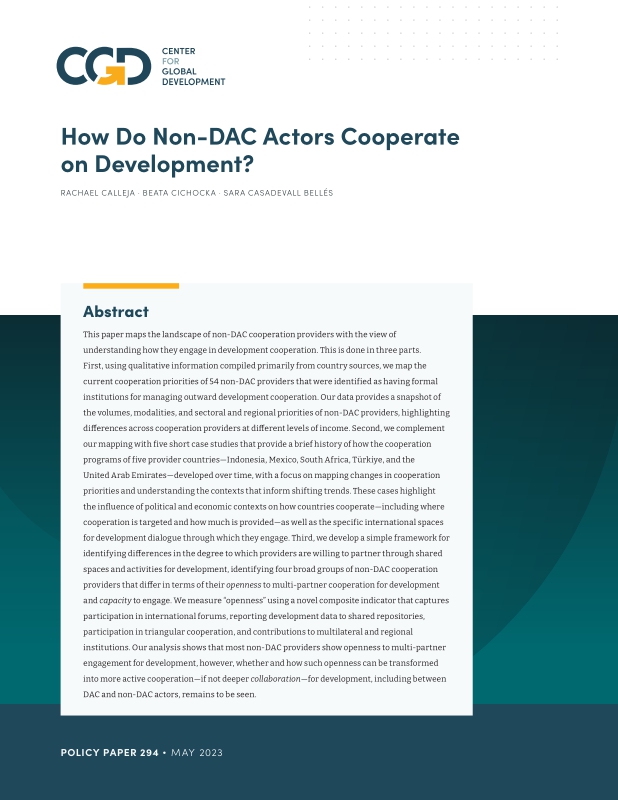
 https://www.cgdev.org/publication/how-do-non-dac-actors-cooperate-development
권호기사보기
| 기사명 | 저자명 | 페이지 | 원문 | 기사목차 |
|---|
결과 내 검색
동의어 포함
Title page
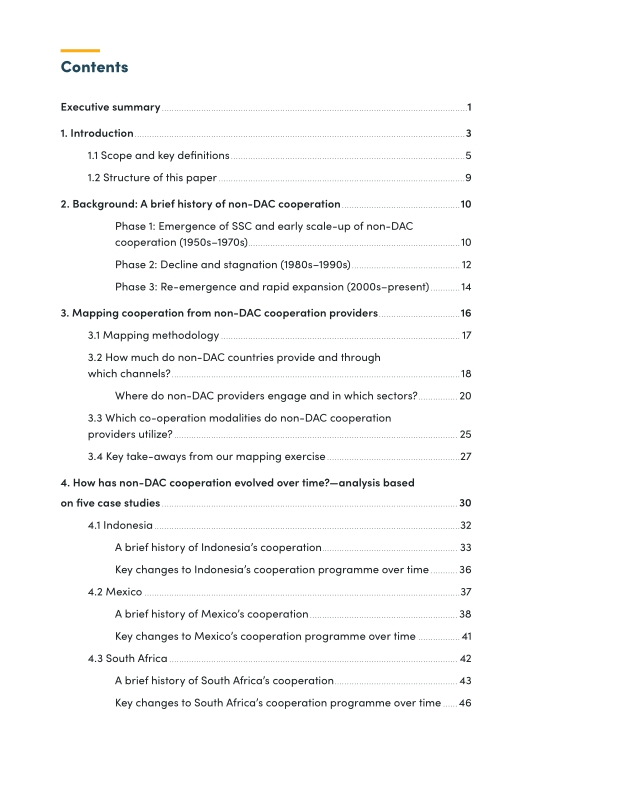
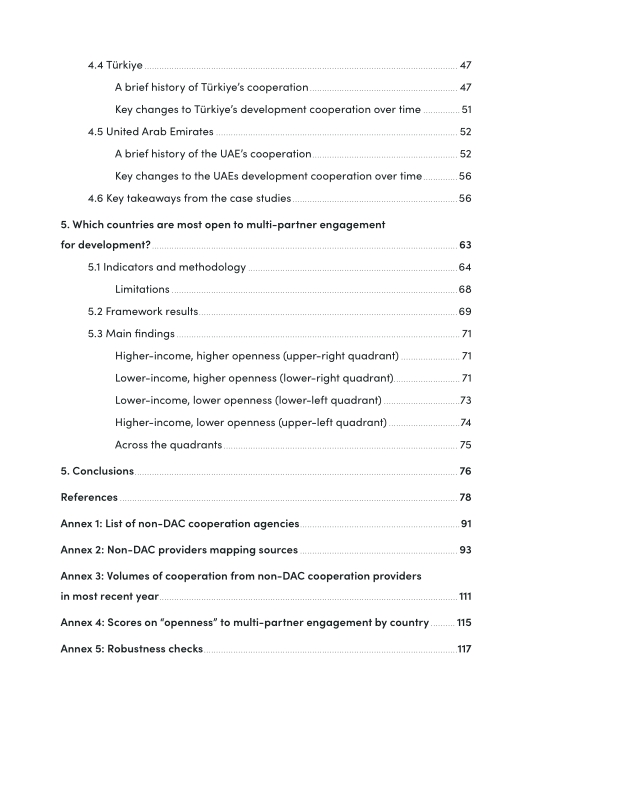
Contents
Abstract 1
Executive summary 6
1. Introduction 8
1.1. Scope and key definitions 10
1.2. Structure of this paper 14
2. Background: A brief history of non-DAC cooperation 15
Phase 1: Emergence of SSC and early scale-up of non-DAC cooperation (1950s-1970s) 15
Phase 2: Decline and stagnation (1980s-1990s) 17
Phase 3: Re-emergence and rapid expansion (2000s-present) 19
3. Mapping cooperation from non-DAC cooperation providers 21
3.1. Mapping methodology 22
3.2. How much do non-DAC countries provide and through which channels? 23
Where do non-DAC providers engage and in which sectors? 25
3.3. Which co-operation modalities do non-DAC cooperation providers utilize? 30
3.4. Key take-aways from our mapping exercise 32
4. How has non-DAC cooperation evolved over time?-analysis based on five case studies 35
4.1. Indonesia 37
A brief history of Indonesia's cooperation 38
Key changes to Indonesia's cooperation programme over time 41
4.2. Mexico 42
A brief history of Mexico's cooperation 43
Key changes to Mexico's cooperation programme over time 46
4.3. South Africa 47
A brief history of South Africa's cooperation 48
Key changes to South Africa's cooperation programme over time 51
4.4. Turkiye 52
A brief history of Turkiye's cooperation 52
Key changes to Turkiye's development cooperation over time 56
4.5. United Arab Emirates 57
A brief history of the UAE's cooperation 57
Key changes to the UAEs development cooperation over time 61
4.6. Key takeaways from the case studies 61
5. Which countries are most open to multi-partner engagement for development? 68
5.1. Indicators and methodology 69
Limitations 73
5.2. Framework results 74
5.3. Main findings 76
Higher-income, higher openness (upper-right quadrant) 76
Lower-income, higher openness (lower-right quadrant) 76
Lower-income, lower openness (lower-left quadrant) 78
Higher-income, lower openness (upper-left quadrant) 79
Across the quadrants 80
6/5. Conclusions 81
References 83
Annex 1: List of non-DAC cooperation agencies 96
Annex 2: Non-DAC providers mapping sources 98
Annex 3: Volumes of cooperation from non-DAC cooperation providers in most recent year 116
Annex 4: Scores on "openness" to multi-partner engagement by country 120
Annex 5: Robustness checks 122
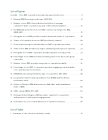
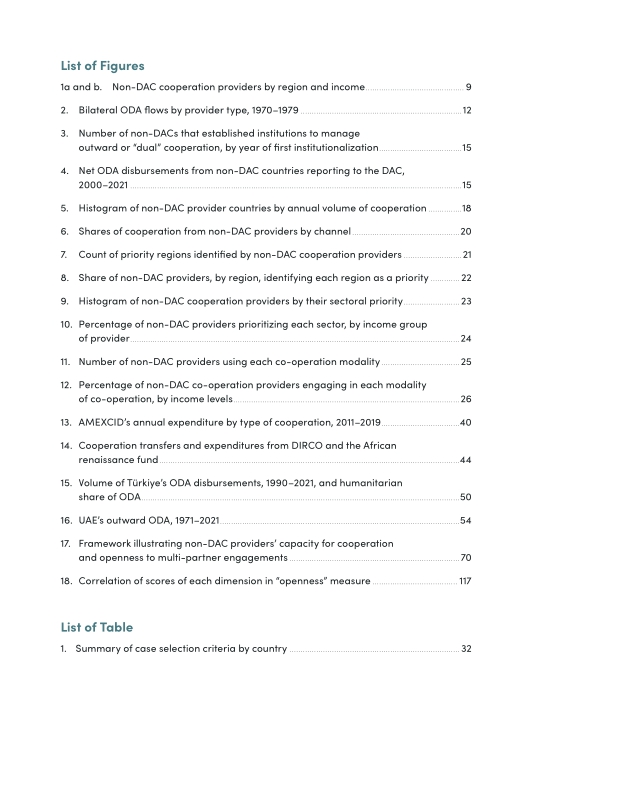
FIGURES 1a and b. Non-DAC cooperation providers by region and income 14
FIGURE 2. Bilateral ODA flows by provider type, 1970-1979 17
FIGURE 3. Number of non-DACs that established institutions to manage outward or "dual" cooperation, by year of first institutionalization 20
FIGURE 4. Net ODA disbursements from non-DAC countries reporting to the DAC, 2000-2021 20
FIGURE 5. Histogram of non-DAC provider countries by annual volume of cooperation 23
FIGURE 6. Shares of cooperation from non-DAC providers by channel 25
FIGURE 7. Count of priority regions identified by non-DAC cooperation providers 26
FIGURE 8. Share of non-DAC providers, by region, identifying each region as a priority 27
FIGURE 9. Histogram of non-DAC cooperation providers by their sectoral priority 28
FIGURE 10. Percentage of non-DAC providers prioritizing each sector, by income group of provider 29
FIGURE 11. Number of non-DAC providers using each co-operation modality 30
FIGURE 12. Percentage of non-DAC co-operation providers engaging in each modality of co-operation, by income levels 31
FIGURE 13. AMEXCID's annual expenditure by type of cooperation, 2011-2019 45
FIGURE 14. Cooperation transfers and expenditures from DIRCO and the African renaissance fund 49
FIGURE 15. Volume of Turkiye's ODA disbursements, 1990-2021, and humanitarian share of ODA 55
FIGURE 16. UAE's outward ODA, 1971-2021 59
FIGURE 17. Framework illustrating non-DAC providers' capacity for cooperation and openness to multi-partner engagements 75
FIGURE 18. Correlation of scores of each dimension in "openness" measure 122
Boxes
BOX 1. Challenges defining "emerging" cooperation providers 10
BOX 2. Approach to mapping non-DAC development agencies 12
BOX 3. Models of non-DAC "donorship" in the literature 36
*표시는 필수 입력사항입니다.
| 전화번호 |
|---|
| 기사명 | 저자명 | 페이지 | 원문 | 기사목차 |
|---|
| 번호 | 발행일자 | 권호명 | 제본정보 | 자료실 | 원문 | 신청 페이지 |
|---|
도서위치안내: / 서가번호:

우편복사 목록담기를 완료하였습니다.
*표시는 필수 입력사항입니다.
저장 되었습니다.
