
 대표어
대표어
 https://www.gao.gov/products/gao-24-106213




권호기사보기
| 기사명 | 저자명 | 페이지 | 원문 | 기사목차 |
|---|
결과 내 검색
동의어 포함
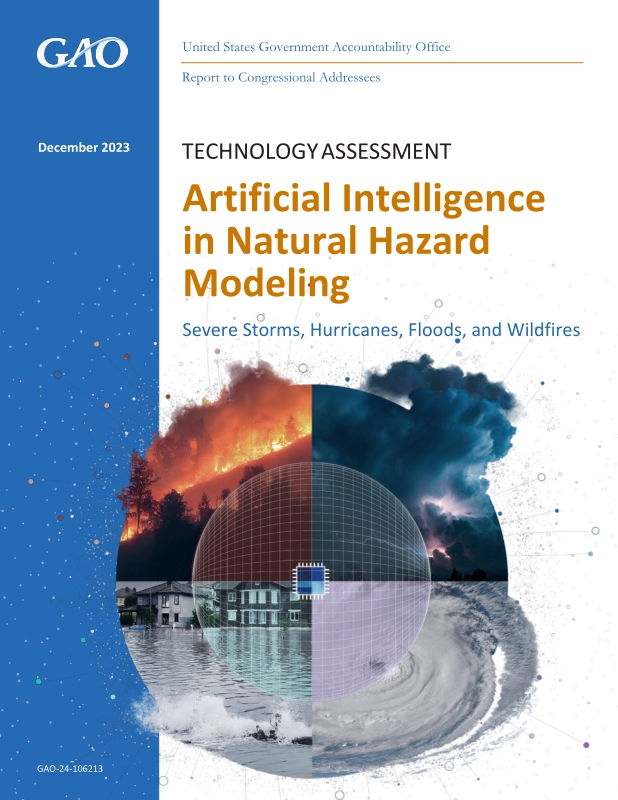
Title page
Contents
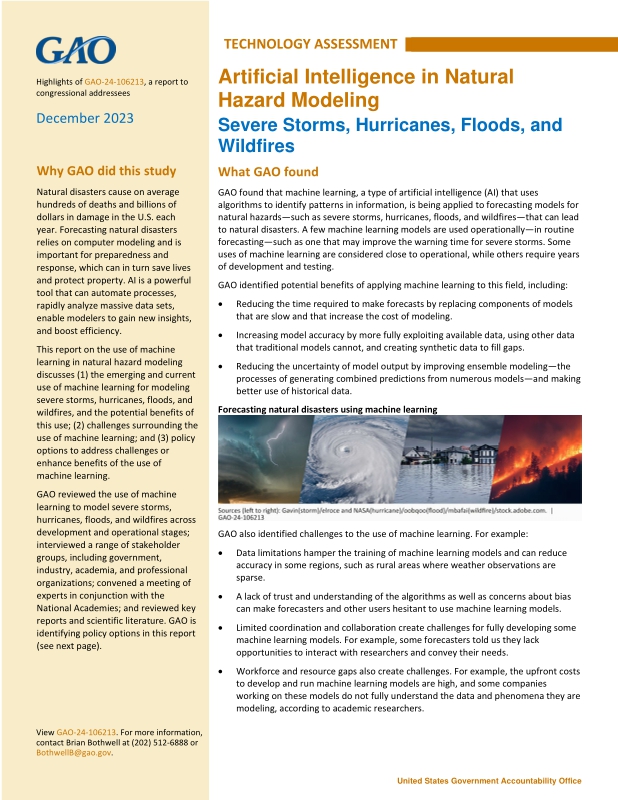
Highlights 3
Introduction 9
1. Background 11
1.1. Modeling for natural hazard forecasts 11
1.2. AI and machine learning 22
1.3. Machine learning in natural hazard modeling 22
1.4. Policy environment 23
2. Machine Learning May Significantly Enhance Natural Hazard Modeling 25
2.1. Machine learning may speed up forecasting 25
2.2. Machine learning may improve the use of data 27
2.3. Machine learning may improve predictions in the absence of data 29
2.4. Machine learning can help leverage multiple models to improve predictions 30
3. Challenges to Applying Machine Learning in Natural Hazard Modeling 36
3.1. Data gaps, bias, and incompatibility 36
3.2. Trust in machine learning 39
3.3. Limited coordination and collaboration 41
3.4. Workforce and resource needs create barriers to uptake of machine learning 42
4. Policy Options to Help Enhance Benefits or Address Challenges of Using Machine Learning Technologies for Natural Hazard Modeling 45
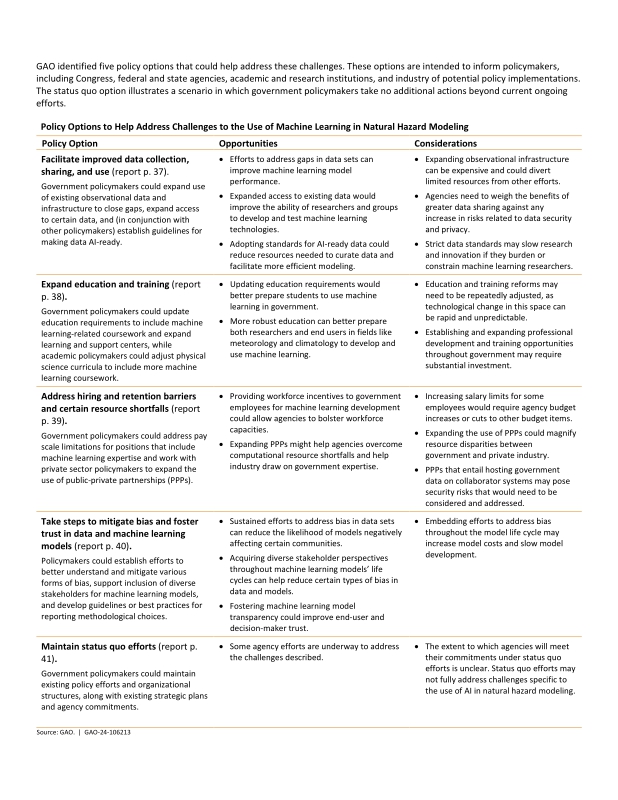
4.1. Facilitate improved data collection, sharing, and use 45
4.2. Expand machine learning education and training 46
4.3. Address hiring and retention barriers and certain resource shortfalls 47
4.4. Take steps to mitigate bias and foster trust in data and machine learning models 48
4.5. Maintain status quo efforts 49
5. Agency and Expert Comments 52
Appendix I: Objectives, Scope, and Methodology 54
Appendix II: Expert Participation 58
Appendix III: GAO Contacts and Staff Acknowledgments 60
Figure 1. Basic steps of forecasting a natural hazard event 12
Figure 2. Representation of an emulator replacing part of a traditional model 26
Figure 3. A digital twin recreating a wildfire 27
*표시는 필수 입력사항입니다.
| 전화번호 |
|---|
| 기사명 | 저자명 | 페이지 | 원문 | 기사목차 |
|---|
| 번호 | 발행일자 | 권호명 | 제본정보 | 자료실 | 원문 | 신청 페이지 |
|---|
도서위치안내: / 서가번호:

우편복사 목록담기를 완료하였습니다.
*표시는 필수 입력사항입니다.
저장 되었습니다.
