
 대표어
대표어
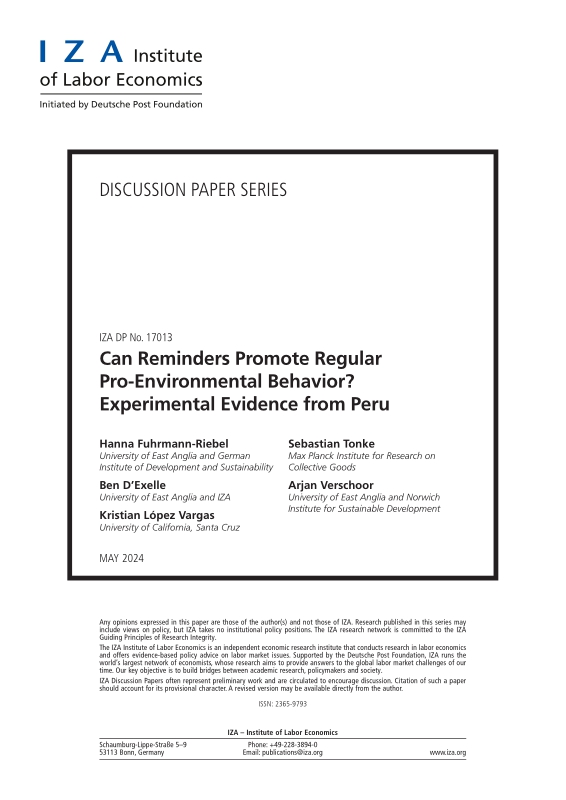
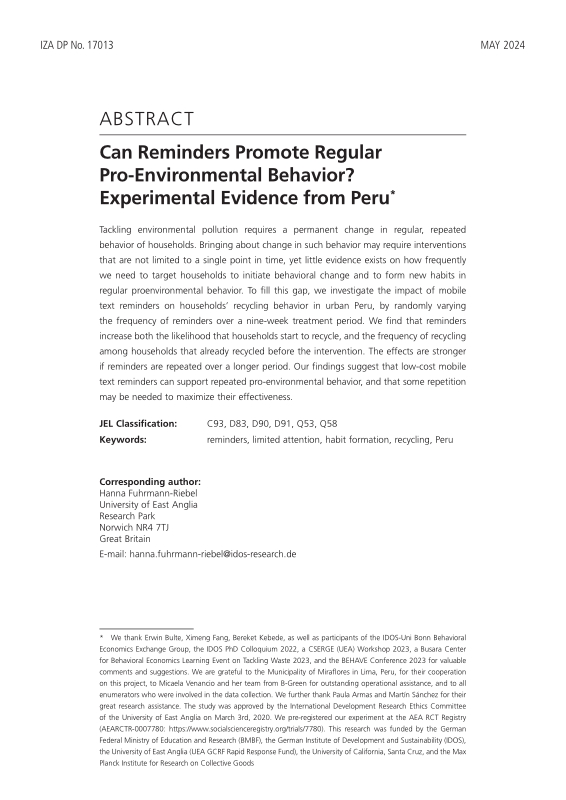
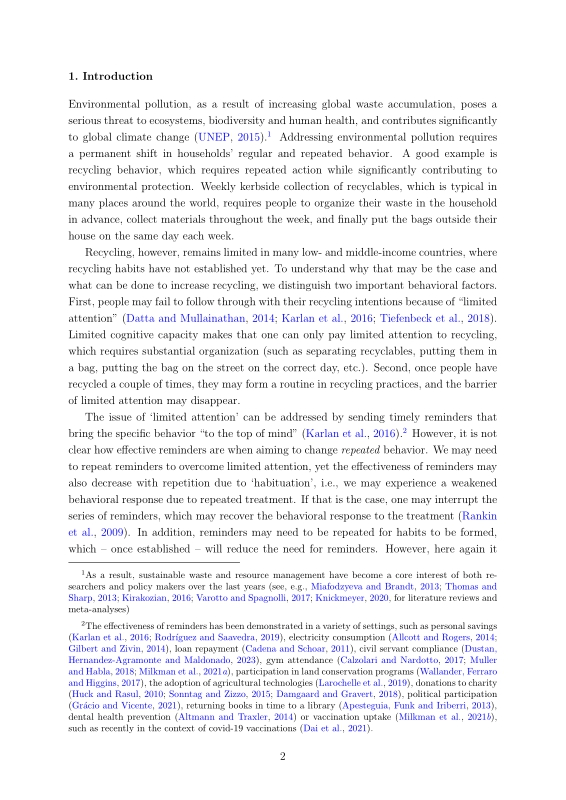
 https://www.iza.org/publications/dp/17013/can-reminders-promote-regular-pro-environmental-behavior-experimental-evidence-from-peru
권호기사보기
| 기사명 | 저자명 | 페이지 | 원문 | 기사목차 |
|---|
결과 내 검색
동의어 포함
Title page
Contents
Abstract 3
1. Introduction 4
2. Design 6
2.1. Setting 6
2.2. Conceptual framework 7
2.3. Treatments 9
2.4. Treatment comparisons and hypotheses 10
2.5. Implementation 11
3. Results 13
3.1. Descriptives 13
3.2. Treatment effects by period 14
3.3. Heterogeneity by recycling at baseline 17
3.4. Mechanisms 18
3.5. Treatment effects over the entire intervention period 20
3.6. Intensive margin 23
4. Conclusion 23
References 26
Appendix 30
A. Balance tests and descriptive overview 30
B. Histograms of recycling frequency per period 32
C. Graphs on weekly recycling behavior 34
D. Additional analyses 35
E. Full sample results 40
Figure 1. Recycling propensity by reminder frequency 7
Figure 2. Proportion of households that recycled at least once per period, by treatment 14
Figure 3. Total recycling frequency during entire intervention period, by treatment 21
Figure B.1. Histograms of recycling frequency during the baseline period (week 1-3), comparing all treatment groups together with the control group 32
Figure B.2. Histograms of recycling frequency during period 2 (week 4-6), comparing all treatment groups together with the control group 32
Figure B.3. Histograms of recycling frequency during period 3 (week 7-9), comparing the continuous and the interrupted treatment groups with the control group 33
Figure B.4. Histograms of recycling frequency during period 4 (week 10-12), comparing the continuous, interrupted and restarted treatment groups with the control group 33
Figure C.1. Percentages of households that recycled per week 34
Figure E.1. Histograms of recycling frequency during the baseline period (week 1-3), comparing all treatment groups together with the control group - full sample 41
Figure E.2. Histograms of recycling frequency during period 2 (week 4-6), comparing all treatment groups together with the control group - full sample 41
Figure E.3. Histograms of recycling frequency during period 3 (week 7-9), comparing the continuous and the interrupted treatment groups with the control group - full sample 42
Figure E.4. Histograms of recycling frequency during period 4 (week 10-12), comparing the continuous, interrupted and restarted treatment groups with the control group - full sample 42
Figure E.5. Percentages of households that recycled per week - full sample 43
Figure E.6. Proportions of households that recycled at least once per period - full sample 44
Figure E.7. Total recycling frequency during entire intervention period, by treatment - full sample 48
*표시는 필수 입력사항입니다.
| 전화번호 |
|---|
| 기사명 | 저자명 | 페이지 | 원문 | 기사목차 |
|---|
| 번호 | 발행일자 | 권호명 | 제본정보 | 자료실 | 원문 | 신청 페이지 |
|---|
도서위치안내: / 서가번호:

우편복사 목록담기를 완료하였습니다.
*표시는 필수 입력사항입니다.
저장 되었습니다.
