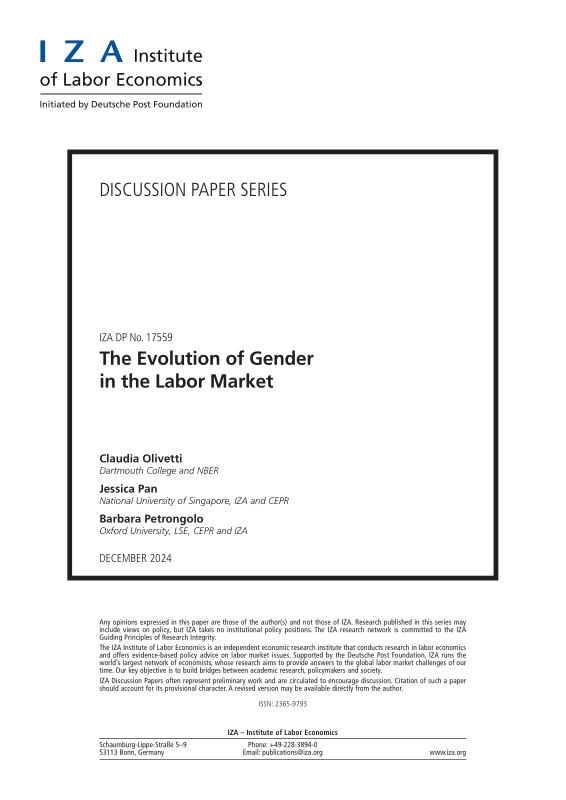
 https://www.iza.org/publications/dp/17559/the-evolution-of-gender-in-the-labor-market
권호기사보기
| 기사명 | 저자명 | 페이지 | 원문 | 기사목차 |
|---|
| 대표형(전거형, Authority) | 생물정보 | 이형(異形, Variant) | 소속 | 직위 | 직업 | 활동분야 | 주기 | 서지 | |
|---|---|---|---|---|---|---|---|---|---|
| 연구/단체명을 입력해주세요. | |||||||||
|
|
|
|
|
|
* 주제를 선택하시면 검색 상세로 이동합니다.
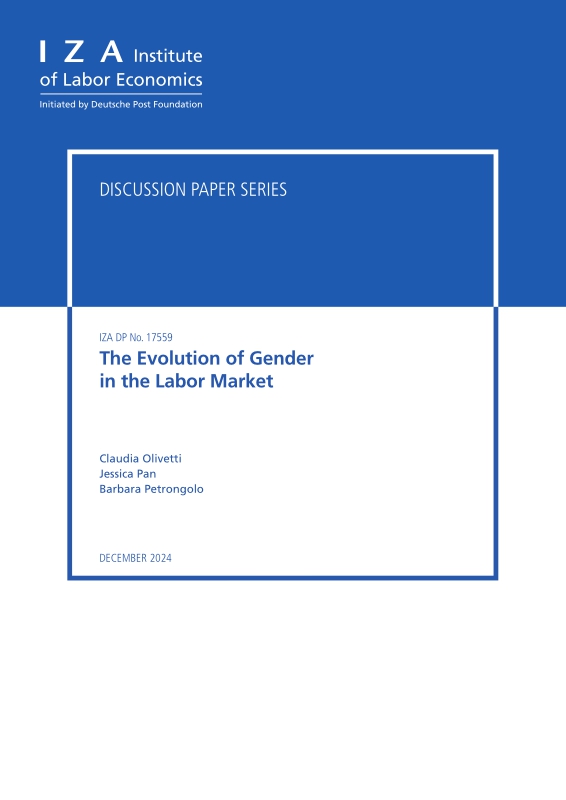
Title page
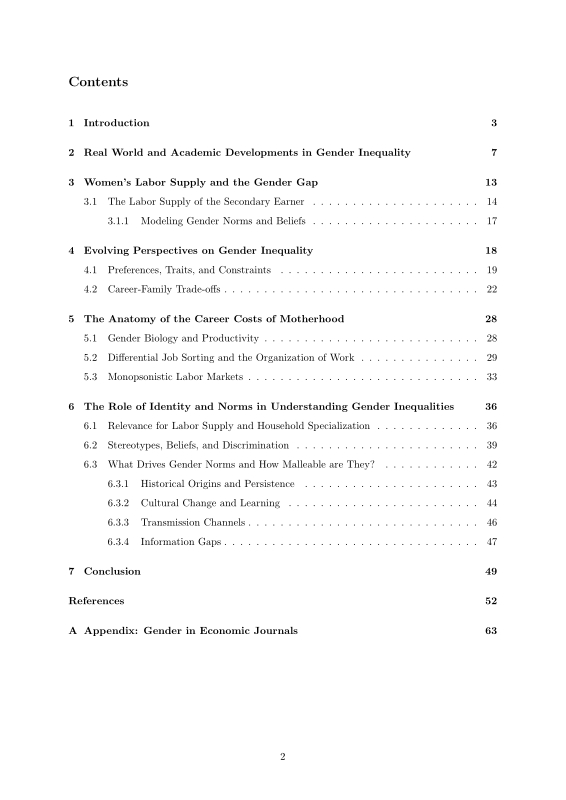
Contents
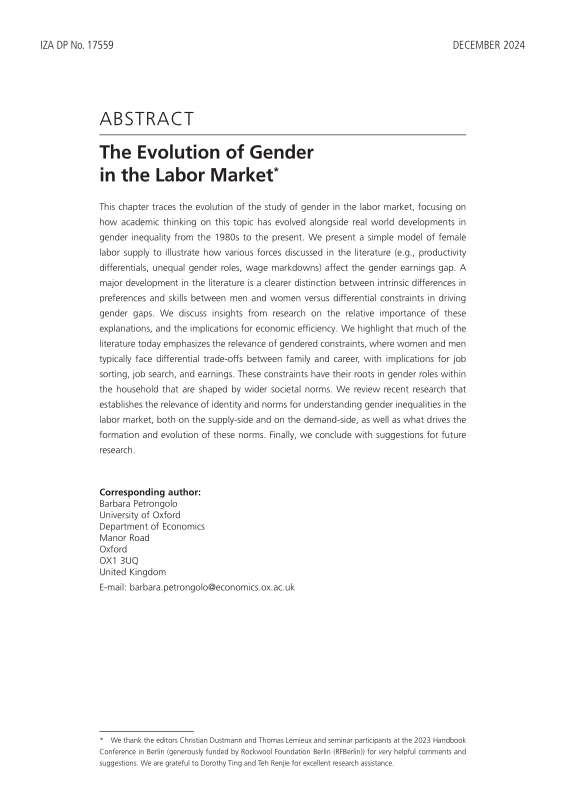
Abstract 3
1. Introduction 5
2. Real World and Academic Developments in Gender Inequality 9
3. Women's Labor Supply and the Gender Gap 15
3.1. The Labor Supply of the Secondary Earner 16
3.1.1. Modeling Gender Norms and Beliefs 19
4. Evolving Perspectives on Gender Inequality 20
4.1. Preferences, Traits, and Constraints 21
4.2. Career-Family Trade-offs 24
5. The Anatomy of the Career Costs of Motherhood 30
5.1. Gender Biology and Productivity 30
5.2. Differential Job Sorting and the Organization of Work 31
5.3. Monopsonistic Labor Markets 35
6. The Role of Identity and Norms in Understanding Gender Inequalities 38
6.1. Relevance for Labor Supply and Household Specialization 38
6.2. Stereotypes, Beliefs, and Discrimination 41
6.3. What Drives Gender Norms and How Malleable are They? 44
6.3.1. Historical Origins and Persistence 45
6.3.2. Cultural Change and Learning 46
6.3.3. Transmission Channels 48
6.3.4. Information Gaps 49
7. Conclusion 51
References 54
A. Appendix: Gender in Economic Journals 65
Figure 1. Gender vs. Race Papers in Top 30 Economics Journals 6
Figure 2. Evolution of Topics Among Gender Papers 7
Figure 3. Gender Gap in Earnings: Role of Participation, Hours, and Wage Rates 11
Figure 4. Decomposition of Gender Log Wage Gap Over Time 13
Figure 5. The Labor Supply Decisions of Married Women 18
Figure A.1. Gender vs. Race Papers in Top 21 Economics Journals Available in EBSCO 65
*표시는 필수 입력사항입니다.
| 전화번호 |
|---|
| 기사명 | 저자명 | 페이지 | 원문 | 기사목차 |
|---|
| 번호 | 발행일자 | 권호명 | 제본정보 | 자료실 | 원문 | 신청 페이지 |
|---|
도서위치안내: / 서가번호:

우편복사 목록담기를 완료하였습니다.
*표시는 필수 입력사항입니다.
저장 되었습니다.
