
 대표어
대표어
 https://openknowledge.worldbank.org/entities/publication/1bf78964-bbd9-4a25-ac7c-1dfe0a3c6d92
권호기사보기
| 기사명 | 저자명 | 페이지 | 원문 | 기사목차 |
|---|
결과 내 검색
동의어 포함
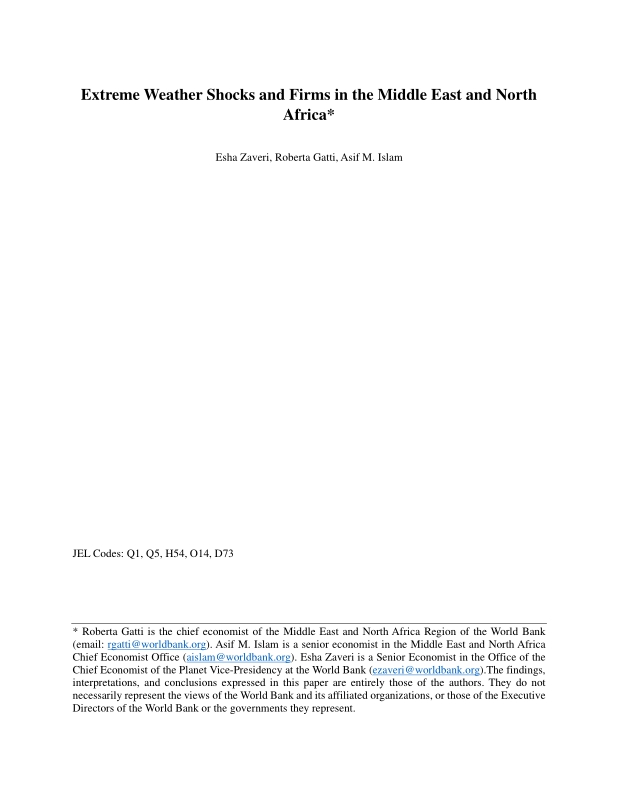
Title page 1
Contents 1
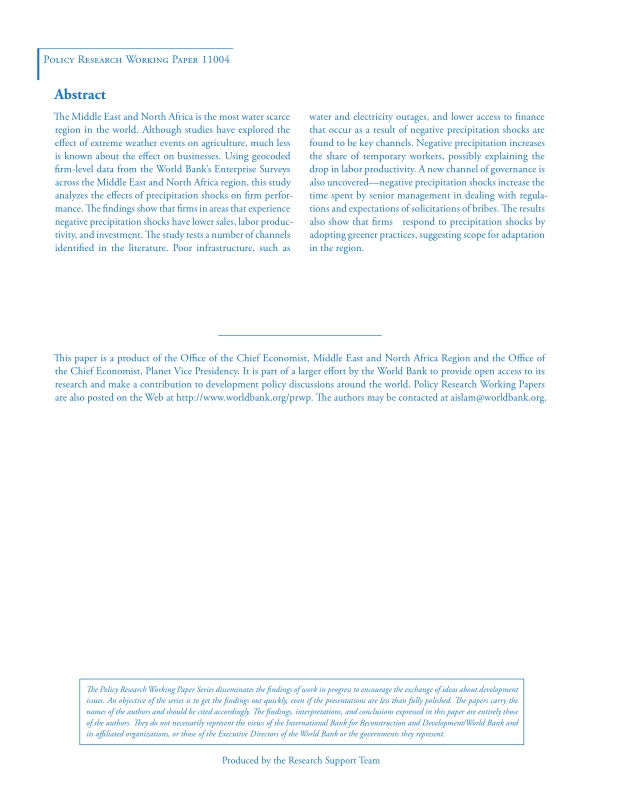
Abstract 2
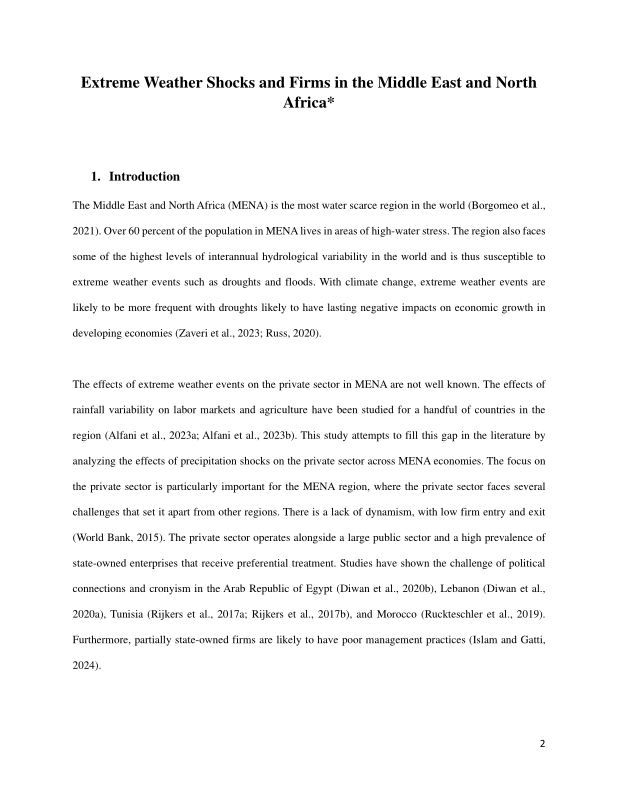
1. Introduction 4
2. Empirical Approach 7
2.1. Data 7
2.2. Empirical Approach 9
3. Results 11
3.1. Main Results 11
3.2. Channels 12
3.3. Adaptation 14
4. Conclusion 15
References 17
Tables 19
Table 1. Precipitation Shocks and Performance 19
Table 2. Precipitation Shocks and Labor - Size and Composition 20
Table 3. Precipitation Shocks and Infrastructure 21
Table 4. Precipitation Shocks and Finance 22
Table 5. Precipitation Shocks and Governance 23
Table 6. Precipitation Shocks and Adaptation 24
Appendix Tables 25
Table A1. Summary Statistics 25
Table A2. Surveys included in the study 26
*표시는 필수 입력사항입니다.
| 전화번호 |
|---|
| 기사명 | 저자명 | 페이지 | 원문 | 기사목차 |
|---|
| 번호 | 발행일자 | 권호명 | 제본정보 | 자료실 | 원문 | 신청 페이지 |
|---|
도서위치안내: / 서가번호:

우편복사 목록담기를 완료하였습니다.
*표시는 필수 입력사항입니다.
저장 되었습니다.
