
 대표어
대표어
 https://www.iza.org/publications/dp/17693/assessing-the-value-of-incomplete-university-degrees-experimental-evidence-from-hr-recruiters
권호기사보기
| 기사명 | 저자명 | 페이지 | 원문 | 기사목차 |
|---|
결과 내 검색
동의어 포함
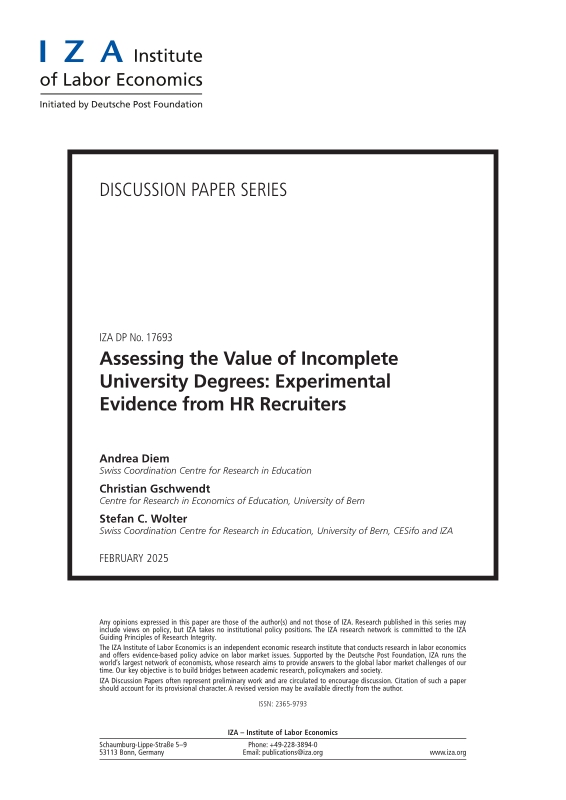
Title page 1
Contents 1
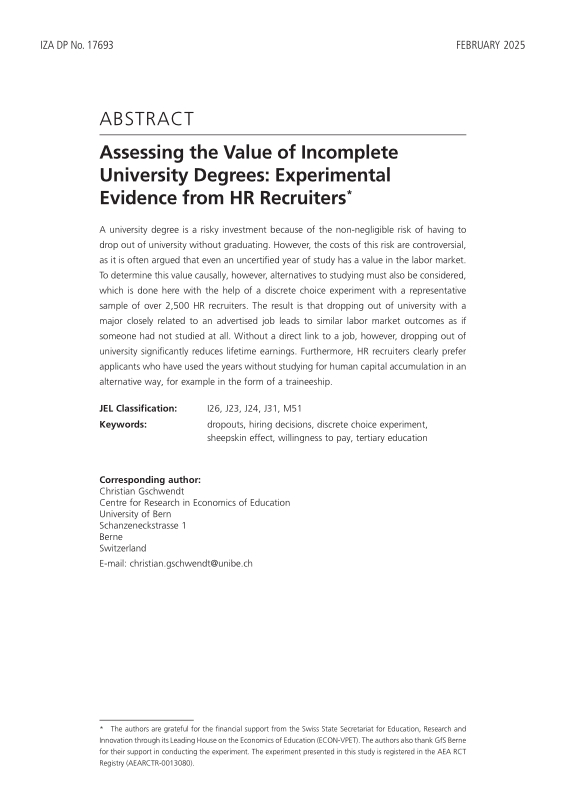
Abstract 3
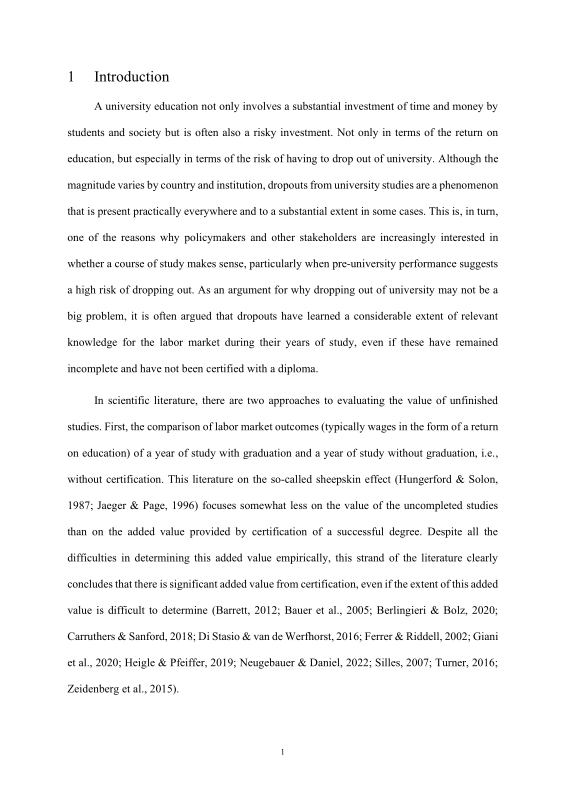
1. Introduction 4
2. Institutional Background 8
3. Experimental Setup 9
4. Data and Methods 14
5. Results 17
5.1. Mixed Logit Estimates and WTP 17
5.2. WTP by university major 19
5.3. WTP with interactions 21
5.4. WTP Differences by Firm Characteristics 22
6. Back of the Envelope Calculations 25
7. Conclusions 26
References 29
Appendix A: Discrete Choice Experiment 32
Appendix B: Descriptives 35
Tables 12
Table 1. Candidate attributes and levels 12
Table 2/Table 3. Mixed logit estimates and WTP for career path attributes 18
Table 3/Table 4. WTP by major program 20
Table 4/Table 5. WTP with time interactions 22
Table 5/Table 6. Individual determinants of WTP for applicant characteristics 24
Table 6/Table 7. Lifetime income differences compared to the reference group of non-studiers who traveled and worked in percent 26
Figures 13
Figure 1. Example of a Choice set 13
Figure 2. Distribution of individual-level WTP for career path attributes 23
Appendix Tables 33
Table A.1. Choice sets used in the DCE 33
Table B.1. Descriptive statistics of the sample 35
Appendix Figures 32
Figure A.1. Print version example of a German choice set including its introductory text 32
*표시는 필수 입력사항입니다.
| 전화번호 |
|---|
| 기사명 | 저자명 | 페이지 | 원문 | 기사목차 |
|---|
| 번호 | 발행일자 | 권호명 | 제본정보 | 자료실 | 원문 | 신청 페이지 |
|---|
도서위치안내: / 서가번호:

우편복사 목록담기를 완료하였습니다.
*표시는 필수 입력사항입니다.
저장 되었습니다.
