
 대표어
대표어
 https://www.c2es.org/document/assessing-the-landscape-of-climate-risk-and-supply-chain-resilience-a-primer-for-corporate-leaders-and-climate-risk-professionals/
권호기사보기
| 기사명 | 저자명 | 페이지 | 원문 | 기사목차 |
|---|
결과 내 검색
동의어 포함
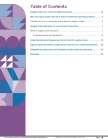
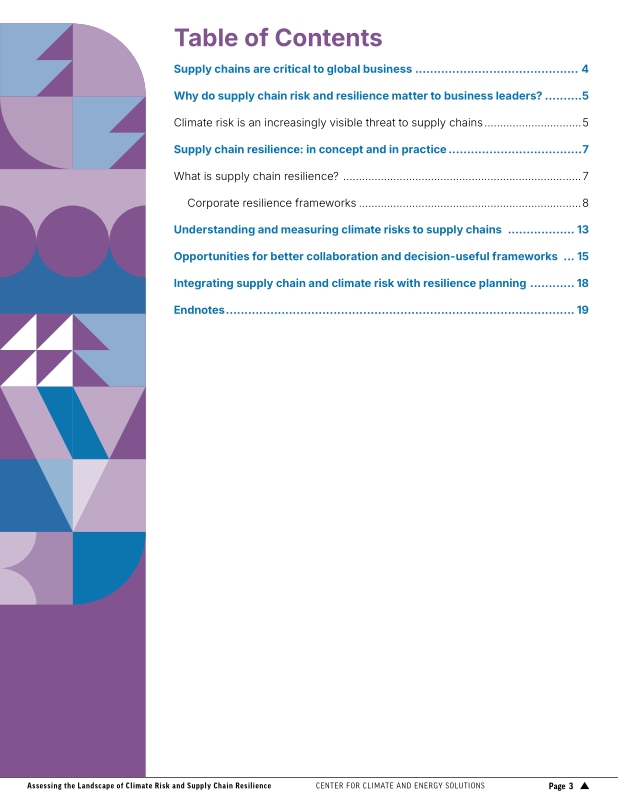
Title page 1
Contents 3
Summary 1
Acknowledgements 2
Supply chains are critical to global business 4
Why do supply chain risk and resilience matter to business leaders? 5
Climate risk is an increasingly visible threat to supply chains 5
Supply chain resilience: in concept and in practice 7
What is supply chain resilience? 7
Corporate resilience frameworks 8
Understanding and measuring climate risks to supply chains 13
Opportunities for better collaboration and decision-useful frameworks 15
Integrating supply chain and climate risk with resilience planning 18
Endnotes 19
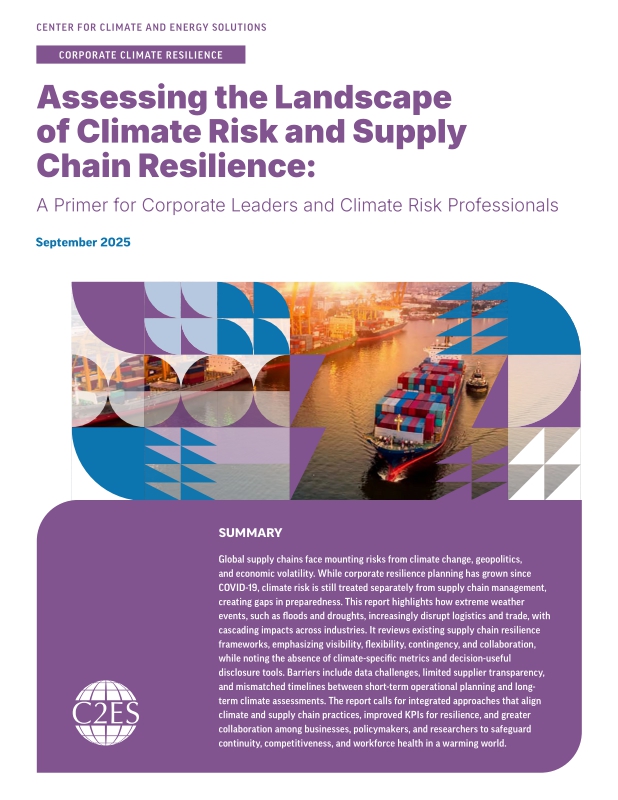
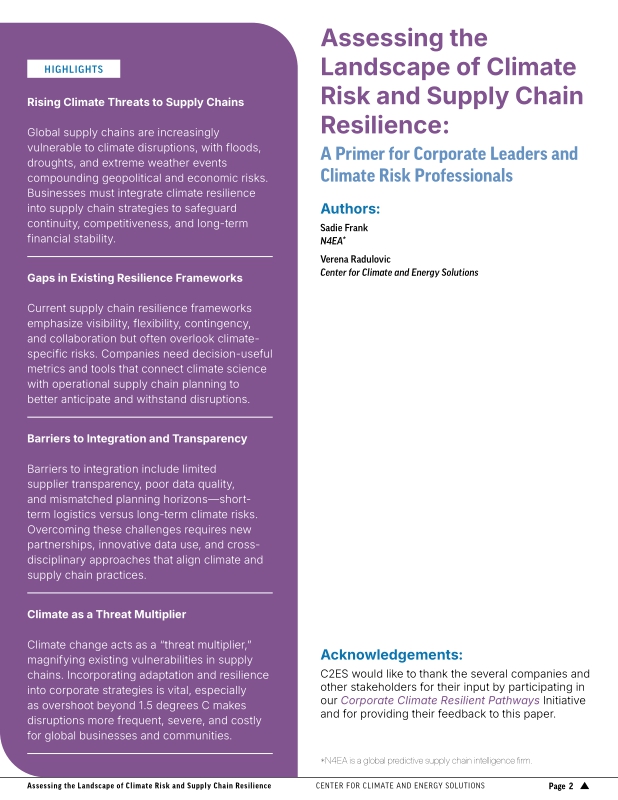
Global supply chains face mounting risks from climate change, geopolitics, and economic volatility. While corporate resilience planning has grown since COVID-19, climate risk is still treated separately from supply chain management, creating gaps in preparedness.
This report highlights how extreme weather events, such as floods and droughts, increasingly disrupt logistics and trade, with cascading impacts across industries. It reviews existing supply chain resilience frameworks, emphasizing visibility, flexibility, contingency, and collaboration, while noting the absence of climate-specific metrics and decision-useful disclosure tools.
Barriers include data challenges, limited supplier transparency, and mismatched timelines between short-term operational planning and long-term climate assessments. The report calls for integrated approaches that align climate and supply chain practices, improved KPIs for resilience, and greater collaboration among businesses, policymakers, and researchers to safeguard continuity, competitiveness, and workforce health in a warming world.*표시는 필수 입력사항입니다.
| 전화번호 |
|---|
| 기사명 | 저자명 | 페이지 | 원문 | 기사목차 |
|---|
| 번호 | 발행일자 | 권호명 | 제본정보 | 자료실 | 원문 | 신청 페이지 |
|---|
도서위치안내: / 서가번호:

우편복사 목록담기를 완료하였습니다.
*표시는 필수 입력사항입니다.
저장 되었습니다.
