
 대표어
대표어
 https://op.europa.eu/en/publication-detail/-/publication/ccb95cbb-c04d-11f0-a612-01aa75ed71a1/language-en?WT.mc_id=Selectedpublications&WT.ria_c=41957&WT.ria_f=6415&WT.ria_ev=search



권호기사보기
| 기사명 | 저자명 | 페이지 | 원문 | 기사목차 |
|---|
결과 내 검색
동의어 포함
Title page 1
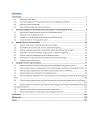
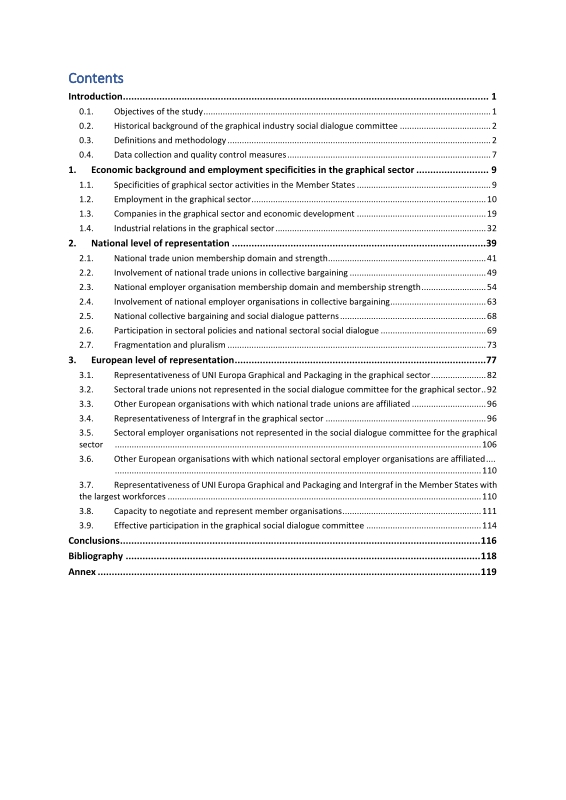
Contents 4
Introduction 8
0.1. Objectives of the study 8
0.2. Historical background of the graphical industry social dialogue committee 9
0.3. Definitions and methodology 9
0.4. Data collection and quality control measures 14
1. Economic background and employment specificities in the graphical sector 16
1.1. Specificities of graphical sector activities in the Member States 16
1.2. Employment in the graphical sector 17
1.3. Companies in the graphical sector and economic development 26
1.4. Industrial relations in the graphical sector 39
2. National level of representation 46
2.1. National trade union membership domain and strength 48
2.2. Involvement of national trade unions in collective bargaining 56
2.3. National employer organisation membership domain and membership strength 61
2.4. Involvement of national employer organisations in collective bargaining 70
2.5. National collective bargaining and social dialogue patterns 75
2.6. Participation in sectoral policies and national sectoral social dialogue 76
2.7. Fragmentation and pluralism 80
3. European level of representation 84
3.1. Representativeness of UNI Europa Graphical and Packaging in the graphical sector 89
3.2. Sectoral trade unions not represented in the social dialogue committee for the graphical sector 99
3.3. Other European organisations with which national trade unions are affiliated 103
3.4. Representativeness of Intergraf in the graphical sector 103
3.5. Sectoral employer organisations not represented in the social dialogue committee for the graphical sector 113
3.6. Other European organisations with which national sectoral employer organisations are affiliated 117
3.7. Representativeness of UNI Europa Graphical and Packaging and Intergraf in the Member States with the largest workforces 117
3.8. Capacity to negotiate and represent member organisations 118
3.9. Effective participation in the graphical social dialogue committee 121
Conclusions 123
Bibliography 125
Annex 126
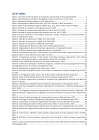
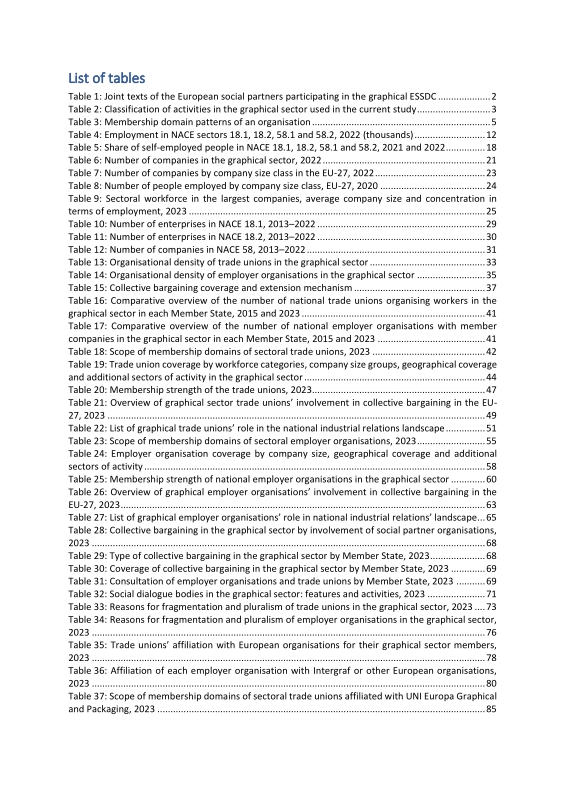
Tables 5
Table 1. Joint texts of the European social partners participating in the graphical ESSDC 9
Table 2. Classification of activities in the graphical sector used in the current study 10
Table 3. Membership domain patterns of an organisation 12
Table 4. Employment in NACE sectors 18.1, 18.2, 58.1 and 58.2, 2022 (thousands) 19
Table 5. Share of self-employed people in NACE 18.1, 18.2, 58.1 and 58.2, 2021 and 2022 25
Table 6. Number of companies in the graphical sector, 2022 28
Table 7. Number of companies by company size class in the EU-27, 2022 30
Table 8. Number of people employed by company size class, EU-27, 2020 31
Table 9. Sectoral workforce in the largest companies, average company size and concentration in terms of employment, 2023 32
Table 10. Number of enterprises in NACE 18.1, 2013-2022 36
Table 11. Number of enterprises in NACE 18.2, 2013-2022 37
Table 12. Number of companies in NACE 58, 2013-2022 38
Table 13. Organisational density of trade unions in the graphical sector 40
Table 14. Organisational density of employer organisations / business associations in the graphical sector 42
Table 15. Collective bargaining coverage and extension mechanism 44
Table 16. Comparative overview of the number of national trade unions organising workers in the graphical sector in each Member State, 2015 and 2023 48
Table 17. Comparative overview of the number of national employer organisations with member companies in the graphical sector in each Member State, 2015 and 2023 48
Table 18. Scope of membership domains of sectoral trade unions, 2023 49
Table 19. Trade union coverage by workforce categories, company size groups, geographical coverage and additional sectors of activity in the graphical sector 51
Table 20. Membership strength of the trade unions, 2023 54
Table 21. Overview of graphical sector trade unions' involvement in collective bargaining in the EU-27, 2023 56
Table 22. List of graphical trade unions' role in the national industrial relations landscape 58
Table 23. Scope of membership domains of sectoral employer organisations, 2023 62
Table 24. Employer organisation coverage by company size, geographical coverage and additional sectors of activity 65
Table 25. Membership strength of national employer organisations in the graphical sector 67
Table 26. Overview of graphical employer organisations' involvement in collective bargaining in the EU-27, 2023 70
Table 27. List of graphical employer organisations' role in national industrial relations' landscape 72
Table 28. Collective bargaining in the graphical sector by involvement of social partner organisations, 2023 75
Table 29. Type of collective bargaining in the graphical sector by Member State, 2023 75
Table 30. Coverage of collective bargaining in the graphical sector by Member State, 2023 76
Table 31. Consultation of employer organisations and trade unions by Member State, 2023 76
Table 32. Social dialogue bodies in the graphical sector: features and activities, 2023 78
Table 33. Reasons for fragmentation and pluralism of trade unions in the graphical sector, 2023 80
Table 34. Reasons for fragmentation and pluralism of employer organisations in the graphical sector, 2023 83
Table 35. Trade unions' affiliation with European organisations for their graphical sector members, 2023 85
Table 36. Affiliation of each employer organisation with Intergraf or other European organisations, 2023 87
Table 37. Scope of membership domains of sectoral trade unions affiliated with UNI Europa Graphical and Packaging (GP), 2023 92
Table 38. Trade union coverage by workforce categories and company size groups of sectoral trade unions affiliated with UNI Europa Graphical and Packaging (GP), 2023 93
Table 39. Membership strength of trade unions affiliated with UNI Europa Graphical and Packaging, 2023 94
Table 40. Overview of the involvement in collective bargaining of the trade unions affiliated with UNI Europa Graphical and Packaging in the EU-27, 2023 95
Table 41. Role of the graphical trade unions affiliated with UNI Europa Graphical and Packaging in the national industrial relations landscape, 2023 97
Table 42. Membership strength of trade unions not affiliated with UNI Europa Graphical and Packaging, 2023 99
Table 43. Role of non-represented graphical trade unions in the national industrial relations landscape, 2023 101
Table 44. Scope of membership domains of sectoral employer organisations affiliated with Intergraf, 2023 106
Table 45. Employer organisation coverage by workforce categories and company size groups for employer organisations affiliated with Intergraf, 2023 109
Table 46. Membership strength of employer organisations that are members of Intergraf, 2023 110
Table 47. Intergraf-affiliated national employer organisations' role in the national industrial relations landscape, 2023 112
Table 48. Membership strength of national employer organisations that are not affiliated with Intergraf, 2023 113
Table 49. Role of non-represented graphical employer organisations in the national industrial relations landscape, 2023 115
Table 50. Overview of the representation of the national social partner organisations from the six Member States with the largest sectoral workforce in the ESSDC 117
Table 51. Affiliations in the Member States where the graphical sector has a share over 1 % of total employment 118
Table 52. Effective participation in the graphical ESSDC, 2022-2024 121
Table 53. Comparative overview of the social partners in the graphical sector based on European Commission Decision 98/500/EC criteria 122
Table 54. Activities considered part of the graphical sector in each Member State, 2023 126
Table 55. Features of the graphical sector workforce, 2023 129
Table 56. Features hindering the organisation of the workforce in the graphical sector, 2023 131
Table 57. Means used by trade unions to attract members in the sector in recent years, 2023 133
Table 58. Company features that hinder the organisation of companies in employer organisations, 2023 135
Table 59. Scope of membership domains of trade unions not represented in the ESSDC, 2023 137
Table 60. Trade union coverage by workforce categories and company size groups of non-represented sectoral trade unions, 2023 138
Table 61. Scope of membership domains of sectoral employer organisations not affiliated with Intergraf, 2023 139
Table 62. List of national trade unions identified as representing workers in the graphical sector 141
Table 63. List of national employer organisations representing the companies in the graphical sector 144
Table 64. Correspondents who contributed to this study 147
Figures 7
Figure 1. Four different types of sector-relatedness 13
Figure 2. Number of Member States that consider these activities to be part of the graphical sector, 2023 16
Figure 3. Employment in NACE sectors 18.1, 18.2 and 58, 2013-2022 (2013 = 100) 18
Figure 4. Share of employment of NACE sectors 18.1, 58.1 and 58.2 in the graphical sector, 2022 22
Figure 5. Change in employment in absolute figures (thousands) and percentages in NACE 18.1, 2013-2022 23
Figure 6. Change in employment in absolute figures (thousands) and percentages in NACE 58, 2013-2022 24
Figure 7. Gender distribution of the workforce in the graphical sector (NACE 18) in the EU-27, 2013-2024 26
Figure 8. Number of companies in the graphical sector in the EU-27 in NACE 18.1, 18.2 and 58, 2013-2022 34
Figure 9. Number of trade unions and employer organisations in the graphical industry, 2023 46
Figure 10. Activities and occupations covered by the trade unions, 2023 53
Figure 11. Activities and occupations covered by the employer organisations, 2023 64
Figure 12. Number of graphical trade unions and employer organisations affiliated with UNI Europa Graphical and Packaging and Intergraf, respectively, 2023 84
Figure 13. Scoreboard of the representativeness of UNI Europa Graphical and Packaging, 2023 90
Figure 14. Scoreboard of the representativeness of Intergraf 104
*표시는 필수 입력사항입니다.
| 전화번호 |
|---|
| 기사명 | 저자명 | 페이지 | 원문 | 기사목차 |
|---|
| 번호 | 발행일자 | 권호명 | 제본정보 | 자료실 | 원문 | 신청 페이지 |
|---|
도서위치안내: / 서가번호:

우편복사 목록담기를 완료하였습니다.
*표시는 필수 입력사항입니다.
저장 되었습니다.
