
 대표어
대표어
 https://op.europa.eu/en/publication-detail/-/publication/11bd13fb-c061-11f0-a612-01aa75ed71a1/language-en?WT.mc_id=Selectedpublications&WT.ria_c=41957&WT.ria_f=6415&WT.ria_ev=search
권호기사보기
| 기사명 | 저자명 | 페이지 | 원문 | 기사목차 |
|---|
결과 내 검색
동의어 포함
Title page 1
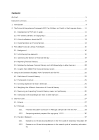
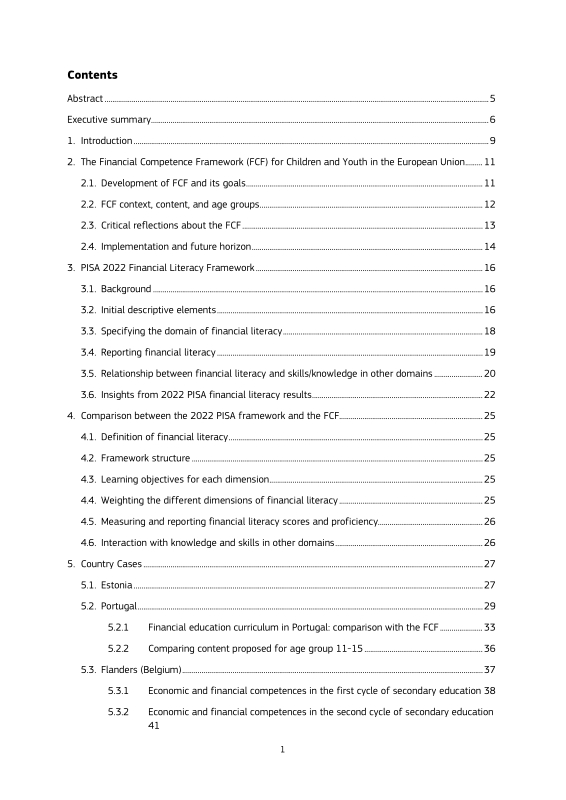
Contents 3
Abstract 7
Executive summary 8
1. Introduction 11
2. The Financial Competence Framework (FCF) for Children and Youth in the European Union 13
2.1. Development of FCF and its goals 13
2.2. FCF context, content, and age groups 14
2.3. Critical reflections about the FCF 15
2.4. Implementation and future horizon 16
3. PISA 2022 Financial Literacy Framework 18
3.1. Background 18
3.2. Initial descriptive elements 18
3.3. Specifying the domain of financial literacy 20
3.4. Reporting financial literacy 21
3.5. Relationship between financial literacy and skills/knowledge in other domains 22
3.6. Insights from 2022 PISA financial literacy results 24
4. Comparison between the 2022 PISA framework and the FCF 27
4.1. Definition of financial literacy 27
4.2. Framework structure 27
4.3. Learning objectives for each dimension 27
4.4. Weighting the different dimensions of financial literacy 27
4.5. Measuring and reporting financial literacy scores and proficiency 28
4.6. Interaction with knowledge and skills in other domains 28
5. Country Cases 29
5.1. Estonia 29
5.2. Portugal 31
5.2.1. Financial education curriculum in Portugal: comparison with the FCF 35
5.2.2. Comparing content proposed for age group 11-15 38
5.3. Flanders (Belgium) 39
5.3.1. Economic and financial competences in the first cycle of secondary education 40
5.3.2. Economic and financial competences in the second cycle of secondary education 43
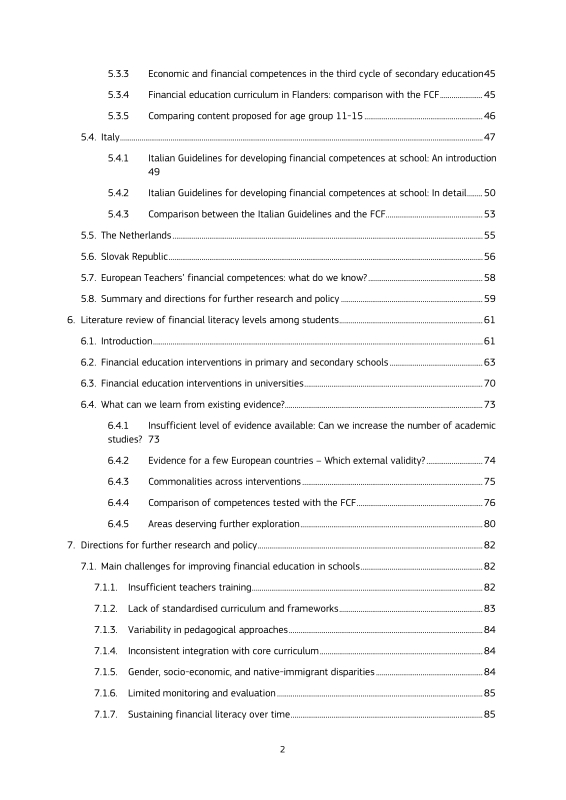
5.3.3. Economic and financial competences in the third cycle of secondary education 47
5.3.4. Financial education curriculum in Flanders: comparison with the FCF 47
5.3.5. Comparing content proposed for age group 11-15 48
5.4. Italy 49
5.4.1. Italian Guidelines for developing financial competences at school: An introduction 51
5.4.2. Italian Guidelines for developing financial competences at school: In detail 52
5.4.3. Comparison between the Italian Guidelines and the FCF 55
5.5. The Netherlands 57
5.6. Slovak Republic 58
5.7. European Teachers' financial competences: what do we know? 60
5.8. Summary and directions for further research and policy 61
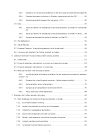
6. Literature review of financial literacy levels among students 63
6.1. Introduction 63
6.2. Financial education interventions in primary and secondary schools 65
6.3. Financial education interventions in universities 72
6.4. What can we learn from existing evidence? 75
6.4.1. Insufficient level of evidence available: Can we increase the number of academic studies? 75
6.4.2. Evidence for a few European countries - Which external validity? 76
6.4.3. Commonalities across interventions 77
6.4.4. Comparison of competences tested with the FCF 78
6.4.5. Areas deserving further exploration 82
7. Directions for further research and policy 84
7.1. Main challenges for improving financial education in schools 84
7.1.1. Insufficient teachers training 84
7.1.2. Lack of standardised curriculum and frameworks 85
7.1.3. Variability in pedagogical approaches 86
7.1.4. Inconsistent integration with core curriculum 86
7.1.5. Gender, socio-economic, and native-immigrant disparities 86
7.1.6. Limited monitoring and evaluation 87
7.1.7. Sustaining financial literacy over time 87
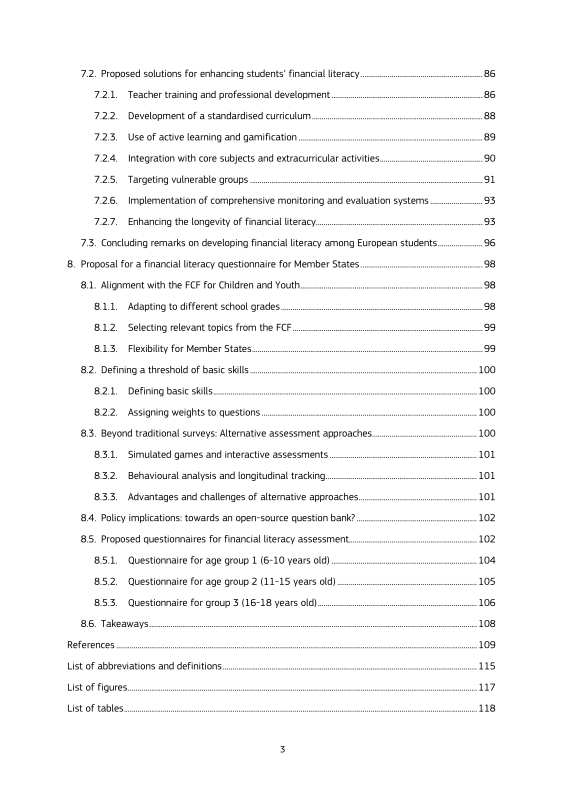
7.2. Proposed solutions for enhancing students' financial literacy 88
7.2.1. Teacher training and professional development 88
7.2.2. Development of a standardised curriculum 90
7.2.3. Use of active learning and gamification 91
7.2.4. Integration with core subjects and extracurricular activities 92
7.2.5. Targeting vulnerable groups 93
7.2.6. Implementation of comprehensive monitoring and evaluation systems 95
7.2.7. Enhancing the longevity of financial literacy 95
7.3. Concluding remarks on developing financial literacy among European students 98
8. Proposal for a financial literacy questionnaire for Member States 100
8.1. Alignment with the FCF for Children and Youth 100
8.1.1. Adapting to different school grades 100
8.1.2. Selecting relevant topics from the FCF 101
8.1.3. Flexibility for Member States 101
8.2. Defining a threshold of basic skills 102
8.2.1. Defining basic skills 102
8.2.2. Assigning weights to questions 102
8.3. Beyond traditional surveys: Alternative assessment approaches 102
8.3.1. Simulated games and interactive assessments 103
8.3.2. Behavioural analysis and longitudinal tracking 103
8.3.3. Advantages and challenges of alternative approaches 103
8.4. Policy implications: towards an open-source question bank? 104
8.5. Proposed questionnaires for financial literacy assessment 104
8.5.1. Questionnaire for age group 1 (6-10 years old) 106
8.5.2. Questionnaire for age group 2 (11-15 years old) 107
8.5.3. Questionnaire for group 3 (16-18 years old) 108
8.6. Takeaways 110
References 111
List of abbreviations and definitions 117
Annex 1. Italy, Portugal, and Flanders: A detailed comparison with the FCF 121
Annex 2. Suggestions from international reports 122
Annex 3. Cross-comparison of challenges and proposed solutions in financial literacy 125
Annex 4. Alternative questionnaires for financial literacy assessment 128
Tables 120
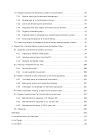
Table 1. Financial literacy domains: perspectives, definitions, and dimensions 21
Table 2. Portuguese curriculum's structure, by age groups 35
Table 3. Portuguese financial education topics 36
Table 4. Comparison between Portugal's curriculum and the FCF general structure 37
Table 5. Portuguese curriculum: topics, subtopics, and goals across education levels and teaching stages 38
Table 6. Financial literacy curriculum in Flanders (Belgium) - Grades 7 and 8 41
Table 7. Financial literacy curriculum in Flanders (Belgium) - Grades 9 and 10 44
Table 8. Financial literacy curriculum in Flanders (Belgium) - Grades 11 and 12 47
Table 9. Flanders' curriculum structure, by age groups 48
Table 10. Comparison between Flanders' curriculum and the FCF general structure 48
Table 11. Different education levels considered for developing a financial literacy framework 51
Table 12. Italian Guidelines: summary of financial literacy areas and sub-areas proposed by the framework 52
Table 13. Example of the synopsis proposed in the Italian Guidelines (original, in Italian) 53
Table 14. Example of the synopsis proposed in the Italian Guidelines (translated into English) 54
Table 15. Comparison between Italy's Guidelines and the FCF, areas, sub-areas, and topics 55
Table 16. Comparison between Italian Guidelines and the FCF, age, and age groups 56
Table 17. Different detailed classification, FCF vs Italian Guidelines 57
Table 18. Overview of the contributions of financial education interventions in primary and secondary schools 71
Table 19. Overview of the contributions of financial education interventions in universities 74
Table 20. A brief comparison between financial competences tested by selected papers and the FCF 79
Table 21. Detailed description of the specific financial competences tested by the selected papers 79
Table 22. Main challenges towards the effectiveness of financial education in European schools 87
Table 23. Proposed solutions for enhancing financial literacy education 96
Table 24. Proposed coverage of content areas by age group 105
Table 25. Cross-comparison of challenges and proposed solutions in financial literacy 126
Figures 119
Figure 1. European Union/OECD Financial Competence Framework (FCF) 15
Figure 2. Share of students able to perform tasks for PISA's five levels of financial literacy, selected EU countries 22
Figure 3. 2022 PISA financial literacy score, selected EU countries 24
Figure 4. 2022 PISA financial literacy score by proficiency level, selected EU countries 25
Figure 5. Number of journal articles on financial literacy in Web of Science, per year 63
Figure 6. EU Member States with financial education interventions, 2014-2024 (in blue) 77
*표시는 필수 입력사항입니다.
| 전화번호 |
|---|
| 기사명 | 저자명 | 페이지 | 원문 | 기사목차 |
|---|
| 번호 | 발행일자 | 권호명 | 제본정보 | 자료실 | 원문 | 신청 페이지 |
|---|
도서위치안내: / 서가번호:

우편복사 목록담기를 완료하였습니다.
*표시는 필수 입력사항입니다.
저장 되었습니다.
