
 대표어
대표어
 https://www.accc.gov.au/about-us/publications/sustainability-collaborations-and-australian-competition-law-a-guide-for-business
권호기사보기
| 기사명 | 저자명 | 페이지 | 원문 | 기사목차 |
|---|
결과 내 검색
동의어 포함
Title page 1
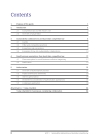
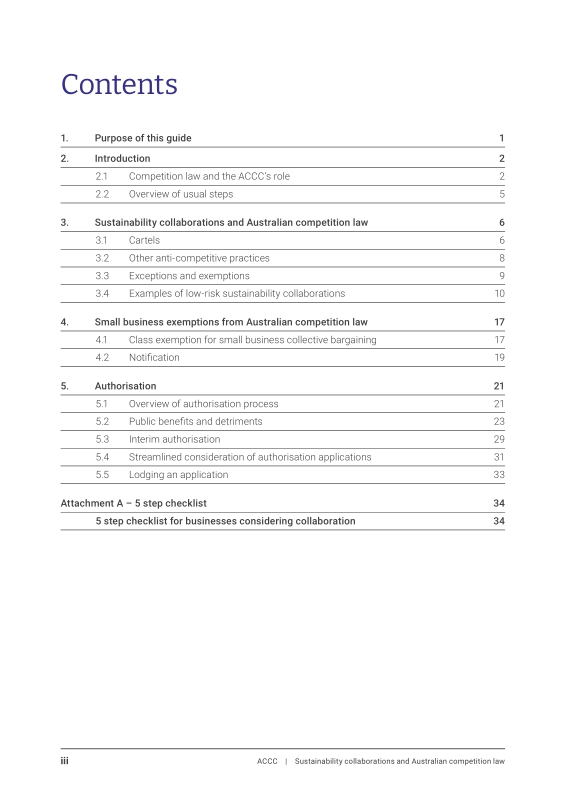
Contents 3
Acknowledgment of country 2
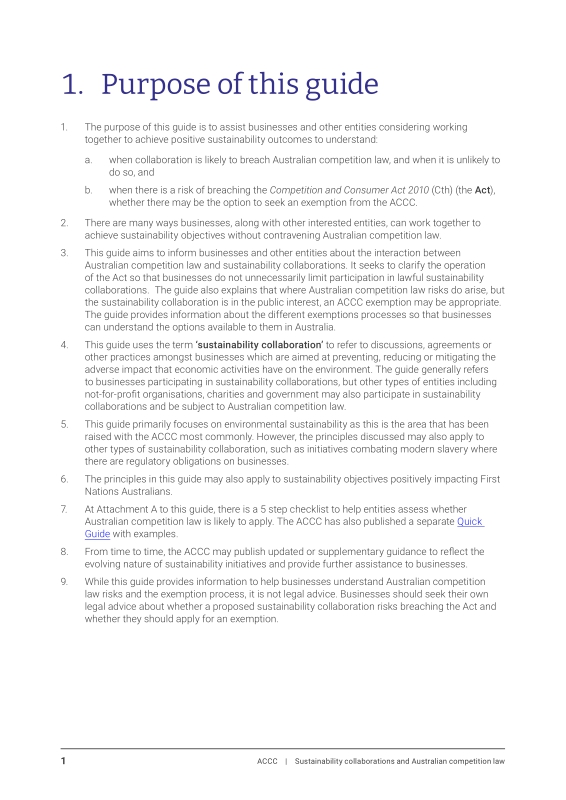
1. Purpose of this guide 4
2. Introduction 5
2.1. Competition law and the ACCC's role 5
2.2. Overview of usual steps 8
3. Sustainability collaborations and Australian competition law 9
3.1. Cartels 9
3.2. Other anti-competitive practices 11
3.3. Exceptions and exemptions 12
3.4. Examples of low-risk sustainability collaborations 13
4. Small business exemptions from Australian competition law 20
4.1. Class exemption for small business collective bargaining 20
4.1.1. The class exemption applies to small businesses 20
4.1.2. Using the class exemption is simple 21
4.1.3. Collective bargaining group members can share certain information 21
4.2. Notification 22
4.2.1. Collective bargaining and collective boycotts 22
4.2.2. Notification provides legal protection automatically unless the ACCC objects 22
5. Authorisation 24
5.1. Overview of authorisation process 24
5.2. Public benefits and detriments 26
5.2.1. Sustainability benefits can be public benefits 26
5.2.2. Making public benefit claims to support authorisation 27
5.2.3. Examples of types of sustainability benefits 30
5.2.4. Public detriments 31
5.3. Interim authorisation 32
5.4. Streamlined consideration of authorisation applications 34
5.5. Lodging an application 36
Attachment A - 5 step checklist 37
5 step checklist for businesses considering collaboration 37
*표시는 필수 입력사항입니다.
| 전화번호 |
|---|
| 기사명 | 저자명 | 페이지 | 원문 | 기사목차 |
|---|
| 번호 | 발행일자 | 권호명 | 제본정보 | 자료실 | 원문 | 신청 페이지 |
|---|
도서위치안내: / 서가번호:

우편복사 목록담기를 완료하였습니다.
*표시는 필수 입력사항입니다.
저장 되었습니다.
