
 대표어
대표어
 https://itif.org/publications/2026/01/05/policy-reforms-to-launch-us-space-innovation/
권호기사보기
| 기사명 | 저자명 | 페이지 | 원문 | 기사목차 |
|---|
결과 내 검색
동의어 포함
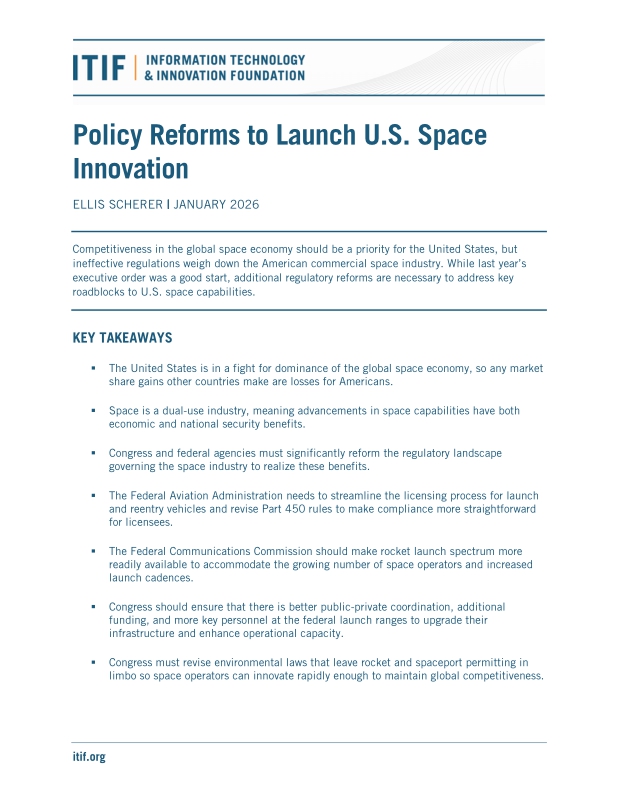
Title page 1
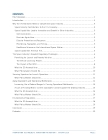
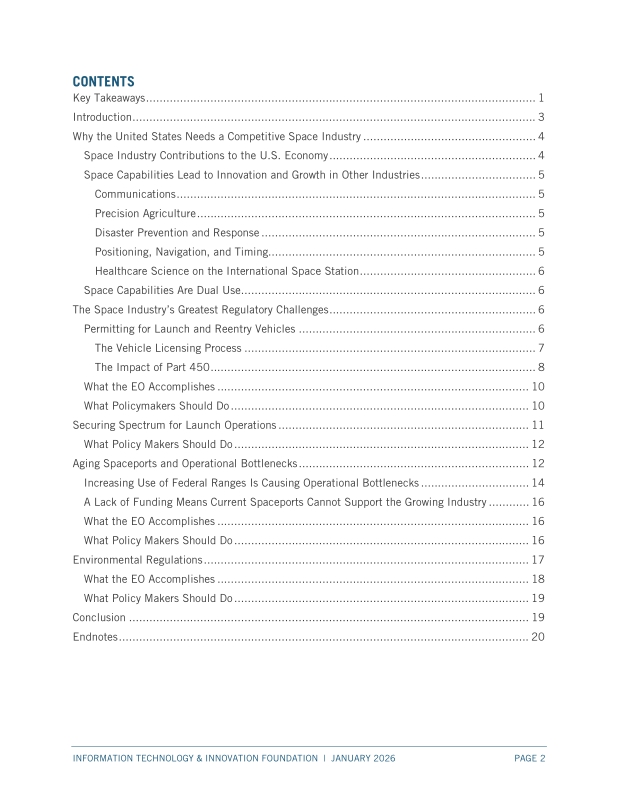
Contents 2
KEY TAKEAWAYS 1
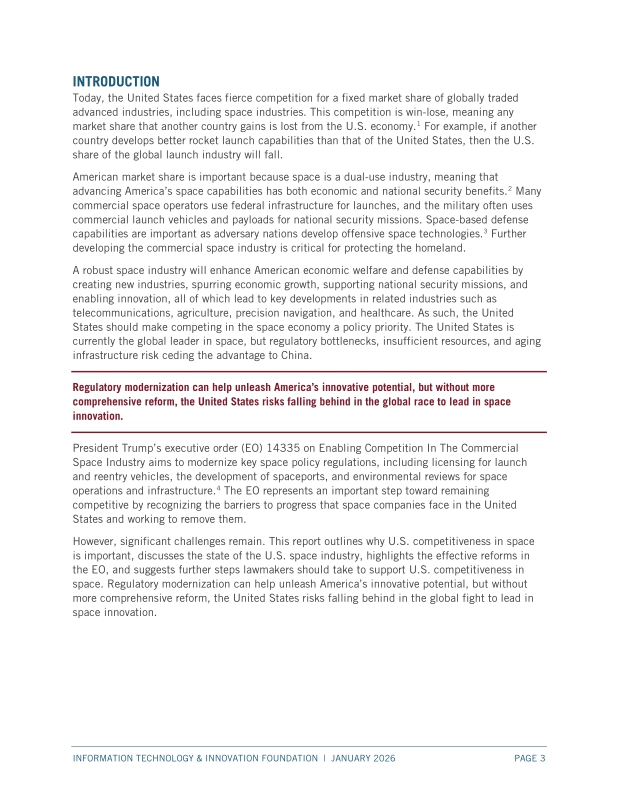
INTRODUCTION 3
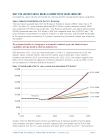
WHY THE UNITED STATES NEEDS A COMPETITIVE SPACE INDUSTRY 4
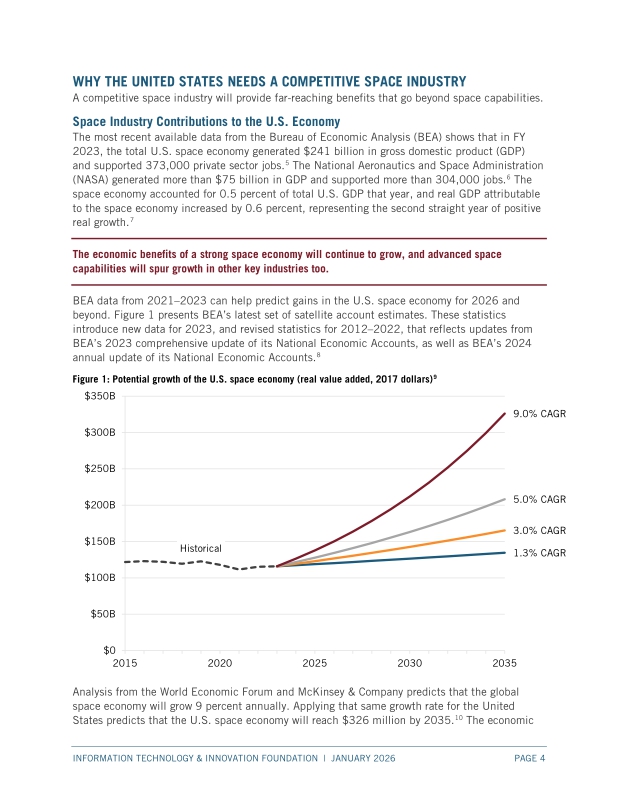
Space Industry Contributions to the U.S. Economy 4
Space Capabilities Lead to Innovation and Growth in Other Industries 5
Communications 5
Precision Agriculture 5
Disaster Prevention and Response 5
Positioning, Navigation, and Timing 5
Healthcare Science on the International Space Station 6
Space Capabilities Are Dual Use 6
THE SPACE INDUSTRY’S GREATEST REGULATORY CHALLENGES 6
Permitting for Launch and Reentry Vehicles 6
The Vehicle Licensing Process 7
The Impact of Part 450 8
What the EO Accomplishes 10
What Policymakers Should Do 10
SECURING SPECTRUM FOR LAUNCH OPERATIONS 11
What Policy Makers Should Do 12
AGING SPACEPORTS AND OPERATIONAL BOTTLENECKS 12
Increasing Use of Federal Ranges Is Causing Operational Bottlenecks 14
A Lack of Funding Means Current Spaceports Cannot Support the Growing Industry 16
What the EO Accomplishes 16
What Policy Makers Should Do 16
ENVIRONMENTAL REGULATIONS 17
What the EO Accomplishes 18
What Policy Makers Should Do 19
CONCLUSION 19
ENDNOTES 20
Figures 4
Figure 1. Potential growth of the U.S. space economy (real value added, 2017 dollars) 4
Figure 2. AST licensing process flow chart 8
Figure 3. FAA/AST map of U.S. spaceports, March 2025 13
Figure 4. Government Accountability Office presentation of a launch site 14
Figure 5. Launches from U.S. federal ranges 15
*표시는 필수 입력사항입니다.
| 전화번호 |
|---|
| 기사명 | 저자명 | 페이지 | 원문 | 기사목차 |
|---|
| 번호 | 발행일자 | 권호명 | 제본정보 | 자료실 | 원문 | 신청 페이지 |
|---|
도서위치안내: / 서가번호:

우편복사 목록담기를 완료하였습니다.
*표시는 필수 입력사항입니다.
저장 되었습니다.
