대표어
대표어
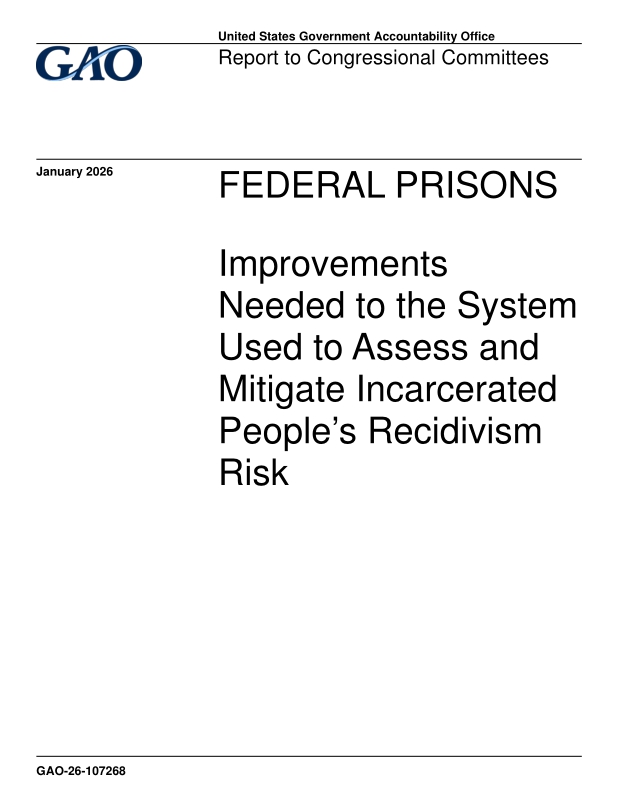
 https://www.gao.gov/products/gao-26-107268
권호기사보기
| 기사명 | 저자명 | 페이지 | 원문 | 기사목차 |
|---|
결과 내 검색
동의어 포함
Title page 1
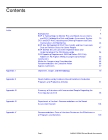
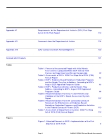
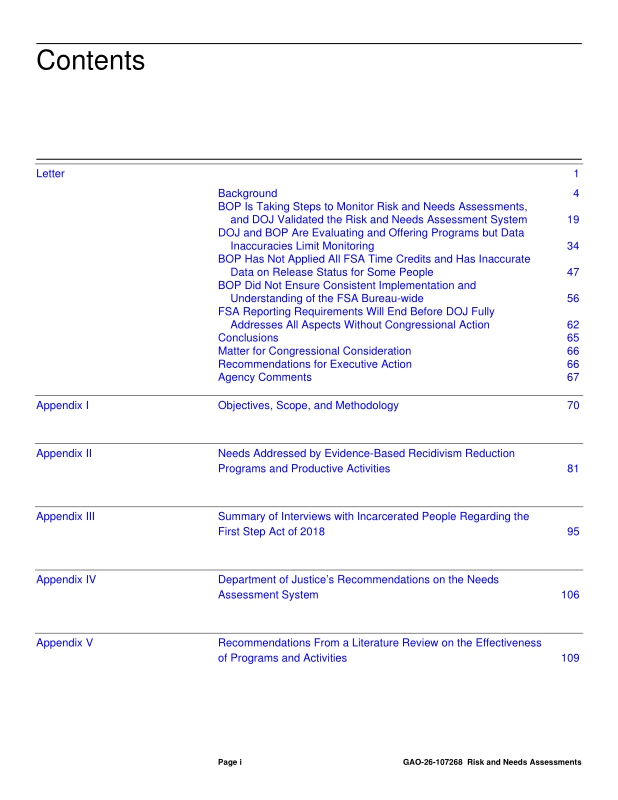
Contents 3
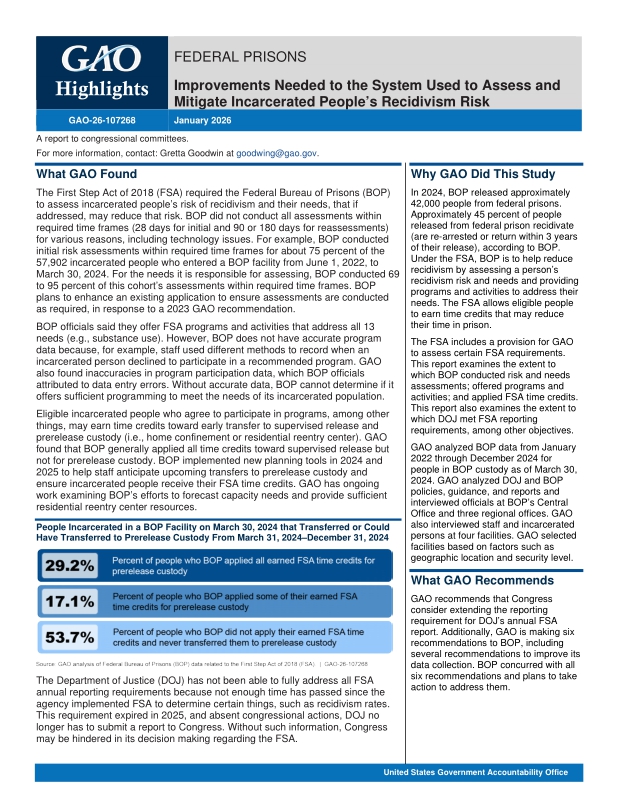
Highlights 2
Letter 7
Background 10
Elements of the FSA 10
Agency Roles and Responsibilities 23
BOP Is Taking Steps to Monitor Risk and Needs Assessments, and DOJ Validated the Risk and Needs Assessment System 25
BOP Conducted Some, but Not All, Risk and Needs Assessments Within FSA Required and Internal Time Frames 25
BOP Is Taking Steps to Better Monitor the Timeliness of Risk and Needs Assessments 37
DOJ Validated the Risk and Needs Assessment System as Required 39
DOJ and BOP Are Evaluating and Offering Programs but Data Inaccuracies Limit Monitoring 40
DOJ and BOP Are in the Process of Evaluating BOP's Programs 41
BOP Is Taking Steps to Monitor if It Offers Sufficient Programs and Activities 43
Inaccurate Data Limit BOP's Ability to Monitor Its Program Offerings 49
BOP Central Office Does Not Have Bureau-wide Data That Are Readily Accessible to Monitor Work Assignments 51
BOP Has Not Applied All FSA Time Credits and Has Inaccurate Data on Release Status for Some People 53
BOP Applied All Time Credits for Supervised Release but Not for Prerelease Custody and Is Missing Accurate, Readily Accessible Data for Some People's Release Status 54
Some Incarcerated People with Higher Recidivism Risk Petitioned to Apply Their FSA Time Credits 61
BOP Did Not Ensure Consistent Implementation and Understanding of the FSA Bureau-wide 62
BOP Established Mechanisms to Help Staff Implement and Understand FSA Policies and Procedures 63
BOP Staff Did Not Implement FSA Policies and Procedures Consistently Bureau-wide 65
BOP Staff's Understanding of FSA Policies and Procedures Varied Across the Bureau 67
FSA Reporting Requirements Will End Before DOJ Fully Addresses All Aspects Without Congressional Action 68
Conclusions 71
Matter for Congressional Consideration 72
Recommendations for Executive Action 72
Agency Comments 73
Appendix I: Objectives, Scope, and Methodology 76
Appendix II: Needs Addressed by Evidence-Based Recidivism Reduction Programs and Productive Activities 87
Appendix III: Summary of Interviews with Incarcerated People Regarding the First Step Act of 2018 101
Appendix IV: Department of Justice's Recommendations on the Needs Assessment System 112
Appendix V: Recommendations From a Literature Review on the Effectiveness of Programs and Activities 115
Appendix VI: Requirements for the Department of Justice's (DOJ) First Step Act of 2018 (FSA) Report 118
Appendix VII: Comments from the Department of Justice 122
Appendix VIII: GAO Contact and Staff Acknowledgments 126
Related GAO Products 127
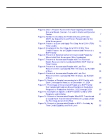
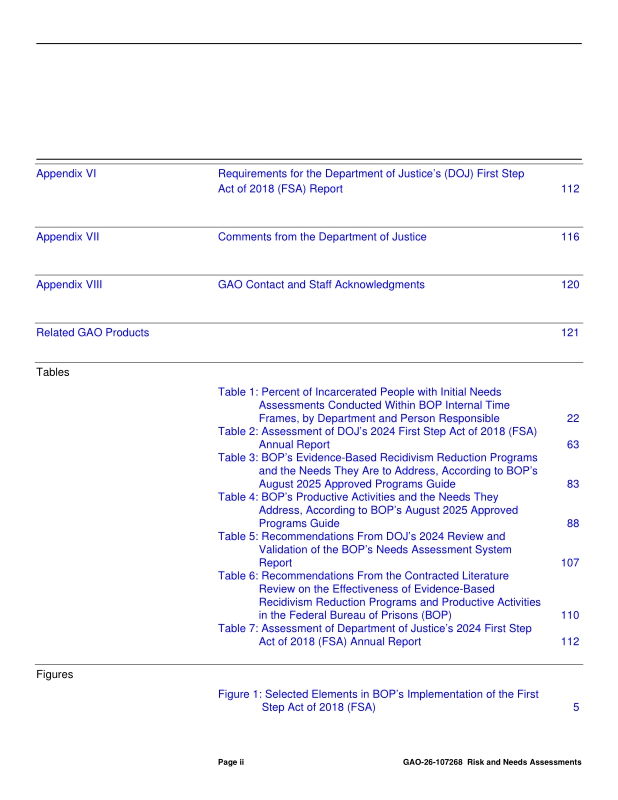
Tables 4
Table 1. Percent of Incarcerated People with Initial Needs Assessments Conducted Within BOP Internal Time Frames, by Department and Person Responsible 28
Table 2. Assessment of DOJ's 2024 First Step Act of 2018 (FSA) Annual Report 69
Table 3. BOP's Evidence-Based Recidivism Reduction Programs and the Needs They Are to Address, According to BOP's August 2025 Approved Programs Guide 89
Table 4. BOP's Productive Activities and the Needs They Address, According to BOP's August 2025 Approved Programs Guide 94
Table 5. Recommendations From DOJ's 2024 Review and Validation of the BOP's Needs Assessment System Report 113
Table 6. Recommendations From the Contracted Literature Review on the Effectiveness of Evidence-Based Recidivism Reduction Programs... 116
Table 7. Assessment of Department of Justice's 2024 First Step Act of 2018 (FSA) Annual Report 118
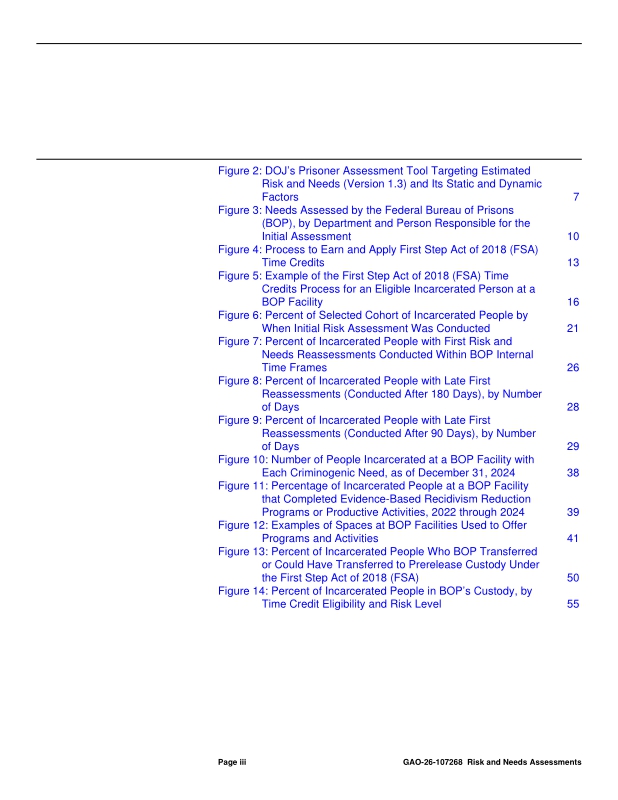
Figures 4
Figure 1. Selected Elements in BOP's Implementation of the First Step Act of 2018 (FSA) 11
Figure 2. DOJ's Prisoner Assessment Tool Targeting Estimated Risk and Needs (Version 1.3) and Its Static and Dynamic Factors 13
Figure 3. Needs Assessed by the Federal Bureau of Prisons (BOP), by Department and Person Responsible for the Initial Assessment 16
Figure 4. Process to Earn and Apply First Step Act of 2018 (FSA) Time Credits 19
Figure 5. Example of the First Step Act of 2018 (FSA) Time Credits Process for an Eligible Incarcerated Person at a BOP Facility 22
Figure 6. Percent of Selected Cohort of Incarcerated People by When Initial Risk Assessment Was Conducted 27
Figure 7. Percent of Incarcerated People with First Risk and Needs Reassessments Conducted Within BOP Internal Time Frames 32
Figure 8. Percent of Incarcerated People with Late First Reassessments (Conducted After 180 Days), by Number of Days 34
Figure 9. Percent of Incarcerated People with Late First Reassessments (Conducted After 90 Days), by Number of Days 35
Figure 10. Number of People Incarcerated at a BOP Facility with Each Criminogenic Need, as of December 31, 2024 44
Figure 11. Percentage of Incarcerated People at a BOP Facility that Completed Evidence-Based Recidivism Reduction Programs or Productive Activities, 2022 through 2024 45
Figure 12. Examples of Spaces at BOP Facilities Used to Offer Programs and Activities 47
Figure 13. Percent of Incarcerated People Who BOP Transferred or Could Have Transferred to Prerelease Custody Under the First Step Act of 2018 (FSA) 56
Figure 14. Percent of Incarcerated People in BOP's Custody, by Time Credit Eligibility and Risk Level 61
*표시는 필수 입력사항입니다.
| 전화번호 |
|---|
| 기사명 | 저자명 | 페이지 | 원문 | 기사목차 |
|---|
| 번호 | 발행일자 | 권호명 | 제본정보 | 자료실 | 원문 | 신청 페이지 |
|---|
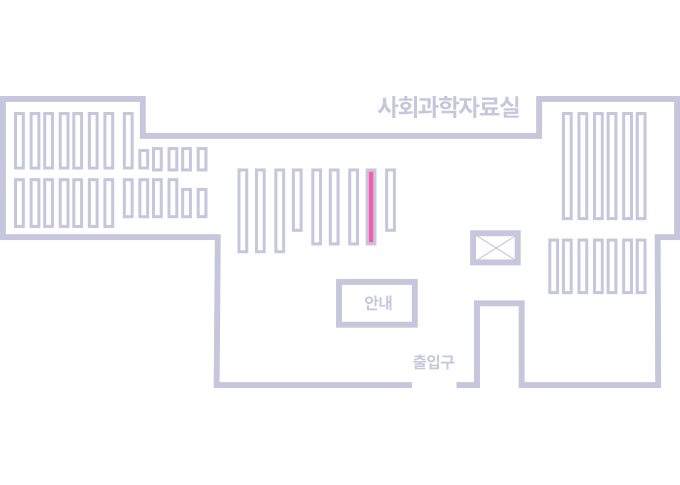
도서위치안내: / 서가번호:
우편복사 목록담기를 완료하였습니다.
*표시는 필수 입력사항입니다.
저장 되었습니다.