
 대표어
대표어
 https://op.europa.eu/en/publication-detail/-/publication/864ddeb6-1452-11f1-8870-01aa75ed71a1/language-en?WT.mc_id=Selectedpublications&WT.ria_c=41957&WT.ria_f=6415&WT.ria_ev=search
권호기사보기
| 기사명 | 저자명 | 페이지 | 원문 | 기사목차 |
|---|
결과 내 검색
동의어 포함
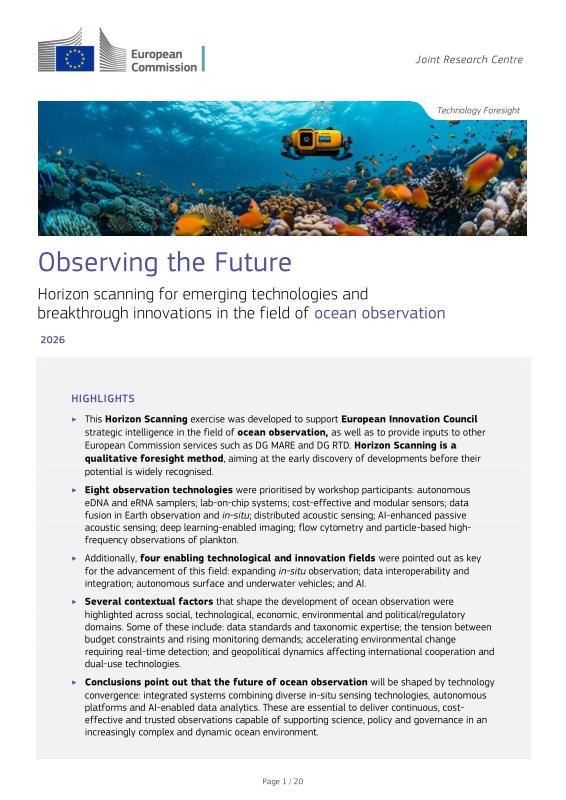
Title page 1
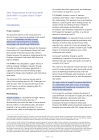
Contents 1
Introduction 2
Trends and signals 4
A. Core observation technologies and innovations 4
A.1. Autonomous eDNA sampler 4
A.2. Cost-effective and modular sensors 6
A.3. Data fusion - Earth observation and in-situ 6
A.4. Distributed acoustic sensing 7
A.5. Deep learning-enabled imaging flow cytometryc 9
B. Enabling technologies and innovations 9
B.1. Expanding in-situ observation 9
B.2. Data interoperability and integration 10
B.3. Autonomous surface and underwater vehicles 11
Contextual factors 13
Conclusions 15
References 16
Acknowledgements 20
Figures 4
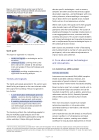
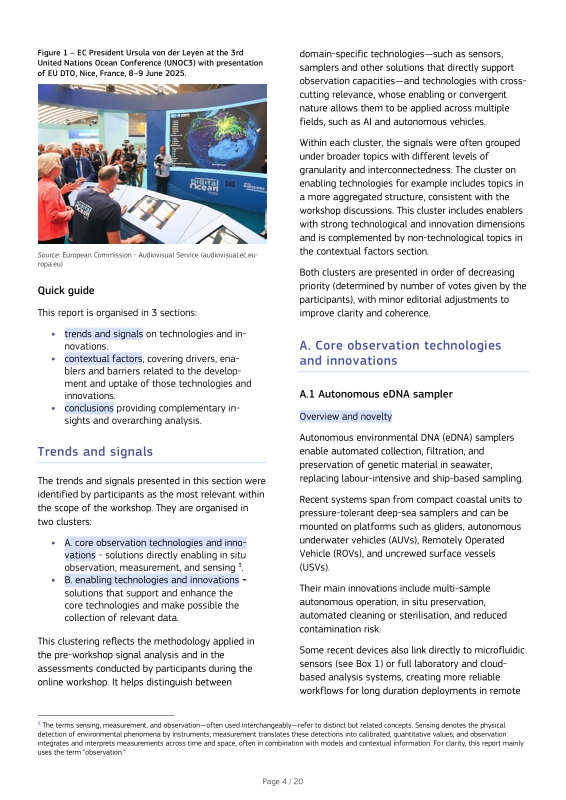
Figure 1. EC President Ursula von der Leyen at the 3rd United Nations Ocean Conference (UNOC3) with presentation of EU DTO, Nice,... 4
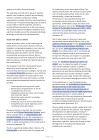
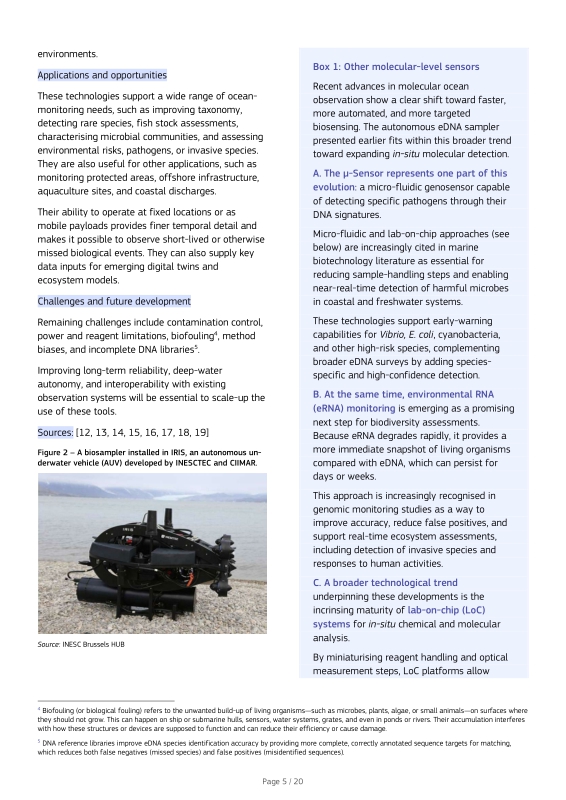
Figure 2. A biosampler installed in IRIS, an autonomous underwater vehicle (AUV) developed by INESCTEC and CIIMAR 5
Figure 3. A screenshot of the MyOcean (light) a page is dedicated to ocean data visualisation 7
Figure 4. A conceptual image showing fibre optic cables running along the ocean floor 8
Figure 5. A research vessel with submerged equipment prepared for scientific exploration 10
Figure 6. The Ulyx, and autonomous underwater vehicle (AUV) developed by Ifremer 11
Figure 7. A fish farm in Greece 14
Figure 8. The hybrid ROV Ariane developed by Ifremer 15
Figure 9. A 'swirling tornado' of Barracudas 16
Boxes 5
Box 1. Other molecular-level sensors 5
Box 2. AI-enhanced passive acoustic sensing 8
Box 3. Particle-based high-frequency observations of plankton 9
Box 4. Artificial Intelligence 12
*표시는 필수 입력사항입니다.
| 전화번호 |
|---|
| 기사명 | 저자명 | 페이지 | 원문 | 기사목차 |
|---|
| 번호 | 발행일자 | 권호명 | 제본정보 | 자료실 | 원문 | 신청 페이지 |
|---|
도서위치안내: / 서가번호:

우편복사 목록담기를 완료하였습니다.
*표시는 필수 입력사항입니다.
저장 되었습니다.
