
 대표어
대표어
 https://www.wipo.int/publications/en/details.jsp?id=4801&plang=EN
권호기사보기
| 기사명 | 저자명 | 페이지 | 원문 | 기사목차 |
|---|
결과 내 검색
동의어 포함
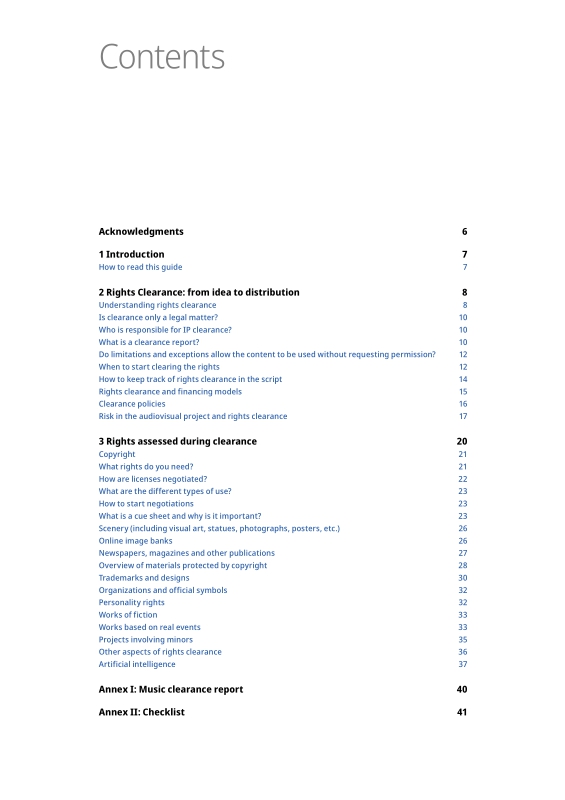
Title page 1
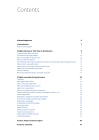
Contents 4
Acknowledgments 5
1. Introduction 6
How to read this guide 6
2. Rights Clearance: from idea to distribution 7
Understanding rights clearance 7
Is clearance only a legal matter? 9
Who is responsible for IP clearance? 9
What is a clearance report? 9
Do limitations and exceptions allow the content to be used without requesting permission? 11
When to start clearing the rights 11
How to keep track of rights clearance in the script 13
Rights clearance and financing models 14
Clearance policies 15
Risk in the audiovisual project and rights clearance 16
3. Rights assessed during clearance 19
Copyright 20
What rights do you need? 20
How are licenses negotiated? 21
What are the different types of use? 22
How to start negotiations 22
What is a cue sheet and why is it important? 22
Scenery (including visual art, statues, photographs, posters, etc.) 25
Online image banks 25
Newspapers, magazines and other publications 26
Overview of materials protected by copyright 27
Trademarks and designs 29
Organizations and official symbols 31
Personality rights 31
Works of fiction 32
Works based on real events 32
Projects involving minors 34
Other aspects of rights clearance 35
Artificial intelligence 36
Annex I. Music clearance report 39
Annex II. Checklist 40
Figures 8
Figure 1. Rights clearance for an audiovisual project 8
Figure 2. Process of licensing from the clearance report 10
Figure 3. Clearance through the concept to production phases 13
Figure 4. Levels of risk 17
Figure 5. Steps to minimize risk 19
Figure 6. Recorded music rights 20
Figure 7. Overview of license negotiations 21
Figure 8. Assessing limitations and exceptions 29
*표시는 필수 입력사항입니다.
| 전화번호 |
|---|
| 기사명 | 저자명 | 페이지 | 원문 | 기사목차 |
|---|
| 번호 | 발행일자 | 권호명 | 제본정보 | 자료실 | 원문 | 신청 페이지 |
|---|
도서위치안내: / 서가번호:

우편복사 목록담기를 완료하였습니다.
*표시는 필수 입력사항입니다.
저장 되었습니다.
