
 대표어
대표어
 https://www.wto.org/english/res_e/reser_e/ersd202603_e.htm
권호기사보기
| 기사명 | 저자명 | 페이지 | 원문 | 기사목차 |
|---|
결과 내 검색
동의어 포함
Title page 1
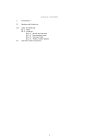
Contents 3
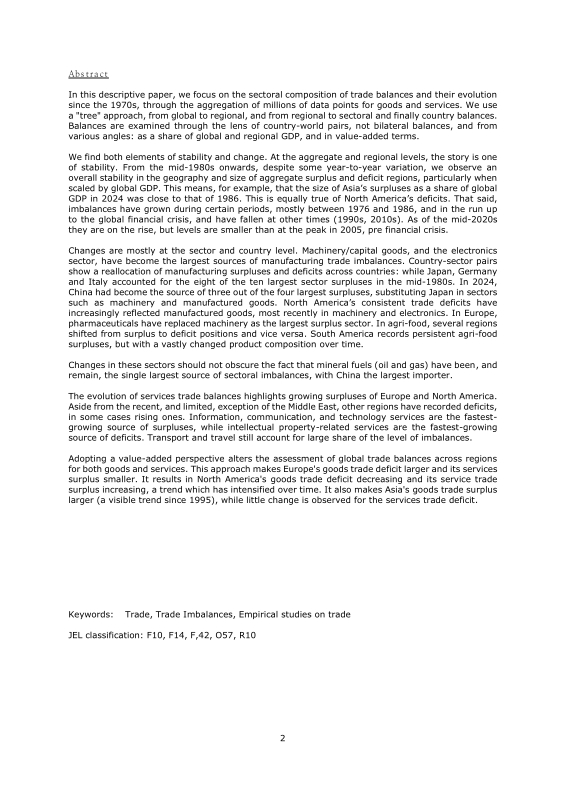
ABSTRACT 2
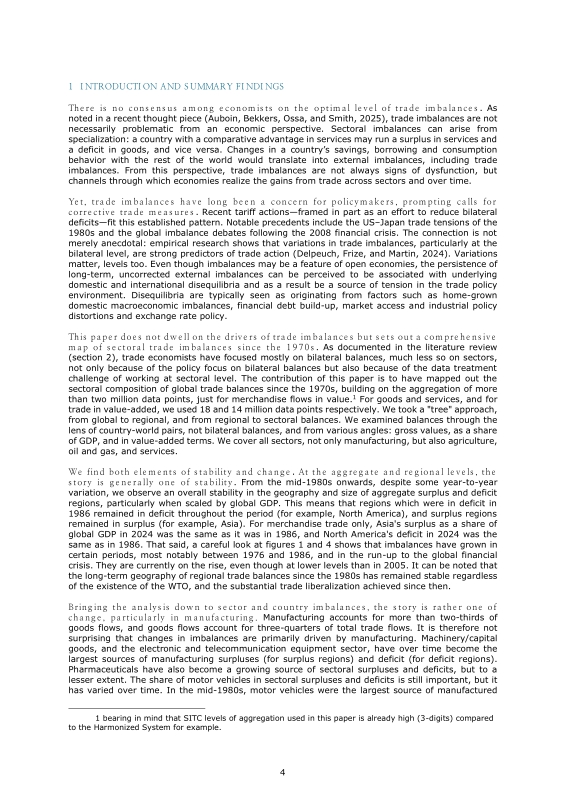
I/1. INTRODUCTION AND SUMMARY FINDINGS 4
II/2. BACKGROUND AND LITERATURE 6
III. DATA AND DETAILED FINDINGS 7
III.1. Data 7
III.1.1. Approach 8
III.2. Findings 9
III.2.1. Trade in goods and services - Balance of Payments statistics 9
III.2.2. Merchandise trade - Aggregate view 12
III.2.3. Services Trade 38
III.2.4. Trade in Value Added 42
IV/V. SUMMARY AND CONCLUSION 45
ANNEX 47
BIBLIOGRAPHY 47
Figures 10
Figure 1. Trade balance of Goods and Services, 1976-2024 10
Figure 2. Trade balance of Goods and Services, 1976-2024 10
Figure 3. The top eight countries contributing to the global trade balance, goods and services (average absolute value 1975-2024) 12
Figure 4. Merchandise trade net exports by region 1986, 2005, and 2024 13
Figure 5. Merchandise trade net exports by region 1986, 2005, and 2024 14
Figure 6. Sectors accounting for the trade deficit, 1986 & 2024 15
Figure 7. Sectors accounting for the trade surplus, 1986 & 2024 16
Figure 8. North America: Mineral fuels have moved from the largest source of deficit to surplus 17
Figure 9. Europe: Pharmaceuticals have replaced machinery as the largest surplus sector 18
Figure 10. Asia: The manufacturing surplus and the deficit in fuels have both grown 19
Figure 11. South America: Food and agriculture are expanding as a source of surplus 20
Figure 12. Africa: Mineral fuels drive the evolution of the trade balance 21
Figure 13. Top 10 Economy-sector pairs accounting for the trade deficit 1986 & 2024 22
Figure 14. Top 10 Economy-sector pairs accounting for the trade surplus 1986 & 2024 23
Figure 15. Vehicles: Asia's surplus has remained broadly consistent but lower than the 1980s 24
Figure 16. Manufactured Articles: Asia continues to be the main surplus region 25
Figure 17. Electronics: Asia is the main surplus region with all others in deficit 26
Figure 18. Food and agriculture: South America has consistently had the largest surpluses 26
Figure 19. Seed oils have overtaken coffee in South America's Food & Agriculture balance 27
Figure 20. Pharmaceuticals: Europe's surplus has continued to grow 28
Figure 21. Asia: China has replaced Japan as the largest source of surplus 29
Figure 22. Europe: Germany is still the largest net exporter but with a reduced share 29
Figure 23. South America: Brazil is the largest surplus country as Venezuela has declined 30
Figure 24. Africa: Major oil and gas exporters shape Africa's trade balance 31
Figure 25. The United States has moved from the largest deficit to a surplus in mineral fuels 32
Figure 26. Japan and Germany share of motor vehicles trade continues to decline 33
Figure 27. China has emerged since the mid-2000 to become the largest exporter of machinery 33
Figure 28. China has emerged as the main global supplier of manufactured articles 34
Figure 29. China has surpassed Japan's surplus position in electronics 35
Figure 30. Germany's share global chemicals trade has declined as new producers emerge 36
Figure 31. China has become an increasingly important exporter of textiles and clothing 36
Figure 32. Brazil's surplus in food and agriculture has grown to be the world's largest 37
Figure 33. Pharmaceuticals are increasingly traded with European countries the main suppliers 38
Figure 34. Services trade: Surpluses have grown in Europe and North America 39
Figure 35. Services: Europe surpluses stand out as a share of regional GDP 39
Figure 36. Europe and North America's net export position is consistent through 2005-2024 40
Figure 37. Transport contributing most to services trade deficits, with intellectual property and travel shares growing the fastest 41
Figure 38. Information, telecommunications and computer services contributing most to services trade surpluses 42
Figure 39. Merchandise trade: Accounting for value chains reduces the deficit in North America 43
Figure 40. Services trade: The North American surplus further expands with value chains 44
Figure 41. Accounting for value added leads to reduced surpluses in electronics 44
*표시는 필수 입력사항입니다.
| 전화번호 |
|---|
| 기사명 | 저자명 | 페이지 | 원문 | 기사목차 |
|---|
| 번호 | 발행일자 | 권호명 | 제본정보 | 자료실 | 원문 | 신청 페이지 |
|---|
도서위치안내: / 서가번호:

우편복사 목록담기를 완료하였습니다.
*표시는 필수 입력사항입니다.
저장 되었습니다.
