
 대표어
대표어
 https://www.ilo.org/publications/nursing-and-artificial-intelligence-republic-korea
권호기사보기
| 기사명 | 저자명 | 페이지 | 원문 | 기사목차 |
|---|
결과 내 검색
동의어 포함
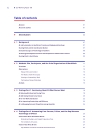
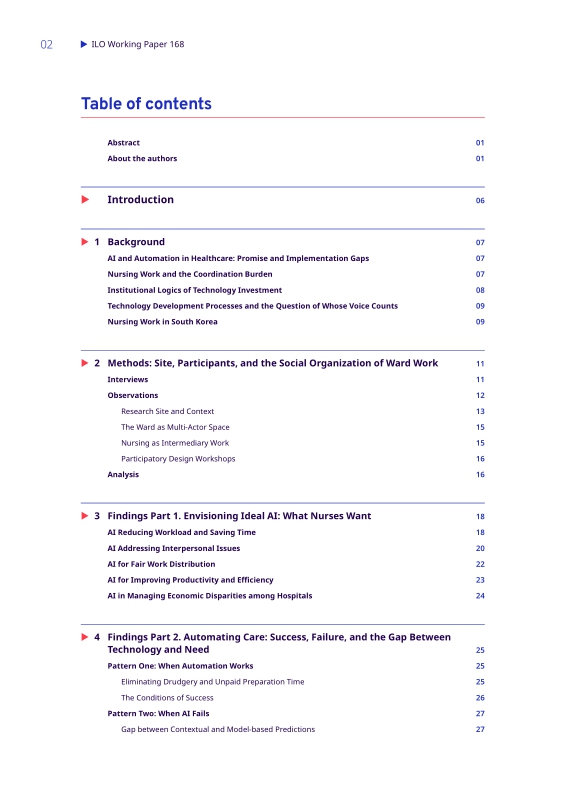
Title page 1
Contents 5
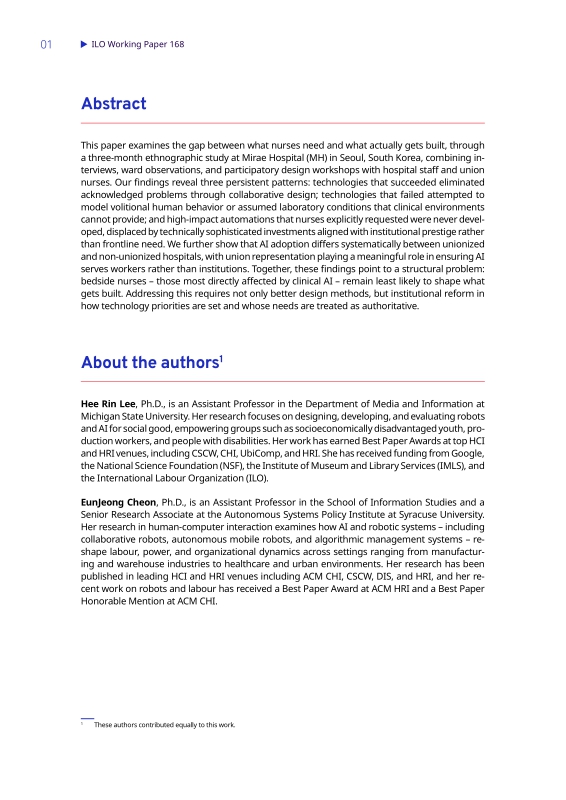
Abstract 4
About the authors 4
Introduction 9
1. Background 10
AI and Automation in Healthcare: Promise and Implementation Gaps 10
Nursing Work and the Coordination Burden 10
Institutional Logics of Technology Investment 11
Technology Development Processes and the Question of Whose Voice Counts 12
Nursing Work in South Korea 12
2. Methods: Site, Participants, and the Social Organization of Ward Work 14
Interviews 14
Observations 15
Research Site and Context 16
The Ward as Multi-Actor Space 18
Nursing as Intermediary Work 18
Participatory Design Workshops 19
Analysis 19
3. Findings Part 1. Envisioning Ideal AI: What Nurses Want 21
AI Reducing Workload and Saving Time 21
AI Addressing Interpersonal Issues 23
AI for Fair Work Distribution 25
AI for Improving Productivity and Efficiency 26
AI in Managing Economic Disparities among Hospitals 27
4. Findings Part 2. Automating Care: Success, Failure, and the Gap Between Technology and Need 28
Pattern One: When Automation Works 28
Eliminating Drudgery and Unpaid Preparation Time 28
The Conditions of Success 29
Pattern Two: When AI Fails 30
Gap between Contextual and Model-based Predictions 30
Gap between Lab and Real-world Settings 31
Pattern Three: The Persistent Gap 32
What Nurses Asked For 32
Why Patient Education Automation Didn't Happen 33
5. Discussion 34
The Role of a Labour Union in AI Adoption 34
Central Values Prioritized in AI Adoption 34
Technological Advancement and Resource Gap 35
Decision-making Process 36
Automation and Nursing 37
Conclusion 38
References 39
Tables 8
Table 1. Participant information: participants from Mirae Hospital (MH), Certified Nursing Assistant 14
Table 2. Participant information: participants from Korean Health Workers Union (KHWU) 15
Figures 7
Figure 1. Results from collaborative mapping during individual interviews 17
Figure 2. Technologies observed at the field site: Magic Cart logistics robot (left) and BPOC device (circled) for patient verification,... 17
Figure 3. Example ideas created by participants during the design workshops 19
*표시는 필수 입력사항입니다.
| 전화번호 |
|---|
| 기사명 | 저자명 | 페이지 | 원문 | 기사목차 |
|---|
| 번호 | 발행일자 | 권호명 | 제본정보 | 자료실 | 원문 | 신청 페이지 |
|---|
도서위치안내: / 서가번호:

우편복사 목록담기를 완료하였습니다.
*표시는 필수 입력사항입니다.
저장 되었습니다.
