대표어
대표어
 https://documents.worldbank.org/en/publication/documents-reports/documentdetail/099092026233533441
권호기사보기
| 기사명 | 저자명 | 페이지 | 원문 | 기사목차 |
|---|
결과 내 검색
동의어 포함
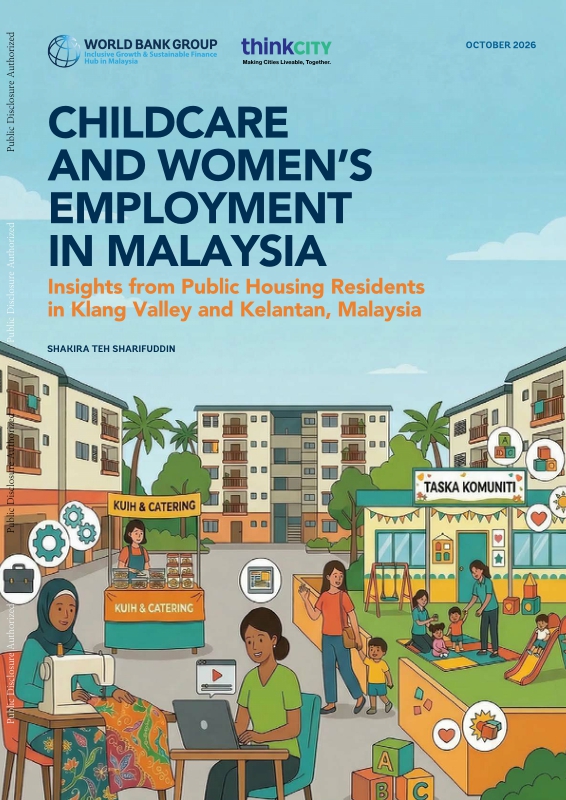
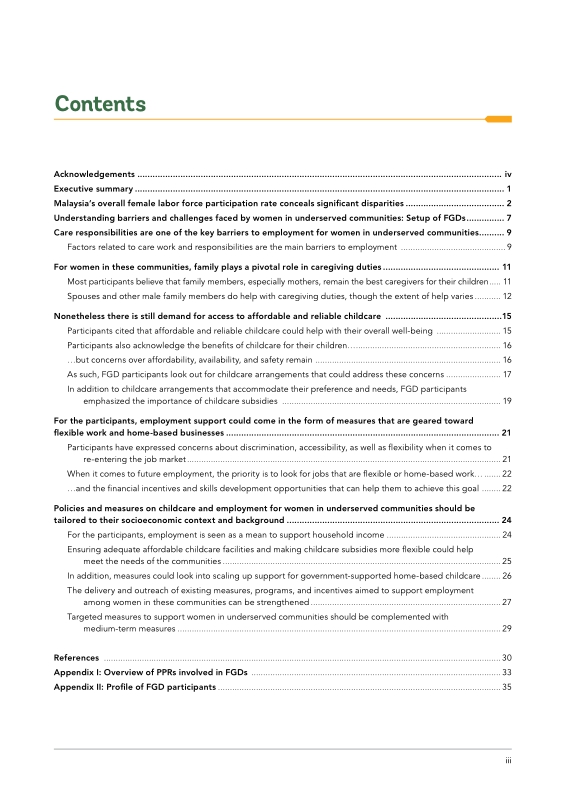
Title page 1
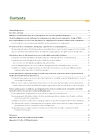
Contents 3
Acknowledgements 4
Executive summary 5
Malaysia's overall female labor force participation rate conceals significant disparities 6
Understanding barriers and challenges faced by women in underserved communities: Setup of FGDs 11
Care responsibilities are one of the key barriers to employment for women in underserved communities 13
Factors related to care work and responsibilities are the main barriers to employment 13
For women in these communities, family plays a pivotal role in caregiving duties 15
Most participants believe that family members, especially mothers, remain the best caregivers for their children 15
Spouses and other male family members do help with caregiving duties, though the extent of help varies 16
Nonetheless there is still demand for access to affordable and reliable childcare 19
Participants cited that affordable and reliable childcare could help with their overall well-being 19
Participants also acknowledge the benefits of childcare for their children... 20
...but concerns over affordability, availability, and safety remain 20
As such, FGD participants look out for childcare arrangements that could address these concerns 21
In addition to childcare arrangements that accommodate their preference and needs, FGD participants emphasized the importance of... 23
For the participants, employment support could come in the form of measures that are geared toward flexible work and home-based businesses 25
Participants have expressed concerns about discrimination, accessibility, as wellas flexibility when it comes to re-entering the job market 25
When it comes to future employment, the priority is to look for jobs that are flexible or home-based work... 26
...and the financial incentives and skills development opportunities that can help them to achieve this goal 26
Policies and measures on childcare and employment for women in underserved communities should be tailored to their socioeconomic... 28
For the participants, employment is seen as a mean to support household income 28
Ensuring adequate affordable childcare facilities and making childcare subsidies more flexible could help meet the needs of the communities 29
In addition, measures could look into scaling up support for government-supported home-based childcare 30
The delivery and outreach of existing measures, programs, and incentives aimed to support employment among women in these communities... 31
Targeted measures to support women in underserved communities should be complemented with medium-term measures 33
References 34
Appendix I. Overview of PPRs involved in FGDs 37
Appendix II. Profile of FGD participants 39
FIGURE 1. Malaysia's aggregate FLFP figures mask significant regional disparities 7
FIGURE 2. Unemployment rate among female-headed households is higher than the total unemployment rate at selected PPRs 8
FIGURE 3. The poverty rate at selected PPRs is more pronounced among female-headed households 8
FIGURE 4. The median monthly earnings of female-headed households in Kelantan is the lowest relative to other states in the country 8
FIGURE 5. Poverty incidence rate among female-headed households in Kelantan is also one of the highest in the country 8
FIGURE 6. The FGD participants represent a diverse group of women that cut across ages, number of children, and household sizes 12
FIGURE 7. Summary of policy recommendations 32
*표시는 필수 입력사항입니다.
| 전화번호 |
|---|
| 기사명 | 저자명 | 페이지 | 원문 | 기사목차 |
|---|
| 번호 | 발행일자 | 권호명 | 제본정보 | 자료실 | 원문 | 신청 페이지 |
|---|
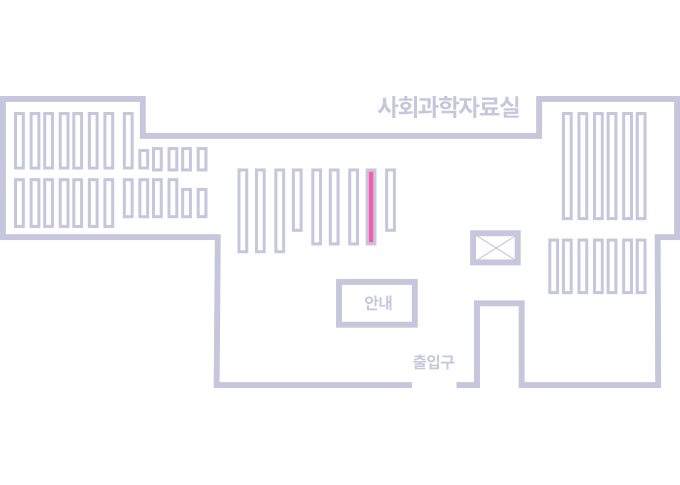
도서위치안내: / 서가번호:
우편복사 목록담기를 완료하였습니다.
*표시는 필수 입력사항입니다.
저장 되었습니다.