
 대표어
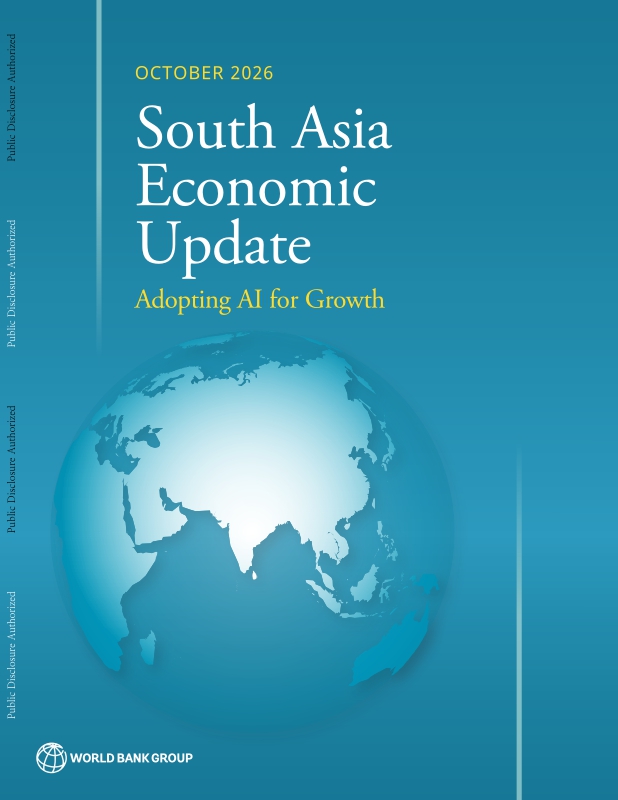
 https://documents.worldbank.org/en/publication/documents-reports/documentdetail/099552210132636511

권호기사보기
| 기사명 | 저자명 | 페이지 | 원문 | 기사목차 |
|---|
결과 내 검색
동의어 포함
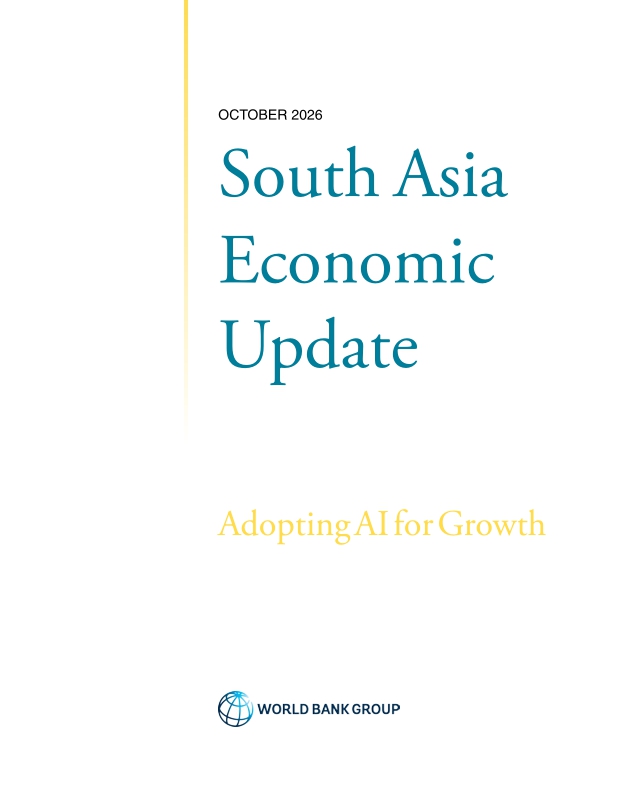
Title page 1
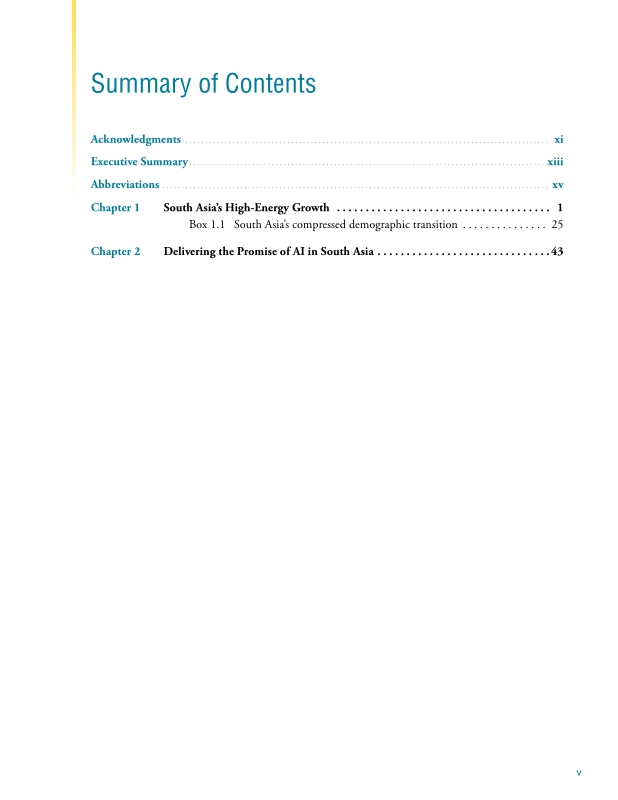
Contents 6
Acknowledgments 9
Executive Summary 10
Abbreviations 12
CHAPTER 1. South Asia's High-Energy Growth 15
Summary 16
Global developments and outlook 17
Developments in South Asia 20
Sectoral developments 22
Country developments 23
Outlook for South Asian countries 26
Risks and vulnerabilities 28
Persistently elevated energy prices 28
Reversal in global AI activity 30
Food insecurity and natural disasters 33
Policy challenges 34
Scaling up energy generation 34
Creating jobs with low entry barriers at scale 37
Realizing the promise of AI 45
Annex 1.1. Policy and macroeconomic response to the energy price shock 49
References 51
CHAPTER 2. Delivering the Promise of AI in South Asia 56
Introduction 57
Firm-level AI adoption: Evidence from a representative sample of formal firms in India 64
How AI is shaping South Asia's GVC relationships 68
The impact of AI-assisted teachers: Evidence from a winter school 72
Data centers: Benefits and costs in South Asia 76
Policies to realize AI promise in South Asia 79
Annex 2.1. Data sources 84
Annex 2.2. Empirical strategy and methods 89
References 97
FIGURE 1.1. Summary 17
FIGURE 1.2. Energy market developments 18
FIGURE 1.3. Global growth and inflation 19
FIGURE 1.4. Financial markets and monetary policy 20
FIGURE 1.5. Regional economic activity 21
FIGURE 1.6. Sectoral developments 22
FIGURE 1.7. Country developments 25
FIGURE 1.8. Outlook 28
FIGURE 1.9. Risk of persistently elevated energy prices 29
FIGURE 1.10. Reversal in AI activity 30
FIGURE 1.11. Reversal in AI investment, financial implications 32
FIGURE 1.12. Food insecurity and natural disasters 33
FIGURE 1.13. Scaling up energy generation 35
FIGURE 1.14. Creating jobs at scale in tourism 37
FIGURE 1.15. Creating jobs at scale in agribusiness 45
FIGURE 1.16. Realizing the promise of AI 46
FIGURE 2.1. AI investment and cross-country diffusion 58
FIGURE 2.2. Labor market exposure and impacts of GenAI in South Asia 59
FIGURE 2.3. The global rise of AI data centers 60
FIGURE 2.4. AI adoption in Indian and U.S. firms 65
FIGURE 2.5. Which firms are adopting AI? 66
FIGURE 2.6. Which firms expect to gain most from AI? 67
FIGURE 2.7. Constraints and policies 68
FIGURE 2.8. AI and the GVC relationships of U.S. firms with South Asia 69
FIGURE 2.9. AI and the GVC relationships of South Asian firms with the United States 71
FIGURE 2.10. Foundational learning gaps in EMDEs 74
FIGURE 2.11. Impact of AI-assisted teaching: Randomized trial of a winter school 75
FIGURE 2.12. Cloud demand and imports 76
FIGURE 2.13. Costs and benefits of data center proximity 77
FIGURE 2.14. Drivers of data center location 78
FIGURE 2.15. Factors for comparative advantage in compute 79
FIGURE 2.16. Policies to spur AI adoption: What do firms prioritize? 81
Boxes 7
BOX 1.1. South Asia's compressed demographic transition 38
FIGURE B1.1.1. South Asia's demographic trends 40
FIGURE B1.1.2. The impact of aging on consumption 41
FIGURE B1.1.3. Productive and financially secure aging 42
FIGURE B1.1.4. Policy options 43
FIGURE A.1.1. Policy and macroeconomic response to the energy price shock 50
*표시는 필수 입력사항입니다.
| 전화번호 |
|---|
| 기사명 | 저자명 | 페이지 | 원문 | 기사목차 |
|---|
| 번호 | 발행일자 | 권호명 | 제본정보 | 자료실 | 원문 | 신청 페이지 |
|---|
도서위치안내: / 서가번호:

우편복사 목록담기를 완료하였습니다.
*표시는 필수 입력사항입니다.
저장 되었습니다.
