
 대표어
대표어
 한국학술지인용색인(NRF)
권호기사보기
| 기사명 | 저자명 | 페이지 | 원문 | 기사목차 |
|---|
결과 내 검색
동의어 포함
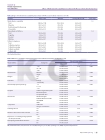
| 번호 | 참고문헌 | 국회도서관 소장유무 |
|---|---|---|
| 1 | Ministry of the Interio and Safety. Current status of foreign residents of local governments in 2018. Seoul: Ministry of the Interio and Safety;2019, p. 1-45 (Korean). | 미소장 |
| 2 | Kim MJ. A study on multicultral attitude, cultral competence and influencing factors among nurses in Korea. J Human Soc Sci 21 2019;10(1):159-174 (Korean). DOI: 10.22143/HSS21.10.1.12 | 미소장 |
| 3 | Leininger M, McFarland MR. Transcultural nursing: concepts, theories, research, and practice. 3rd ed. New York, NY: McGraw-Hill Education;2002, p. 189-192. | 미소장 |
| 4 | Ahn SS, Min MS, Kim ES, Lee, MJ, Kim KM. The 2012 study on Multicentral acceptability in Korea. Seoul: Ministry of Gender Equality and Family; 2012, p. 1-241 (Korean). | 미소장 |
| 5 | Kardong-Edgren S, Bond ML, Schlosser S, Cason C, Jones ME, Warr R, et al. Cultral attitudes, knowledge, and skills of nursing faculty toward patients from four diverse cultures. J Profess Nurs 2005;21(3):175-182. DOI: 10.1016/j.profnurs.2005.04.001 | 미소장 |
| 6 | Hart PL, Mareno N. Nurse’s perceptions of their cultral competence in caring for diverse patient populations. Online J Cult Competence Nurs Healthc 2016;6(1):121-136. DOI: 10.9730/ojccnh.org/v6n1a10 | 미소장 |
| 7 | Ahn SR. Effects of empathy ability and human rights sensitivity of nursing students on multicentral acceptability [dissertation]. Department of Nursing Graduate School, Changwon National University;Korea, 2018. | 미소장 |
| 8 | Park SK, Jeong SK, Kim HS. The effect of multicultral nursing education program on the multicultral acceptability among nursing students. J Korean Data Anal Soc 2018,;20(5):2695-2710 (Korean). | 미소장 |
| 9 | Effects of Cultural Sensitivity Training on Health Care Provider Attitudes and Patient Outcomes  |
미소장 |
| 10 | Development and psychometric evaluation of the transcultural self-efficacy tool: a synthesis of findings. |
미소장 |
| 11 | Sharifi N, Adib-Hajbaghery M, Najafi M. Cultural competence in nursing:a concept analysis. Int J Nurs Stud 2019;99:1033386. DOI: 10.1016/j.ijnurstu.2019.103386 | 미소장 |
| 12 | Jeong GH, Park HS, Kim KW, Kim YH, Lee SH, Kim HK. A concept analysis of cultral nursing competence. Korean J Woman Health Nurs 2016;22(2):86-95 (Korean). DOI: 10.4069/kjwhn.2016.22.2.86 | 미소장 |
| 13 | Cultural Competence: A Systematic Review of Health Care Provider Educational Interventions |
미소장 |
| 14 | Choi YK, Ahn JW, Kim KS. Influence of cultral competency, intercultral communication, and organizational support on nurses’ clinical competency caring for foreign patients. Health Soc Welfare Rev 2018;38(4):518-543 (Korean). DOI: 10.15709/hswr.2018.38.4.518 | 미소장 |
| 15 | Myung JK. Relationships among professional self-concept, cultral sensitivity, and cultral competence nurses working at hospital [dissertation]. Department of Nursing Administration Graduate School, Hanyang University; Korea, 2016. | 미소장 |
| 16 | Chae DH. Development of cultral competence scale for korean nurses [dissertation]. Department of Nursing Graduate School, Yonsei University;Korea, 2013. | 미소장 |
| 17 | Chae DH, Lee CY. Development and psychometric evaluation of the Korean version of the cultural competence scale for clinical nurses. Asian Nurs Res 2014;8(4):305-312. DOI: 10.1016/j.anr.2014.06.004 | 미소장 |
| 18 | Son HM, Je MJ, Lee BJ. Integrative review on cultral competence of nurse. Korean J Cult Arts Educ Stud 2014;9(4):25-47 (Korean). DOI:10.15815/kjcaes.2014.9.4.25 | 미소장 |
| 19 | U.S. Department of Health and Human Services, The Office of Minority Health. Cultural and Linguistic Competency. Available at https://minorityhealth.hhs.gov/ [accessed on February 10, 2020] | 미소장 |
| 20 | The influence of cultural competence of nurses on patient satisfaction and the mediating effect of patient trust. |
미소장 |
| 21 | Giger JN, Davidhizar RE. Transcultural nursing: assessment and intervention. 6th ed. St. Louis, MO: Elsvier/Mosby; 2013, p. 1-18. | 미소장 |
| 22 | Kim HY, Cho MO. Experiences of conflicts on job identity among the nurses of medium-sized hospitals. J Qual Res 2006;7(2):13-25 (Korean). | 미소장 |
| 23 | Erdfelder E, Faul F, Buchner A. G*power: a general power analysis program. Behav Res Meth Instrum Comput 1996;28(1):1-11. DOI:10.3758/BF03203630 | 미소장 |
| 24 | Maurer FA, Smith CM. Community/public health nursing practice:health for families and populations. 7th ed. St. Louis, MO: Elsvier/Saunders; 2013, p. 266-297. | 미소장 |
| 25 | Oh EO, Park ES, Suk MH, Im YJ. Development and psychometric evaluation of the transcultral self-efficacy scale for nurses. J Korean Acad Nurs 2016;46(2):293-304 (Korean). DOI: 10.4040/jkan.2016.46.2.293 | 미소장 |
| 26 | Berry JW, Poortinga YH, Segall MH, Dasen PR. Cross-cultural psychology:research and applications. 2nd ed. Cambridge, UK: Cambridge University Press; 2002, p. 11-60. | 미소장 |
| 27 | Yoon IJ. Multicultural minority groups and multicultural coexistence in Korean society. Korea Observer 2010;41(4):517-557 (Korean). | 미소장 |
| 28 | Hwang JM, Kim YS, Lee MJ, Choi H, Lee DJ. A study on the multiracial and multicultural orientation in Korean society. Seoul; Korea Women’s Policy Institute; 2007 (Korean). | 미소장 |
| 29 | Shin JW. Mediating and moderating effect of transcultral efficacy in relationship between cultral empathy and cultral competence [dissertation]. Department of Nursing Graduate School, Korea University;Korea, 2017 | 미소장 |
| 30 | Choi KS, Kim HS, Lee SY, Dressel A, Galvao LM, Jun MH. A study on the curriculum of global health education. J Korean Acad Soc Nurs Educ 2016;22(2):220-227 (Korean). DOI: 10.5977/jkasne.2016.22.2.220 | 미소장 |
*표시는 필수 입력사항입니다.
| 전화번호 |
|---|
| 기사명 | 저자명 | 페이지 | 원문 | 기사목차 |
|---|
| 번호 | 발행일자 | 권호명 | 제본정보 | 자료실 | 원문 | 신청 페이지 |
|---|
도서위치안내: / 서가번호:

우편복사 목록담기를 완료하였습니다.
*표시는 필수 입력사항입니다.
저장 되었습니다.
