본문 바로가기 주메뉴 바로가기
국회도서관 홈으로 정보검색 소장정보 검색

결과 내 검색

동의어 포함

목차보기


Preface
Acknowledgments for the Second Edition
Acknowledgments for the First Edition
Conventions
Additional Resources

Part 1. Introduction
1. Law and Neuroscience: An Overview of Issues
2. The Case of the Murdering Brain

Part 2. Fundamentals of Cognitive Neuroscience
3. Brain Structure and Brain Function
4. Brain Monitoring and Manipulation
5. Limits and Cautions

Part 3. Brain, Behavior, and Responsibility
6. Relationships of Law, Science, and Behavior
7. Behavior, Responsibility, and Punishment: Views from Law and Neuroscience
8. Neuroscience in the Courtroom: Assessing Scientific Evidence

Part 4. Core Themes in Law and Neuroscience
A. The Injured Brain
9. Brain Death
10. Brain Injury
11. Pain and Distress
12. Addicted Brains
B. The Thinking and Feeling Brain
13. Memory
14. Emotions
15. Lie Detection
16. Judging
C. The Developing and Aging Brain
17. Adolescent Brains
18. Aging Brains

Part 5. The Future
19. Cognitive Enhancement
20. Brain-Machine Interface and Law
21. Artificial Intelligence, Robots, and Law

Appendix: How to Read a Brain Imaging Study
Table of Cases
Glossary
Author & Name Index
Subject Index

이용현황보기

Law and neuroscience 이용현황 표 - 등록번호, 청구기호, 권별정보, 자료실, 이용여부로 구성 되어있습니다.
등록번호 청구기호 권별정보 자료실 이용여부
0002874735 LM 340.19 -A22-1 서울관 법률정보센터(206호) 북큐레이션
(자료실내 이용)

출판사 책소개

알라딘제공

Buy a new version of this textbook and receive access to the Connected eBook on Casebook Connect, including lifetime access to the online ebook with highlight, annotation, and search capabilities. Access also includes an outline tool and other helpful resources. Connected eBooks provide what you need most to be successful in your law school classes.


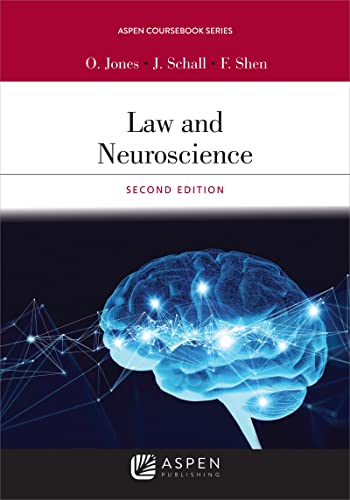
The implications for law of new neuroscientific techniques and findings are now among the hottest topics in legal, academic, and media venues. Law and Neuroscience--a collaboration of professors in law, neuroscience, and biology--is the first and still only coursebook to chart this new territory, providing the world's most comprehensive collection of neurolaw materials. This text will be of interest to many professors teaching Criminal Law and Torts courses, who would like to incorporate the most current thinking on how biology intersects with the law.

New to the Second Edition:

  • Extensively revised chapters, updated with new findings and materials.
  • New chapter on Aging Brains
  • Hundreds of new references and citations to recent developments.
  • Over 600 new references and citations to recent developments, with 260 new readings, including 27 new case selections
  • Highly current material; 45% of cases and publications in the Second Edition were published since the first edition in 2014

Professors and students will benefit from:

  • Technical subjects explained in an accessible manner
  • Extensive glossary of key terms
  • Photos and illustrations enliven the text
  • Professors of any background can teach this course


