
 대표어
대표어
권호기사보기
| 기사명 | 저자명 | 페이지 | 원문 | 기사목차 |
|---|
결과 내 검색
동의어 포함
| 등록번호 | 청구기호 | 권별정보 | 자료실 | 이용여부 |
|---|---|---|---|---|
| 0002980240 | LM 346.42015 -A23-1 | 서울관 서고(열람신청 후 1층 대출대) | 이용가능 |

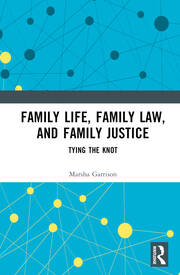
Family Life, Family Law, and Family Justice: Tying the Knot combines history, social science, and legal analysis to chart the evolution and interdependence of family life and family law, portray current trends in family life, explain the pressing policy challenges these trends have produced, and analyze the changes in family law that are essential to meeting these challenges.
The challenges are large and pressing. Across the industrialized West, nonmarital birth, relational stress, multi-partner fertility, and relationship dissolution have increased, producing a dramatic rise in single parenthood, poverty, and childhood risk. This concentration of familial and economic risk accelerates socioeconomic inequality and retards intergenerational mobility. Although the divide is most pronounced in the United States, the same patterns now affect families throughout the Western world. Across the European Union, there are 9.2 million "lone" parents, and just under half of their families live in poverty. Tying the Knot demonstrates how today’s family patterns are deeply rooted in long-standing, class-based differences in family life and explains why these class-based differences have accelerated. It explains how the values that guide family law development inevitably reflect the world in which families live and develops a new family law capable of meeting the needs of twenty-first century families.
The book will be of considerable interest to family specialists from a number of fields, including law, demography, economics, history, political science, public health, social policy, and sociology.
This book combines history, social science, and legal analysis to chart the evolution and interdependence of family life and family law, portray current trends in family life, explain the pressing policy challenges these trends have produced, and analyze the changes in family law that are essential to meeting these challenges.
*표시는 필수 입력사항입니다.
| 전화번호 |
|---|
| 기사명 | 저자명 | 페이지 | 원문 | 기사목차 |
|---|
| 번호 | 발행일자 | 권호명 | 제본정보 | 자료실 | 원문 | 신청 페이지 |
|---|
도서위치안내: / 서가번호:

우편복사 목록담기를 완료하였습니다.
*표시는 필수 입력사항입니다.
저장 되었습니다.
