Acknowledgements Table of Figures Table of Cases Table of Legislation Introduction 1 The Current Legal Status of Animals I Introduction II The Property Status of Animals A Animals as Simple Property B Animals as More than Simple Property III Legislation Protecting Animals A The History of Animal Protection B Anti-Cruelty Laws C Animal Welfare Laws D Species-Specific Provisions E Limits of Animal Protection Laws: Exclusions and Exceptions IV Constitutional Law A Competence Norms B State Objectives C Direct Legal Protections V International Law VI Animal Protection Laws in Practice VII Conclusion 2 Welfarism vs Abolitionism, a Dichotomy? I Introduction II Classic Welfarism A Bigger Cages! Classic Welfarism and the Humane Treatment of Animals B Critiques of Classic Welfarism III Abolitionism A No Cages! The Abolitionist Case for Ending Animal Exploitation B Critiques of Abolitionism IV New Welfarism A First Bigger Cages, Then No Cages! New Welfarism's Hybrid Approach B Critiques of New Welfarism V Beyond the Dichotomy A Cooperation Instead of Abolition: Sue Donaldson and Will Kymlicka's Theory of Shared Multispecies Communities B Dialogue over Debate: Melanie Joy's Plea for a Multi-Pronged Strategy VI Conclusion 3 Philosophical Foundations of Animal Rights I Introduction II Peter Singer's Utilitarianism A Extending the Scope of Moral Concern to Animals B How Animals' Interests Ought to be Considered III Tom Regan's Deontological Approach A Regan's Critique of Utilitarianism B Inherent Value and Subjects-of-a-Life IV Martha Nussbaum's Capabilities Approach A Nussbaum's Critique of Other Approaches B The Capabilities Approach V Sue Donaldson and Will Kymlicka's Political Theory A The Political Turn in Animal Ethics and Animal Studies B Zoopolis's Differentiated Theory of Animal Rights VI Critical Approaches to Animal Rights A The Ecofeminist Critique B The Conservationist Critique C The Contractualist Critique VII Conclusion 4 The Legal Theory of Animal Rights I Introduction II Are Animals Fit to have Legal Rights? A The Choice-Based Approach to Rights B Evaluating the Choice-Based Approach C The Interest-Based Approach to Rights D Evaluating the Interest-Based Approach III Do Animals Already have Legal Rights? A Animals Already have Legal Rights: The Thin Conception B The Thin Conception: A Review C Animals do not Yet have Legal Rights: The Thick Conception IV Would Animals Need to Become Legal Persons? A The Traditional View: Legal Personhood is Necessary for Rights-Holdership B The Unorthodox View: Legal Personhood is not Necessary for Rights-Holdership C Evaluating the Traditional and Unorthodox Views V Conclusion 5 Animal Rights and Human Rights I Introduction II Should Only Humans have Human Rights? A Are Human Rights Grounded in Human Properties? The Foundationalist Approach B Are Human Rights the Outcome of Political Practices and Decisions? The Anti-Foundationalist Approach III Should Animals have Similar Rights to Humans? A Do Human and Animal Rights Flow from the Same Source? B Are Human and Animal Rights Mutually Supportive? IV How Could Human and Animal Rights be Reconciled Legally? A Rights Conflicts and the Proportionality Test B Prioritising the Rights of Minorities? C The Species Membership Approach V Conclusion 6 Animal Rights in Litigation I Introduction II Animals and the Issue of Legal Standing to Bring an Action A Cetacean Community (2003) B Hiasl (2007) C Tilikum, Katina, Corky, Kasatka, and Ulises (2012) D Naruto (2016) III Animals as Subjects of Habeas Corpus A Tommy and Kiko (2013) B Hercules and Leo (2013) C Cecilia (2016) D Chucho (2017) E Beulah, Karen, and Minnie (2017) F Happy (2018) IV Fundamental Rights and Personhood Litigation Beyond Habeas Corpus A Animal Welfare Board of India v Nagaraja (2014) B Kaavan (2020) C The Swiss Primate Rights Case (2019) D Estrellita (2022) E People for Animals v Md Mohazzim (2015) F Stray Dogs (2021) G Karnail Singh v State of Haryana (2019) H Sandra (2014) V Conclusion 7 Animal Rights in Legislation I Introduction II Domestic Proposals for Animal Rights Laws A The Swiss Primate Rights Initiative B The Finnish Rights Proposal C Evaluating the Proposals III International Proposals for Animal Rights Laws A An International Treaty on Animal Rights? B Universal Declaration of Animal Rights C Declaration of Rights for Cetaceans D Evaluating the Proposals IV Drafting Animal Rights Laws A The Mechanics of Law Reform B Scope C Legal Status D The Procedural Rights of Animals E The Substantive Rights of Animals V Conclusion 8 Animal Rights as a Social Justice Movement I Introduction II The Animal Rights Movement as Abolitionist A Human Abolitionism B The Origins of Abolitionism in Animal Rights C The Implications of Abolitionism in Animal Rights III Animal Rights and Connections with Other Rights Movements A Analogies with Other Movements to Support Animal Rights B Links with Feminism and Interlocking Oppression C A Failure in the System? IV Learning Lessons A Direct Action, Consciousness-Raising, the Use of Social Media, and New Directions B Compromise V Conclusion Conclusion Bibliography Glossary Index
이용현황보기
Animal rights law 이용현황 표 - 등록번호, 청구기호, 권별정보, 자료실, 이용여부로 구성 되어있습니다.
등록번호
청구기호
권별정보
자료실
이용여부
0003024185
LM 344.049 -A23-2
서울관 법률정보센터(206호)
이용중
출판사 책소개
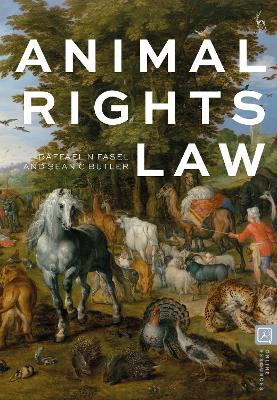
Do animals have legal rights? This pioneering book tells readers everything they need to know about animal rights law.
Using straightforward examples from over 30 legal systems from both the civil and common law traditions, and based on popular courses run by the authors at the Cambridge Centre for Animal Rights, the book takes the reader from the earliest anti-cruelty laws to modern animal welfare laws, to recent attempts to grant basic rights and personhood to animals. To help readers understand this legal evolution, it explains the ethics, legal theory, and social issues behind animal rights and connected topics such as property, subjecthood, dignity, and human rights.
The book's companion website (bloomsbury.pub/animal-rights-law) provides access to briefs on the latest developments in this fast-changing area, and gives readers the tools to investigate their own legal systems with a list of key references to the latest cases, legislation, and jurisdiction-specific bibliographic references.
Rich in exercises and study aids, this easy-to-use introduction is a prime resource for students from all disciplines and for anyone else who wants to understand how animals are protected by the law.

 대표어