Acknowledgements Table of Abbreviations Table of Cases Table of Legislation Introduction 1. The Road to a Democratic Republic I. The Dynastic Legal and Political Heritage II. Advent of Modern Constitutionalism and Colonial Rule III. From Liberation to Constitutional Founding IV. Making of the Founding Constitution V. Conclusion Further Reading 2. History of Constitutional Revisions I. Revisions under Syngman Rhee II. Revisions of 1960: The 'Second Republic' III. Revisions under Park Chung-hee IV. Revision of 1980: The 'Fifth Republic' V. Revision of 1987: Transition to Democracy VI. Conclusion Further Reading 3. The 1987 Constitution and its Basic Features I. A Democratic Republic II. Government under Law III. Welfare State and the Economic Order IV. The North Korean Question V. Conclusion Further Reading 4. President and the Government I. Imperial Presidency and its Discontents II. The Administration III. Holding Executive Power Accountable IV. Conclusion Further Reading 5. National Assembly and its Powers I. Composition of the National Assembly II. Weak Party System and Strong Party Discipline III. Organisation of the National Assembly IV. The Legislative Process V. Oversight Functions of the National Assembly VI. Conclusion Further Reading 6. Courts in the Age of Democracy I. Organisation of the Judiciary II. Powers of the Judiciary III. Judicial Independence IV. Politics of Judicial Reform V. Conclusion Further Reading 7. Constitutional Court: Guardian of the Constitution? I. From Uncertain Beginnings to Judicialisation of Politics II. Organisation of the Court III. Procedural Rules for Adjudication IV. Review of Statutes' Constitutionality V. Adjudication of Constitutional Complaints VI. Impeachment Proceedings VII. Dissolution of Unconstitutional Political Parties VIII. Adjudication of Competence Disputes IX. Conclusion Further Reading 8. Expansion of Constitutional Rights I. Rights During Dynastic and Colonial Periods II. Anti-communism and Rights Discourse III. Human Dignity and Unenumerated Rights IV. Restraining Basic Rights V. Rights in a Diverse Society VI. International Context of Rights Protection VII. Conclusion Further Reading 9. A Constitution between Past and Future I. Transitional Justice and Constitutional Continuity II. Constitutional Significance of the Confucian Tradition III. Constitutional Status of the Korean Diaspora IV. Conclusion Further Reading Conclusion I. The Persistence of Hybridity II. Democracy and the Rule of Law III. Many Faces of Nationalism IV. Conclusion Index
이용현황보기
The constitution of South Korea : a contextual analysis 이용현황 표 - 등록번호, 청구기호, 권별정보, 자료실, 이용여부로 구성 되어있습니다.
등록번호
청구기호
권별정보
자료실
이용여부
0003128164
LM 342.5102 -A24-1
서울관 법률정보센터(206호)
이용중
출판사 책소개
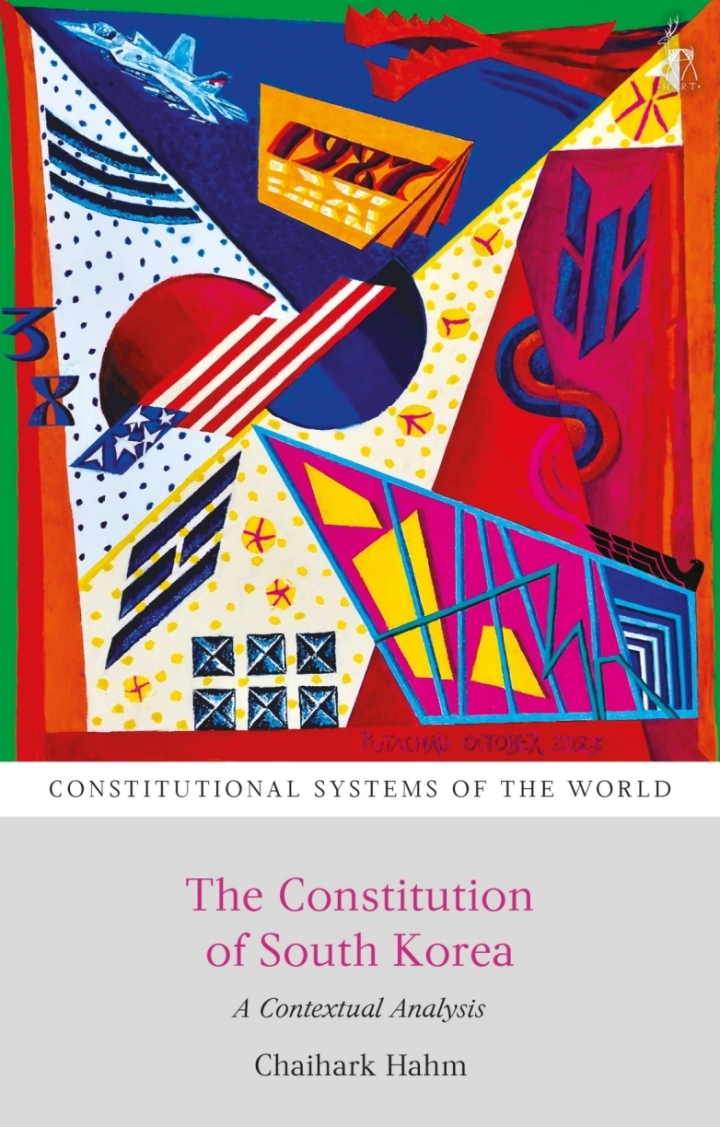
The constitutional system of South Korea is a work in progress, and this volume fleshes out and makes intelligible to foreign readers that process within the specific political and historical context of modern South Korea. The current South Korean Constitution of 1987 is the culmination of decades-long efforts by the South Korean people to achieve democratic self-government. It is the fruition of untold sacrifices made by dedicated citizens who tirelessly fought to rein in the power of the government under some form of constitutional rule. In that sense, it should be understood against the backdrop of South Korea's experimentation with constitutionalism that began at the turn of the last century. Yet, it also represents a radical break, the beginning of a new era which ended a long political history of 'constitution without constitutionalism'.
For the first time in the history of the South Korean nation, the constitution has become a living norm rather than an ornament, or a fa?ade, for illegitimate or ineffectual governments. It has proven to be a binding law that matters not only for government leaders but also for private individuals. With the adoption, especially, of a system allowing the adjudication of constitutional issues at an independent court, the people have begun to realise that the constitution can be invoked to protect their rights and advance their interests. As a result, the South Korean Constitutional Court is being stretched to its limits with a great number of cases filed at its docket.
This book is an insightful new addition to Hart's successful series, Constitutional Systems of the World.

 대표어
대표어